History, Culture, Architecture, and Famous Destinations
Iran is a country filled with ancient cities, breathtaking architecture, rich traditions, and diverse cultures. From the historic streets of Isfahan to the modern skyline of Tehran, Iranian cities reflect thousands of years of civilization, art, trade, poetry, and science. Every city in Iran has its own identity, local cuisine, dialect, traditions, and historical landmarks that attract millions of visitors and researchers from around the world.
Iranian cities are among the oldest continuously inhabited urban centers on Earth. Many of them were important stops along the Silk Road and played major roles in Persian empires throughout history. Today, these cities combine historical beauty with modern development, making Iran one of the most culturally rich countries in the Middle East.
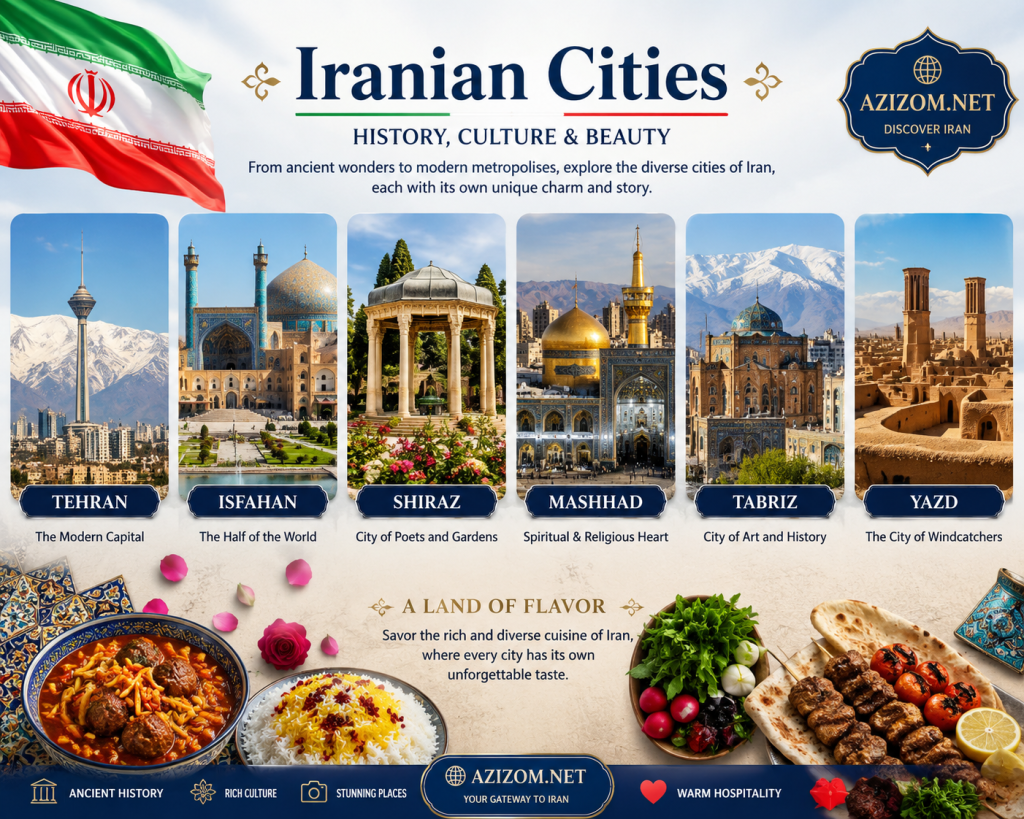
Tehran – The Modern Capital of Iran
Tehran is the capital and largest city of Iran. Located at the foot of the Alborz Mountains, Tehran is the political, economic, educational, and cultural center of the country. The city became the capital during the Qajar dynasty and has grown into a large metropolitan area with millions of residents.
Tehran is known for:
- Modern skyscrapers and busy streets
- Museums and historical palaces
- Large shopping centers and bazaars
- Universities and technology centers
- Art galleries and cultural festivals
Famous attractions in Tehran include:
- Golestan Palace
- Azadi Tower
- Milad Tower
- Grand Bazaar of Tehran
- Saadabad Palace Complex
Tehran also offers a mix of traditional Persian culture and modern urban lifestyle, making it one of the most dynamic cities in the Middle East.
Isfahan – The Jewel of Persian Architecture
Isfahan is one of the most beautiful and historic cities in Iran. During the Safavid Empire, Isfahan became the capital of Persia and gained worldwide fame for its architecture, bridges, mosques, and gardens.
The famous Persian saying “Isfahan is Half the World” reflects the city’s beauty and importance.
Isfahan is famous for:
- Persian-Islamic architecture
- Blue-tiled mosques
- Ancient bridges
- Traditional handicrafts
- Persian gardens
Top attractions include:
- Naqsh-e Jahan Square
- Shah Mosque
- Ali Qapu Palace
- Si-o-se-pol Bridge
- Khaju Bridge
The city is also famous for Persian miniature art, carpet weaving, and traditional sweets.
Shiraz – City of Poetry and Gardens
Shiraz is known as the cultural heart of Iran. It is famous for poetry, literature, flowers, and historical monuments. Shiraz was home to some of the greatest Persian poets, including Hafez and Saadi.
The city is surrounded by beautiful gardens and has a peaceful atmosphere that attracts tourists from all over the world.
Shiraz is known for:
- Persian poetry and literature
- Historic gardens
- Ancient Persian culture
- Traditional Persian houses
- Nearby archaeological sites
Major attractions include:
- Tomb of Hafez
- Tomb of Saadi
- Eram Garden
- Nasir al-Mulk Mosque
- Vakil Bazaar
Near Shiraz lies Persepolis, the ancient ceremonial capital of the Achaemenid Empire and one of the most important historical sites in the world.
Mashhad – Spiritual Center of Iran
Mashhad is the second-largest city in Iran and the most important religious city in the country. It is home to the shrine of Imam Reza, the eighth Imam in Shia Islam.
Millions of pilgrims visit Mashhad every year, making it one of the most visited religious destinations in the world.
Mashhad is famous for:
- Imam Reza Holy Shrine
- Religious tourism
- Traditional Persian cuisine
- Historical museums
- Local handicrafts
The city also has beautiful parks, shopping centers, and traditional bazaars.
Tabriz – Historic Trade and Cultural Hub
Tabriz is one of Iran’s oldest cities and has long been an important center for trade and commerce. Located in northwestern Iran, Tabriz played a major role on the Silk Road.
The city is famous for:
- Historic bazaars
- Azerbaijani culture
- Carpet weaving
- Traditional architecture
- Mountain landscapes
Top attractions include:
- Tabriz Historic Bazaar Complex
- Blue Mosque
- El Goli Park
- Azerbaijan Museum
Tabriz is also known for producing some of the finest Persian carpets in the world.
Yazd – Desert City of Windcatchers
Yazd is one of the oldest desert cities in the world and is famous for its unique desert architecture. The city is recognized as a UNESCO World Heritage Site because of its ancient urban design and historical importance.
Yazd is known for:
- Windcatchers (Badgirs)
- Adobe architecture
- Zoroastrian heritage
- Desert climate
- Ancient alleys and houses
Popular attractions include:
- Amir Chakhmaq Complex
- Yazd Old Town
- Towers of Silence
- Jameh Mosque of Yazd
The city represents the deep historical connection between Persian culture and desert living.
Kerman – Land of History and Desert Beauty
Kerman is one of Iran’s largest provinces and an important historical city in southeastern Iran. The city is famous for deserts, historical sites, pistachios, and Persian carpets.
Kerman is known for:
- Traditional bazaars
- Ancient citadels
- Persian carpets
- Desert tourism
- Pistachio production
Famous places include:
- Ganjali Khan Complex
- Shahdad Desert
- Rayen Castle
- Lut Desert
The nearby Lut Desert is one of the hottest places on Earth and offers unique natural landscapes.
Qom – Religious and Educational Center
Qom is one of the holiest cities in Iran and an important center for Islamic studies. Many religious scholars study and teach in Qom.
The city is famous for:
- Fatima Masumeh Shrine
- Religious seminaries
- Islamic education
- Traditional sweets
Qom attracts millions of religious visitors each year.
Rasht – Green Paradise of Northern Iran
Rasht is located near the Caspian Sea and is known for its green landscapes, rainy weather, and delicious local food.
Rasht is famous for:
- Persian cuisine
- Green forests
- Local markets
- Caspian culture
- Traditional houses
The city is considered one of the food capitals of Iran and offers unique northern Iranian dishes.
Ahvaz – City of Rivers and Industry
Ahvaz is located in southwestern Iran and is known for the Karun River, the longest river in Iran.
Ahvaz is important for:
- Oil and industry
- River transportation
- Arab-Iranian culture
- Bridges and waterfronts
The city has a warm climate and plays an important role in Iran’s economy.
Iranian City Culture and Diversity
Iranian cities are incredibly diverse. Different regions have different:
- Languages and dialects
- Traditional clothing
- Foods and desserts
- Music and dance styles
- Architecture and art
Northern cities are green and rainy, central cities are desert-based, western cities are mountainous, and southern cities are warm and connected to the Persian Gulf.
This diversity makes Iran one of the most culturally fascinating countries in the world.
Traditional Persian Architecture in Iranian Cities
Iranian cities are internationally famous for their architecture. Persian architects developed advanced urban planning techniques centuries ago.
Common features include:
- Domes and minarets
- Colorful tilework
- Courtyards and gardens
- Windcatchers for cooling
- Symmetrical design
- Decorative calligraphy
Many Iranian cities contain UNESCO World Heritage Sites that preserve Persian history and architecture.
Famous Foods from Iranian Cities
Every Iranian city has special local foods.
Examples include:
- Tehran: Kebabs and modern fusion cuisine
- Isfahan: Beryani
- Shiraz: Kalam Polo
- Tabriz: Kufteh Tabrizi
- Rasht: Mirza Ghasemi and Baghala Ghatogh
- Mashhad: Sholeh Mashhadi
- Yazd: Traditional sweets like Qottab and Baklava
Persian cuisine is known for its balance of herbs, rice, saffron, nuts, fruits, and aromatic spices.
Tourism in Iranian Cities
Iranian cities attract tourists interested in:
- Ancient history
- Persian architecture
- Religious tourism
- Traditional markets
- Persian food
- Nature and deserts
- Poetry and literature
Iran offers visitors a unique combination of ancient civilization and modern life.
Conclusion
Iranian cities represent thousands of years of history, culture, architecture, and human civilization. Each city tells a different story about Persia’s rich heritage and diverse traditions.
From the poetic gardens of Shiraz to the magnificent mosques of Isfahan and the modern streets of Tehran, Iran continues to inspire travelers, historians, artists, and culture lovers around the world.
Exploring Iranian cities is not only a journey through geography but also a journey through one of the world’s oldest and most influential civilizations.