Mashhad: The Spiritual Capital of Iran and a Jewel of Persian Heritage
Introduction
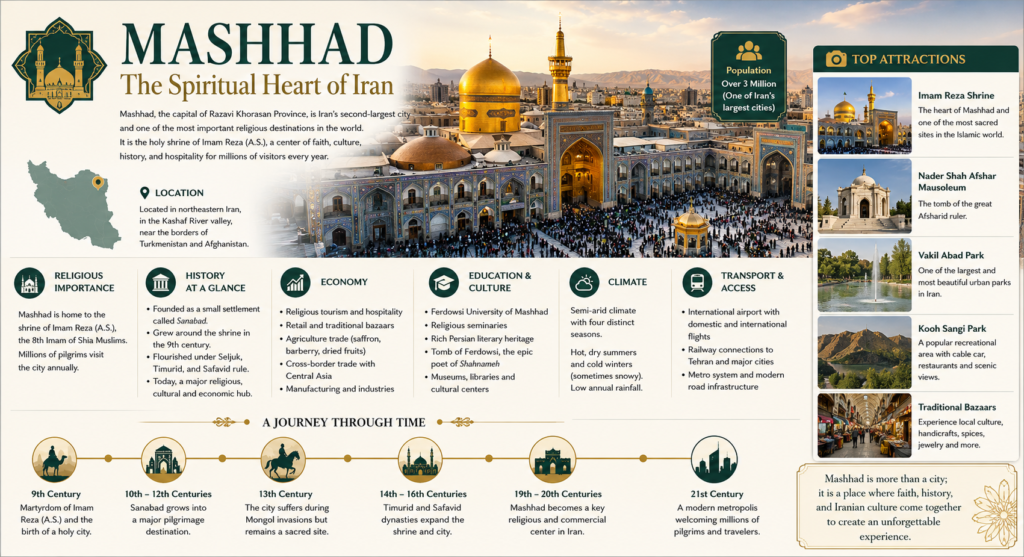
Mashhad is one of the most remarkable cities in Iran, blending deep religious significance, centuries of history, rich cultural traditions, and modern urban development. Located in northeastern Iran, Mashhad serves as the capital of Razavi Khorasan Province and is the country’s second-largest city after Tehran. Every year, millions of visitors travel to this historic destination, making it one of the most visited pilgrimage cities in the world.
For many people, Mashhad is synonymous with spirituality because it is home to the holy shrine of Imam Reza, the eighth Imam of Twelver Shi’a Islam. However, the city offers much more than religious tourism. From magnificent architecture and vibrant bazaars to beautiful parks and cultural landmarks, Mashhad represents a fascinating blend of ancient Persian heritage and contemporary life.
Whether you are interested in history, religion, architecture, culture, or travel, Mashhad offers a unique experience that captures the essence of Iran’s rich civilization.
The Meaning Behind the Name Mashhad
The word “Mashhad” originates from the Arabic term meaning “place of martyrdom.” The city received this name following the martyrdom of Imam Reza in the early ninth century. Over time, the location where he was buried became one of the most important religious centers in the Islamic world.
What began as a small settlement gradually transformed into a thriving city that now welcomes millions of pilgrims and tourists every year.
Geographic Location and Natural Setting
Mashhad is situated in northeastern Iran, approximately 900 kilometers from Tehran. The city lies within a fertile valley surrounded by mountain ranges, providing a striking contrast between urban development and natural landscapes.
Its strategic position has historically connected Persia with Central Asia, Afghanistan, and the broader Silk Road trading network. This location helped Mashhad become an important center for commerce, culture, and the exchange of ideas throughout history.
The surrounding region is known for agricultural production, particularly saffron, barberry, grapes, and various fruits that contribute significantly to the local economy.
A Journey Through History
Early Origins
Before becoming the city known today, the area consisted of small villages and settlements. One of the most notable was Sanabad, located near the ancient city of Tus.
The region gained prominence in 818 CE when Imam Reza was martyred and buried there. His burial site quickly became a place of pilgrimage, attracting visitors from across the Islamic world.
Medieval Growth
During the medieval period, Mashhad expanded steadily. Various dynasties invested in the development of the shrine complex and surrounding infrastructure.
The city survived periods of conflict and invasion, including attacks by Mongol forces. Despite these challenges, its religious significance ensured continued growth and reconstruction.
Safavid Era
The Safavid dynasty played a crucial role in elevating Mashhad’s importance. As Shi’a Islam became the state religion of Iran, the city received increased attention and investment.
New buildings, courtyards, schools, and public facilities were added around the shrine, strengthening Mashhad’s position as a major religious center.
Modern Development
Throughout the twentieth and twenty-first centuries, Mashhad experienced rapid urbanization. Improved transportation networks, modern infrastructure, and economic growth transformed the city into a major metropolitan area while preserving its spiritual identity.
Today, Mashhad combines modern amenities with centuries-old traditions, offering visitors a unique blend of past and present.
The Imam Reza Holy Shrine
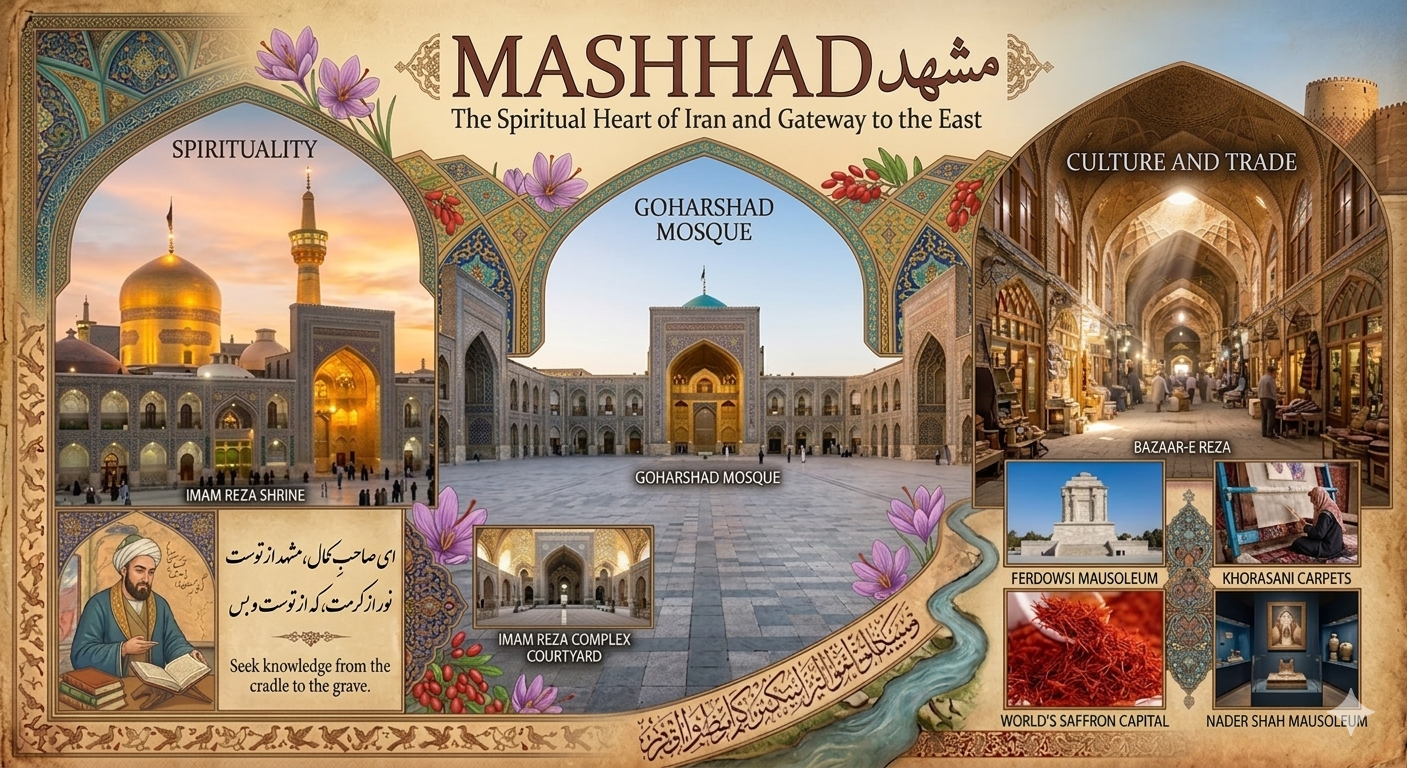
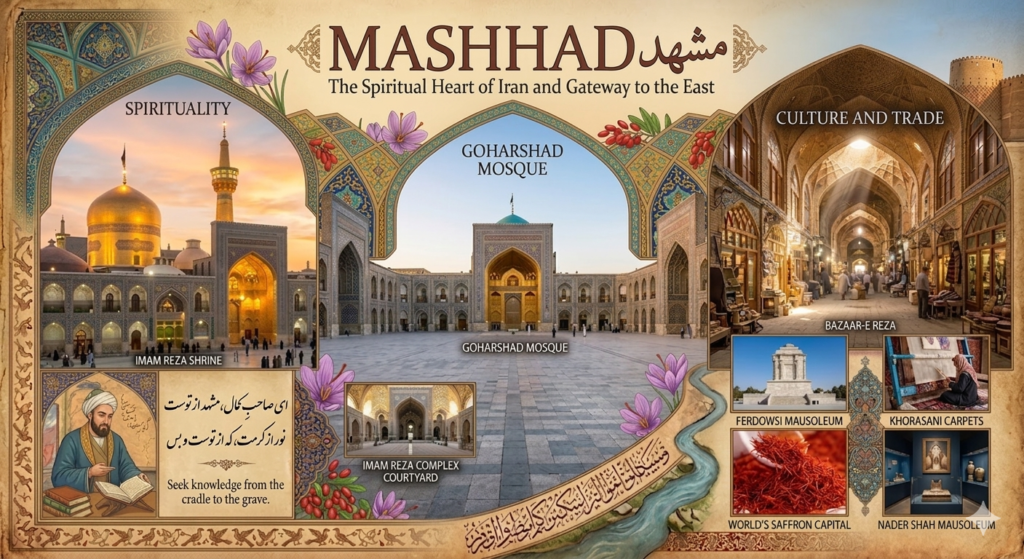
The most famous landmark in Mashhad is undoubtedly the Imam Reza Holy Shrine. This vast religious complex is considered one of the holiest sites in Shi’a Islam.
The shrine is much more than a single building. It encompasses:
- Magnificent courtyards
- Golden domes
- Elegant minarets
- Museums
- Libraries
- Seminaries
- Prayer halls
- Cultural centers
The intricate tilework, calligraphy, mirrors, and decorative elements showcase some of the finest achievements of Persian-Islamic architecture.
Pilgrims often describe their visit as a deeply moving spiritual experience. The atmosphere of devotion and reverence has made the shrine a symbol of faith for millions around the world.
Architecture and Artistic Heritage
Mashhad offers countless examples of traditional Persian architecture.
Visitors can admire:
Islamic Tilework
The city’s religious buildings feature colorful geometric patterns, floral designs, and Quranic inscriptions crafted by skilled artisans.
Domes and Minarets
Golden domes and towering minarets dominate the skyline around the shrine complex, creating one of the most recognizable cityscapes in Iran.
Historic Courtyards
Many traditional structures incorporate large courtyards that provide beauty, shade, and gathering spaces.
Decorative Arts
Mashhad is renowned for calligraphy, carpet weaving, metalwork, and other traditional crafts that continue to flourish today.
These artistic traditions reflect centuries of Persian creativity and craftsmanship.
Cultural Significance
Mashhad occupies a special place within Iranian culture.
The city serves as:
- A center of religious learning
- A hub for Persian arts
- A destination for literary enthusiasts
- A gathering place for diverse communities
People from different regions of Iran and neighboring countries regularly visit Mashhad, creating a vibrant cultural atmosphere.
Traditional music, poetry, storytelling, and local customs remain important aspects of daily life.
Ferdowsi and the Legacy of Persian Literature
Just outside Mashhad lies the city of Tus, the birthplace and resting place of Ferdowsi, one of the greatest poets in Persian history.
Ferdowsi’s masterpiece, the Shahnameh (Book of Kings), is considered one of the most influential works of Persian literature. The epic preserves ancient Persian myths, legends, and historical narratives.
The tomb of Ferdowsi attracts scholars, students, and literature enthusiasts from around the world.
His contribution to preserving the Persian language remains immeasurable and continues to inspire generations.
The Economy of Mashhad
Mashhad’s economy is diverse and dynamic.
Religious Tourism
Pilgrimage tourism remains the city’s largest economic driver. Millions of visitors support hotels, restaurants, transportation services, and local businesses.
Trade and Commerce
Its strategic location near international borders makes Mashhad an important commercial center connecting Iran with Central Asian markets.
Agriculture
The surrounding region produces valuable agricultural products, including:
- Saffron
- Barberry
- Fruits
- Nuts
- Grains
Iranian saffron, often called “red gold,” is particularly important to the local economy.
Manufacturing
Industrial sectors in Mashhad include:
- Food processing
- Textiles
- Construction materials
- Consumer goods
These industries contribute significantly to employment and economic growth.
Education and Academic Excellence
Mashhad is recognized as one of Iran’s leading educational centers.
The city hosts numerous universities, colleges, research institutions, and religious seminaries.
Students from across Iran and neighboring countries come to Mashhad for higher education opportunities.
Fields of study include:
- Engineering
- Medicine
- Humanities
- Islamic studies
- Science and technology
The presence of academic institutions contributes to the city’s intellectual and cultural vitality.
Local Cuisine and Traditional Flavors
Food plays an important role in Mashhad’s cultural identity.
Visitors can enjoy a variety of traditional Persian dishes, including:
Shishlik
A famous regional specialty consisting of marinated lamb ribs grilled over charcoal.
Persian Rice Dishes
Fragrant rice accompanied by saffron, herbs, meats, and vegetables is a staple of local cuisine.
Ash and Soups
Traditional soups and stews provide rich flavors and reflect centuries of culinary heritage.
Saffron Desserts
Because the region produces some of the world’s finest saffron, many sweets and desserts incorporate this prized spice.
Local restaurants offer authentic dining experiences that highlight the hospitality of northeastern Iran.
Shopping and Traditional Bazaars
Mashhad is a paradise for shoppers.
Traditional bazaars offer:
- Persian carpets
- Handmade jewelry
- Saffron
- Dried fruits
- Religious souvenirs
- Handcrafted artwork
Modern shopping centers complement these historic markets, giving visitors access to both traditional and contemporary retail experiences.
Exploring the bazaars provides insight into local culture and everyday life.
Parks and Recreational Attractions
Although primarily known for its religious significance, Mashhad also offers beautiful recreational areas.
Vakil Abad Park
One of the city’s largest green spaces, ideal for families and outdoor activities.
Kooh Sangi Park
A scenic destination featuring rocky hills, walking paths, and panoramic views.
Mellat Park
Popular among residents for relaxation, exercise, and community events.
These parks provide a refreshing contrast to the bustling urban environment.
Climate and Best Time to Visit
Mashhad experiences a semi-arid climate characterized by:
- Warm summers
- Cool autumns
- Cold winters
- Pleasant springs
Spring and autumn are generally considered the most comfortable seasons for visitors due to moderate temperatures and favorable weather conditions.
Each season offers a different perspective on the city’s beauty and character.
Transportation and Accessibility
Mashhad is one of Iran’s most accessible cities.
Transportation options include:
International Airport
The city’s airport connects Mashhad with domestic and international destinations.
Railway Network
Efficient rail services link Mashhad with Tehran and other major cities.
Urban Metro
Modern metro lines help residents and visitors navigate the city efficiently.
Road Infrastructure
Extensive highways and bus services support regional and national travel.
These transportation systems facilitate the movement of millions of visitors each year.
Why Mashhad Matters Today
Mashhad continues to play a vital role in Iran’s religious, cultural, and economic landscape.
The city successfully balances:
- Historical preservation
- Spiritual traditions
- Modern development
- Economic growth
- Cultural diversity
Its ability to honor its heritage while embracing the future has made it one of the most influential urban centers in the region.
My Experience: While every visitor’s journey is unique, what stands out most about Mashhad is the remarkable combination of spirituality and hospitality. The city’s atmosphere is unlike many other destinations, where centuries-old traditions coexist with modern conveniences. Walking through the shrine complex, exploring local markets, and experiencing Persian culture firsthand leaves a lasting impression on travelers from around the world.
Key Takeaways
- Mashhad is Iran’s second-largest city and a major religious destination.
- The city is home to the Imam Reza Holy Shrine, one of the most important pilgrimage sites in Shi’a Islam.
- Rich history, culture, and architecture make Mashhad attractive beyond religious tourism.
- The region is famous for saffron production and traditional Persian cuisine.
- Modern infrastructure and transportation support millions of visitors annually.
- Mashhad remains a powerful symbol of Persian heritage and spiritual devotion.
Related Articles
- Exploring Tehran: Iran’s Dynamic Capital City
- The History and Legacy of Persian Culture
- Top Historical Sites to Visit in Iran
- Discovering the Beauty of Shiraz
- The Complete Guide to Persian Architecture
Disclaimer: This article is intended for informational and educational purposes only. Historical, cultural, and travel information may change over time. Readers are encouraged to verify current travel requirements, local regulations, and attraction information before planning a visit.
Images Disclaimer: All images are for reference purposes only. Copyright remains with their respective owners. Images are used to illustrate locations, culture, and historical subjects related to the article.
Final Thoughts
Mashhad is far more than a destination on a map. It is a city where faith, history, culture, and modern life converge. From the golden domes of the Imam Reza Shrine to the literary legacy of Ferdowsi and the vibrant energy of its markets, Mashhad offers a memorable experience that reflects the enduring spirit of Persian civilization.
For travelers, historians, and cultural enthusiasts alike, Mashhad remains one of Iran’s most fascinating and meaningful cities.
Affiliate Disclaimer: Azizom.net participates in the Amazon Associates Program. As an Amazon Associate, we may earn a commission from qualifying purchases made through links on this website, at no additional cost to you. Prices and availability are subject to change. Thank you for supporting Azizom.net.