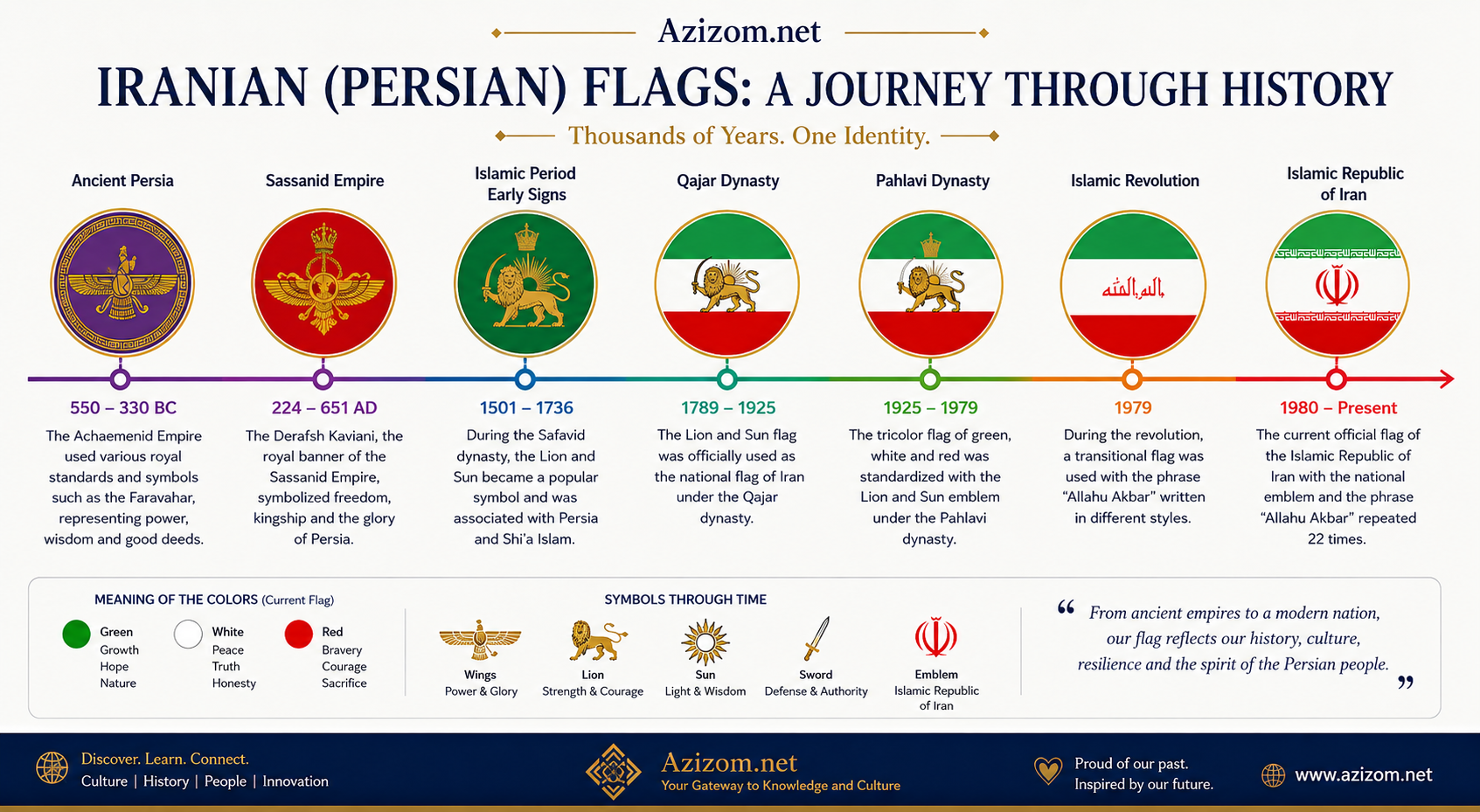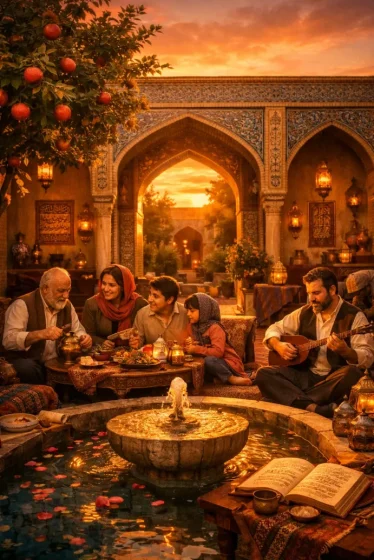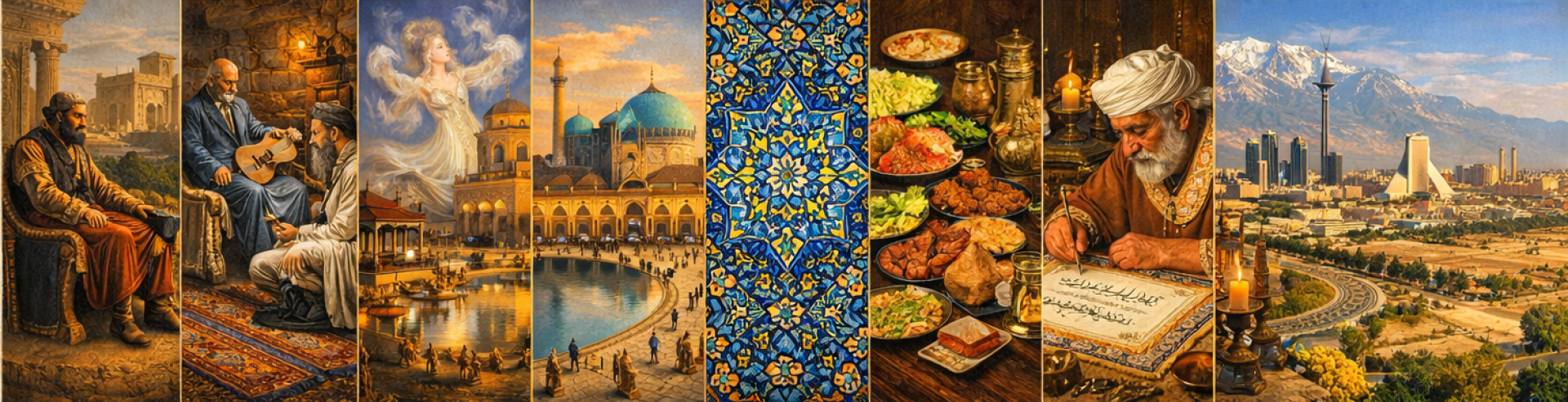
When we talk about Persia (modern-day Iran), we are looking at one of the few places on Earth where history is not just a series of events, but a continuous cultural thread that has survived for over 2,500 years.
The Eternal Legacy of Iran: From Empire to Identity
The transition from “Persia” to “Iran” isn’t just a name change (which happened officially on the international stage in 1935); it represents the evolution of a civilization that has acted as the “bridge of the world” between the East and the West.
1. Geography: The Fortress Plateau
Iran’s history is dictated by its rugged terrain. It is essentially a high central plateau surrounded by massive mountain ranges: the Zagros to the west and the Alborz to the north.
The Strategic Bridge: Because it sits between the Caspian Sea and the Persian Gulf, Iran was the vital link of the Silk Road.
Engineering Water: In a land of arid plains, Persians invented the Qanat—a sophisticated system of underground tunnels that tapped into mountain groundwater and transported it miles away without evaporation. This allowed for the famous “Persian Gardens” (the word Paradise actually comes from the Old Persian paridaiza).
2. History: A Cycle of Resilience
Iran’s history is a story of “conquering its conquerors.” Even when the land was invaded, the Persian culture was so dominant that the invaders ended up adopting Persian ways.
The Achaemenid Glory: Founded by Cyrus the Great, it was the world’s first superpower.
The Islamic Golden Age: After the Arab conquest in the 7th century, Iranians became the architects, scientists, and philosophers of the Islamic world. Thinkers like Avicenna (the father of modern medicine) and Al-Khwarizmi (the inventor of Algebra) were Persians.
The Safavid Renaissance: In the 1500s, Iran regained its independent identity, making Isfahan one of the most beautiful cities in the world, often called Nesf-e-Jahan (Half of the World).
3. Art and Architecture: Geometry and Light
Persian art is characterized by a “horror vacui” (fear of empty space)—every surface is often covered in intricate, mathematically perfect patterns.
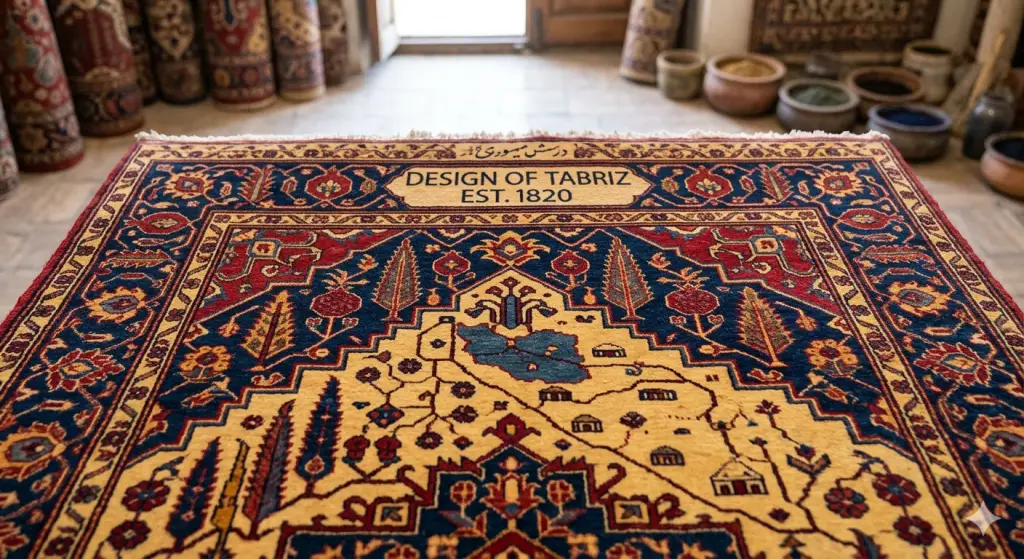
The Persian Rug: More than just floor coverings, these are woven maps of history and mythology. Each region has its own patterns, using natural dyes from pomegranate skins and indigo.
Blue Tilework: The signature of Iranian architecture is the mesmerizing blue mosaic tilework found in mosques and palaces. These tiles use geometry to represent the infinite nature of the universe.
Poetry: In Iran, poetry is the highest form of art. Figures like Rumi, Hafez, and Ferdowsi are treated like rockstars; their books are found in almost every home, often used for divination and guidance.
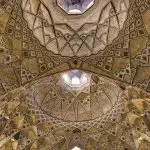
4. A Visual Masterpiece: The Mosque of Light
Below is a glimpse of the architectural genius of the Safavid era, where light and color were used to transform heavy stone into a spiritual experience.
The Eternal Legacy of Iran
Post navigation
Previous Post
 Persian Art
Next Post
Persian Architecture