The Desert Jewel of Iran
Hidden between the great deserts of central Iran stands a city unlike any other in the Middle East. Ancient, quiet, and deeply connected to its environment, Yazd is a place where history still breathes through narrow adobe streets and wind towers rise above rooftops like guardians of the desert. Often called the “Bride of the Desert,” Yazd is one of Iran’s most fascinating cultural treasures.
For travelers, historians, and architecture lovers, Yazd offers more than beautiful scenery. It tells a story of survival, creativity, and tradition shaped over thousands of years.
A City Shaped by Sand and Sun
Yazd is located in the dry heart of Iran, surrounded by vast desert landscapes and mountains. Summer temperatures can become extremely hot, yet people have lived here comfortably for centuries. The secret lies in the city’s unique architecture and clever engineering.
Unlike modern cities built with concrete and glass, Yazd was created using natural materials such as mud brick and clay. These materials protect homes from the intense heat during the day while keeping interiors warm during cold desert nights.
The old city of Yazd feels like an open-air museum. Its maze-like alleys were designed not only for beauty but also for protection from desert winds and sunlight. Walking through these shaded pathways gives visitors the feeling of stepping back in time.
The Magic of Windcatchers
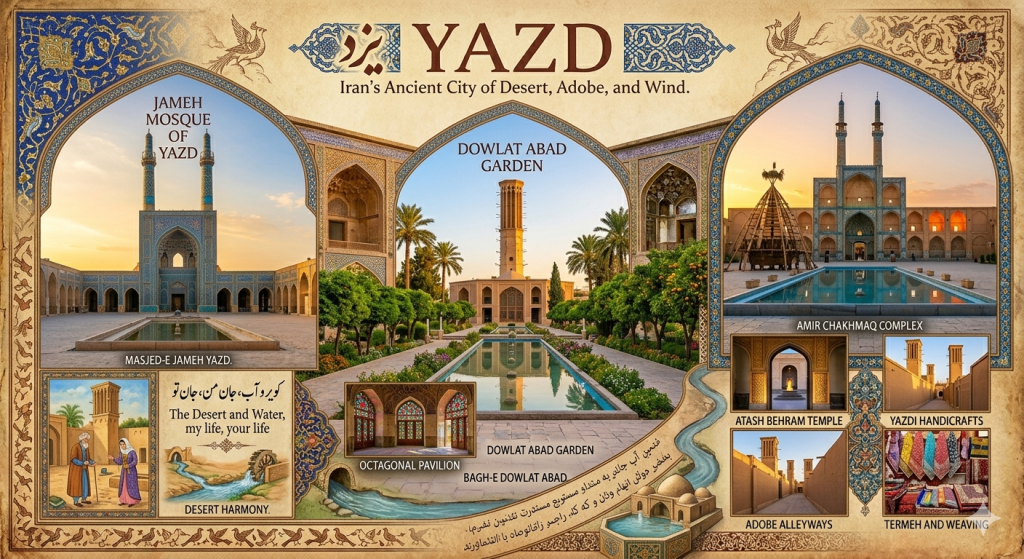
Perhaps the most famous symbol of Yazd is the badgir, known in English as the windcatcher. These tall towers are an ancient Persian invention that works as a natural cooling system.
Before electricity and air conditioners existed, the people of Yazd discovered how to capture desert winds and guide cool air into homes, underground water reservoirs, and courtyards. Some windcatchers are several stories high and continue functioning perfectly even today.
Modern architects around the world admire these structures because they demonstrate sustainable living long before environmental awareness became a global topic. Yazd proves that ancient civilizations understood climate-friendly design in remarkable ways.
The Spiritual Heart of Ancient Persia
Yazd is also one of the most important centers of Zoroastrianism, the ancient religion of Persia founded by the prophet Zoroaster more than 3,000 years ago.
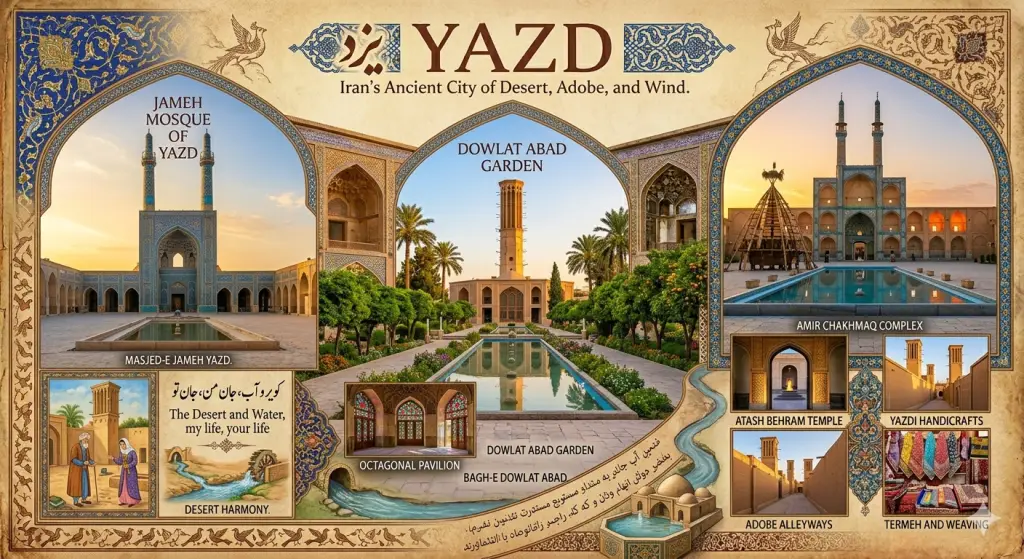
One of the city’s most visited landmarks is the Fire Temple, where a sacred flame has reportedly burned continuously for many centuries. Nearby stand the mysterious Towers of Silence, ancient circular structures once used in traditional burial ceremonies.
These historic sites reveal the deep spiritual roots of Yazd and its role in preserving one of humanity’s oldest religious traditions.
A Masterpiece of Persian Architecture
Among Yazd’s architectural wonders is the magnificent Jameh Mosque, known for its towering minarets and breathtaking blue tiles that shine under the desert sun. The mosque reflects the artistic brilliance of Persian Islamic architecture.
Another famous attraction is the Dowlat Abad Garden, a peaceful oasis filled with fountains, trees, and elegant pavilions. It is home to one of the tallest windcatchers in the world and represents the classic Persian idea of paradise in the middle of the desert.
The traditional bazaars of Yazd also remain full of life. Visitors can discover handmade carpets, silk textiles, copper crafts, and delicious local sweets prepared using recipes passed down through generations.
The Sweet Taste of Yazd
No visit to Yazd is complete without tasting its famous desserts. The city is celebrated across Iran for its traditional sweets, especially qottab, a soft pastry filled with almonds, sugar, and spices. Persian baklava and pistachio candies are also popular among visitors.
Tea culture is an important part of daily life in Yazd, and many old teahouses offer peaceful places to relax while enjoying views of the ancient city.
Why Yazd Matters Today
In a rapidly modernizing world, Yazd remains a powerful reminder that tradition and innovation can exist together. The city’s ancient cooling systems, sustainable architecture, and respect for nature have become increasingly relevant in modern discussions about environmental design and climate adaptation.
Yazd is more than a historical destination. It is a living example of how human intelligence and culture can transform even the harshest environment into a place of beauty and harmony.
For anyone seeking the soul of ancient Persia, Yazd is not simply a city to visit — it is a city to experience.