Iran’s Living Crossroads of History, Culture, and Trade
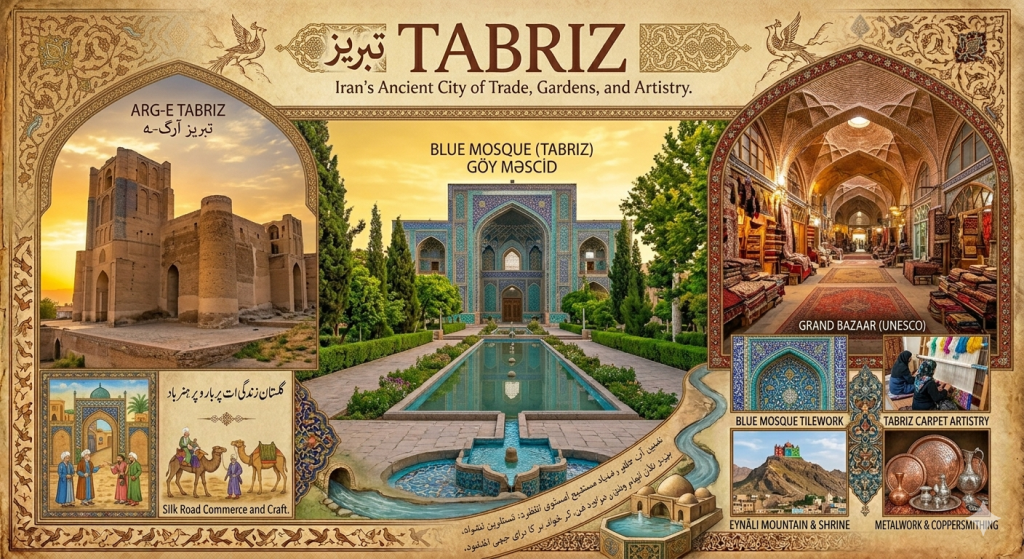
In the northwestern corner of Iran, surrounded by mountains and centuries of history, lies the remarkable city of Tabriz. A city shaped by merchants, poets, travelers, and empires, Tabriz stands as one of Iran’s most fascinating destinations. It is a place where history and modern life coexist.
A City Built on the Silk Road
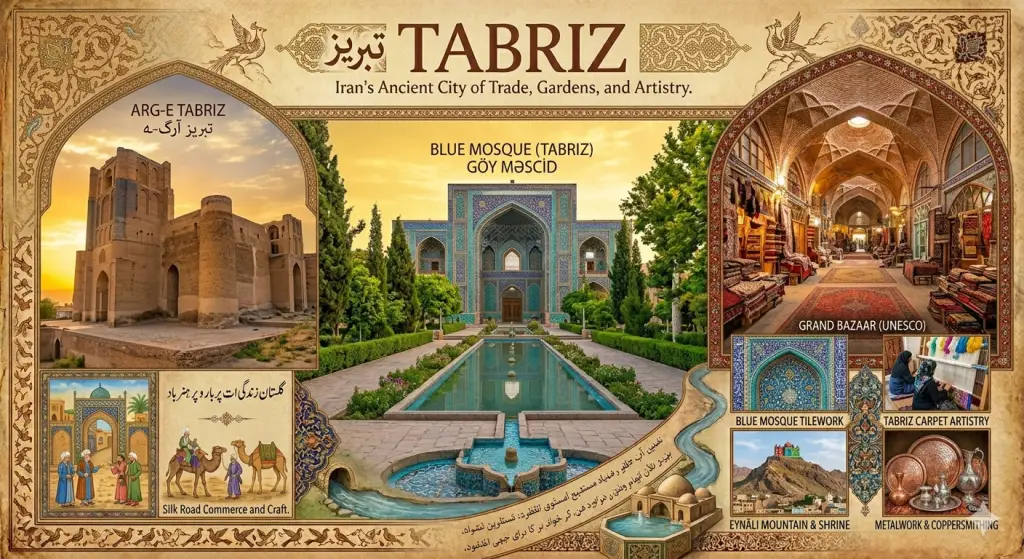
Tabriz occupied one of the most strategic locations on the historic Silk Road. It connected Persia with Europe, Anatolia, and Central Asia.
The Tabriz Historic Bazaar Complex remains one of the world’s largest covered bazaars and a UNESCO World Heritage site, reflecting centuries of trade and culture.
The Cultural Soul of Azerbaijan in Iran
Tabriz is the cultural center of Iranian Azerbaijan, where Azerbaijani Turkish and Persian are widely spoken.
The city is famous for its hospitality, music, poetry, and especially its world-renowned handwoven carpets.
The Blue Jewel of Tabriz
The Blue Mosque of Tabriz is one of the city’s most iconic landmarks, known for its stunning blue tilework and Islamic architecture.
Despite earthquake damage, it remains a symbol of artistic excellence and spiritual beauty.
A City of Resilience
Tabriz has endured earthquakes, invasions, and political changes throughout its history.
It played a major role in Iran’s Constitutional Revolution and is known as the ‘City of Firsts’ for its early modernization.
Nature and Modern Life
Today, Tabriz is a modern industrial city with universities, markets, and cultural centers.
El Goli Park is one of its most popular recreational areas, offering a peaceful environment for families.
Conclusion
Tabriz is a unique blend of history, culture, and modern development.
It remains one of Iran’s most important and inspiring cities, connecting past and present in a remarkable way.