A Symbol of Persia’s Ancient Heritage and National Identity
For thousands of years, the land of Iran—historically known as Persia—has been home to one of the world’s oldest continuous civilizations. Throughout its long and remarkable history, the symbols carried on Persian banners and national flags have reflected the values, beliefs, achievements, and identity of its people. Today, the Iranian flag stands not only as a national emblem but also as a visual representation of a rich cultural legacy that stretches back to antiquity.
The Importance of Flags in Persian History
Flags have always played an important role in uniting nations, armies, and communities. In Persia, banners were more than military markers; they represented royal authority, spiritual beliefs, and the continuity of a civilization that survived countless political and cultural transformations.
From ancient imperial standards to modern national symbols, Iranian flags tell the story of a nation that has influenced art, science, architecture, literature, and trade across continents.
Ancient Persian Standards and Imperial Banners
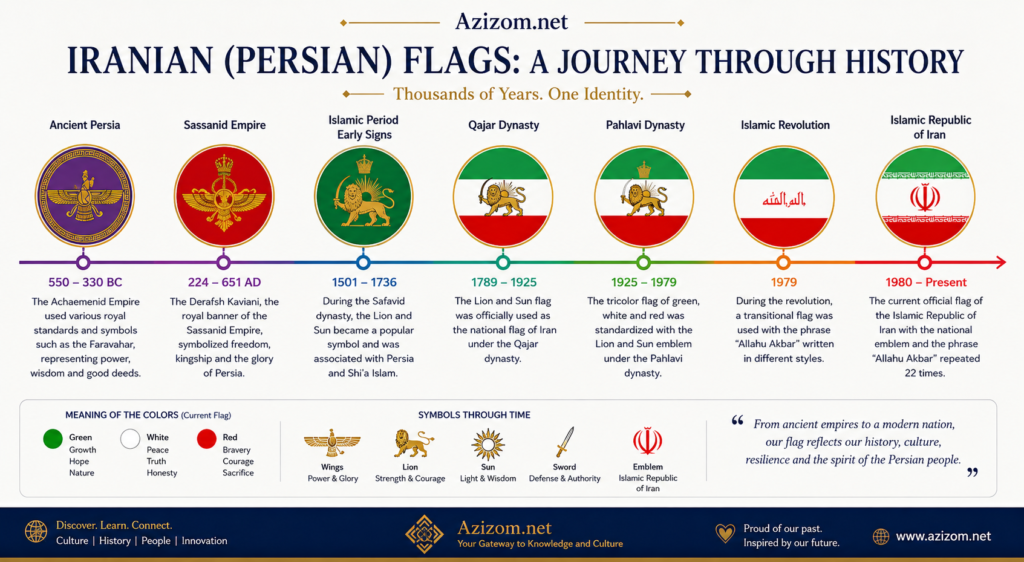
Long before modern national flags existed, Persian empires carried distinctive banners into battle and ceremonial events. The Achaemenid Empire (550–330 BCE), founded by Cyrus the Great, used royal standards that symbolized imperial authority and divine legitimacy.
Many historians associate early Persian symbolism with the Faravahar, an ancient emblem linked to Zoroastrian philosophy. Although not a national flag in the modern sense, it remains one of the most recognizable symbols of ancient Persian culture.
The Parthian and Sassanid empires later introduced their own military and royal standards, helping establish a tradition of visual symbols that represented Persian sovereignty and strength.
The Legendary Derafsh Kaviani
Among all historical Persian banners, none is more famous than the Derafsh Kaviani.
According to Persian legend, this banner originated during a popular uprising led by Kaveh the Blacksmith against a tyrannical ruler. What began as a symbol of resistance evolved into the royal standard of the Sassanid Empire.
The Derafsh Kaviani became associated with:
- Freedom and independence
- National unity
- Royal authority
- Persian resilience
For many historians and cultural scholars, the Derafsh Kaviani remains one of the most iconic symbols of pre-Islamic Iran and Persian identity.
The Rise of the Lion and Sun
Perhaps the most recognizable historical symbol of Iran is the Lion and Sun emblem.
The symbol gradually emerged during the medieval period and became increasingly prominent under the Safavid dynasty. Over time, it evolved into the official national emblem used by later Persian dynasties, particularly the Qajar and Pahlavi rulers.
The symbolism was powerful:
- The Lion represented courage, strength, and kingship.
- The Sun symbolized wisdom, prosperity, and enlightenment.
- The Sword, added in later designs, reflected defense and sovereignty.
For centuries, the Lion and Sun flag served as Iran’s most recognizable national symbol and became known around the world as the flag of Persia.
The Development of the Iranian Tricolor
During the nineteenth century, Iran gradually adopted the familiar green, white, and red color scheme that remains the basis of the national flag today.
These colors carried both cultural and historical significance:
Green
Associated with growth, nature, renewal, and hope.
White
A symbol of peace, honesty, and unity.
Red
Representing bravery, sacrifice, and determination.
The combination created a distinctive national identity while preserving connections to the country’s historical traditions.
The Modern Flag of Iran
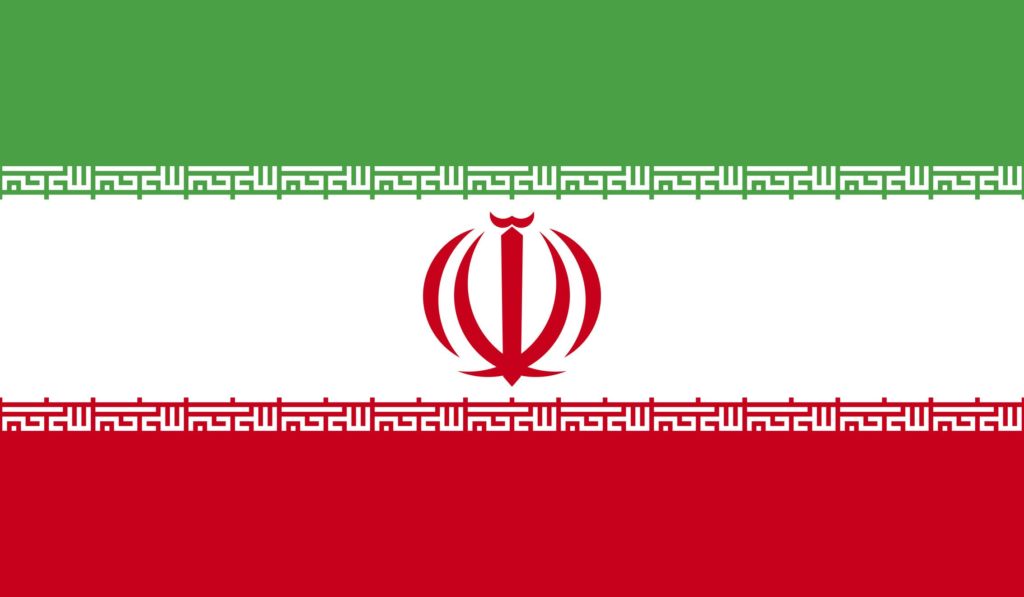
Following the Islamic Revolution of 1979, Iran adopted a new national flag that remains in use today.
Several significant changes were introduced:
- The Lion and Sun emblem was removed.
- A new central emblem was created to represent the Islamic Republic.
- The phrase “Allahu Akbar” was incorporated into the design and repeated along the borders between the color bands.
Despite these changes, the tricolor foundation of green, white, and red was retained, preserving continuity with earlier national flags.
What the Current Iranian Flag Represents
The modern Iranian flag combines national history with contemporary identity.
Many citizens view it as a symbol of:
- National sovereignty
- Cultural continuity
- Historical resilience
- Unity among the Iranian people
The flag is displayed during national celebrations, international sporting events, cultural festivals, and official ceremonies both inside Iran and among Iranian communities around the world.
Iranian Flags as Cultural Symbols
The history of Iranian flags extends beyond politics. These symbols appear throughout Persian art, literature, historical manuscripts, architecture, and cultural celebrations.
For many people of Persian heritage, historical flags represent a connection to:
- Ancient civilization
- Persian traditions
- Cultural pride
- Shared historical memory
Whether viewed through a historical, cultural, or artistic lens, Iranian flags continue to inspire interest among scholars, travelers, and history enthusiasts worldwide.
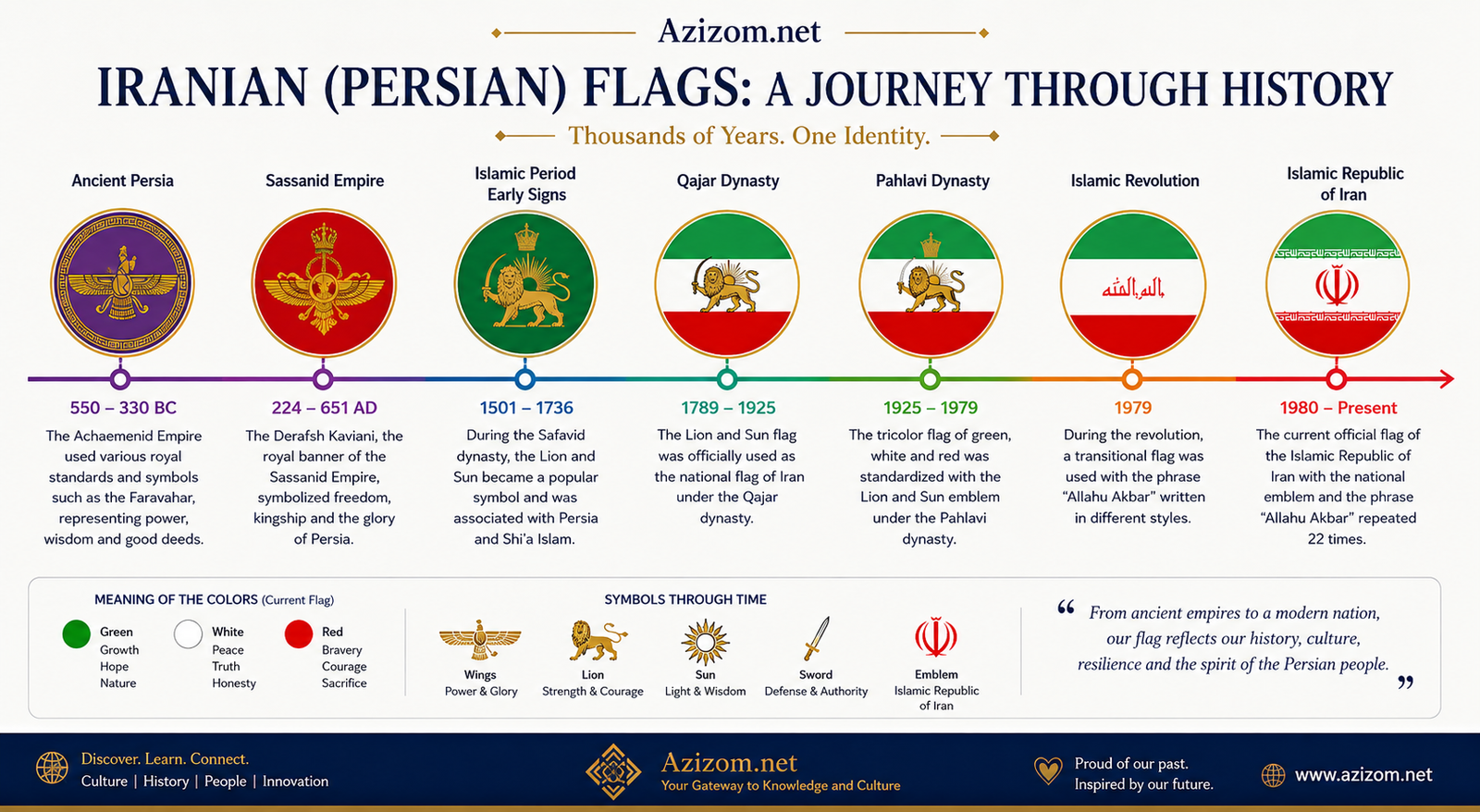
A Timeline of Iranian Flag Evolution
Ancient Persia (550–330 BCE)
Imperial standards of the Achaemenid Empire.
Parthian Era (247 BCE–224 CE)
Royal banners and military symbols.
Sassanid Empire (224–651 CE)
The legendary Derafsh Kaviani.
Safavid Dynasty (1501–1736)
Early development of the Lion and Sun motif.
Qajar Dynasty (1789–1925)
Official adoption of the Lion and Sun flag.
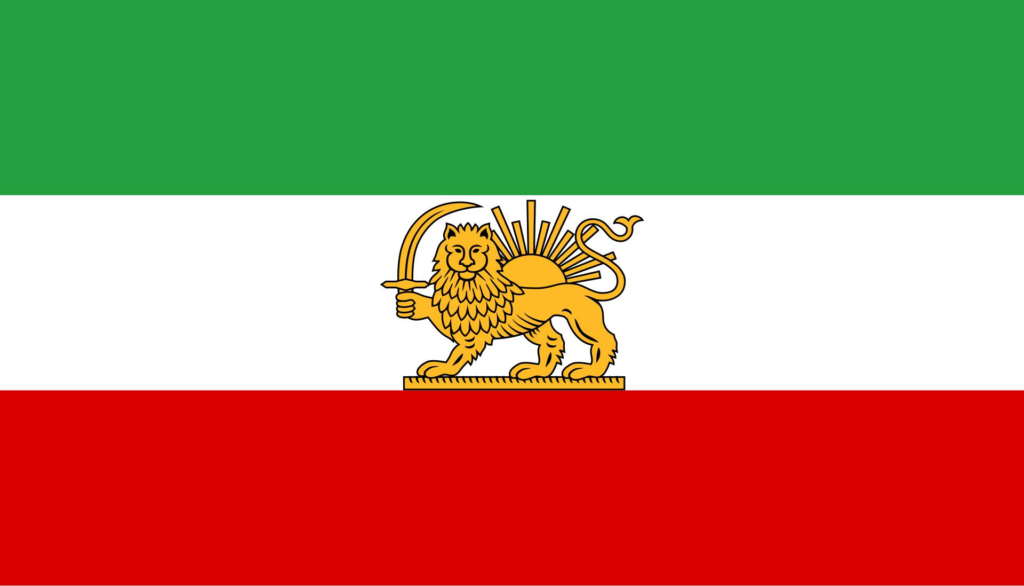
Pahlavi Dynasty (1925–1979)
Standardized tricolor with Lion and Sun emblem.
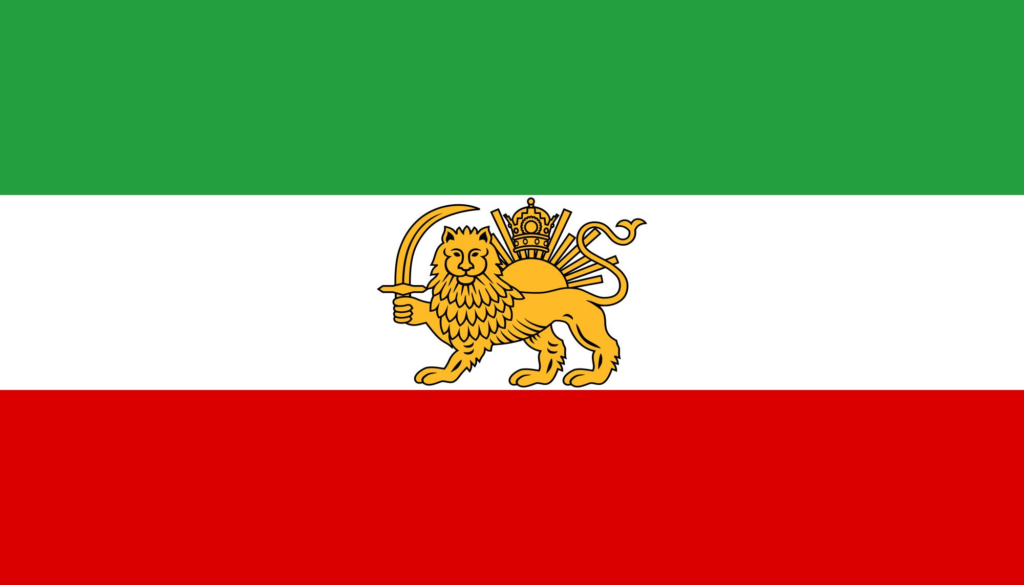
Islamic Revolution (1979)
Transition to a new national identity.
Modern Iran (1980–Present)
Current flag of the Islamic Republic of Iran.
Conclusion
The Iranian flag is more than a national emblem—it is a visual journey through thousands of years of Persian history. From ancient imperial banners and the legendary Derafsh Kaviani to the famous Lion and Sun and the modern tricolor, each stage reflects a different chapter in the story of Iran.
Understanding the history of the Iranian flag provides valuable insight into the cultural heritage, resilience, and identity of one of the world’s oldest civilizations. As a symbol of both history and continuity, the flag remains an enduring representation of the Persian spirit and the remarkable legacy of Iran.