Iranian foods A Culinary Journey Through Persia’s Rich History
Iranian foods By Azizom.net
Iranian foods, often known as Persian cuisine, is far more than a collection of recipes. It is a reflection of thousands of years of history, culture, trade, and tradition. From the royal banquets of ancient Persian kings to modern family gatherings, food has always played a central role in Iranian society.
Renowned for its fragrant saffron, delicate rice dishes, fresh herbs, and perfectly balanced flavors, Persian cuisine is considered one of the oldest and most influential culinary traditions in the world.
The Origins of Iranian Cuisine
The history of Iranian foods dates back to the ancient Persian Empire, one of the world’s greatest civilizations. Located at the crossroads of Asia, the Middle East, and Europe, Persia became a meeting point for cultures, ingredients, and culinary techniques.
Merchants traveling along the Silk Road introduced new spices, fruits, and cooking methods, while Persian chefs developed sophisticated dishes that combined sweet, sour, savory, and aromatic flavors. Many cooking traditions that originated in Persia later influenced cuisines across Central Asia, the Caucasus, India, Turkey, and the Arab world.
Today, Iranian cuisine remains deeply connected to its historical roots while continuing to evolve with regional specialties and modern influences.
What Makes Persian Foods Unique?
Unlike many cuisines that rely heavily on spicy heat, Iranian foods focuses on harmony and balance. Persian cooks carefully combine ingredients to create layers of flavor without overpowering the palate.
Key characteristics of Persian cuisine include:
- Extensive use of fresh herbs
- Premium saffron and aromatic spices
- Slow-cooked stews and braised dishes
- High-quality rice preparation
- Sweet and sour flavor combinations
- Seasonal fruits, nuts, and vegetables
- Strong emphasis on hospitality and sharing meals
Every meal tells a story of family, heritage, and tradition.
Most Famous Iranian Foods and Their Origins
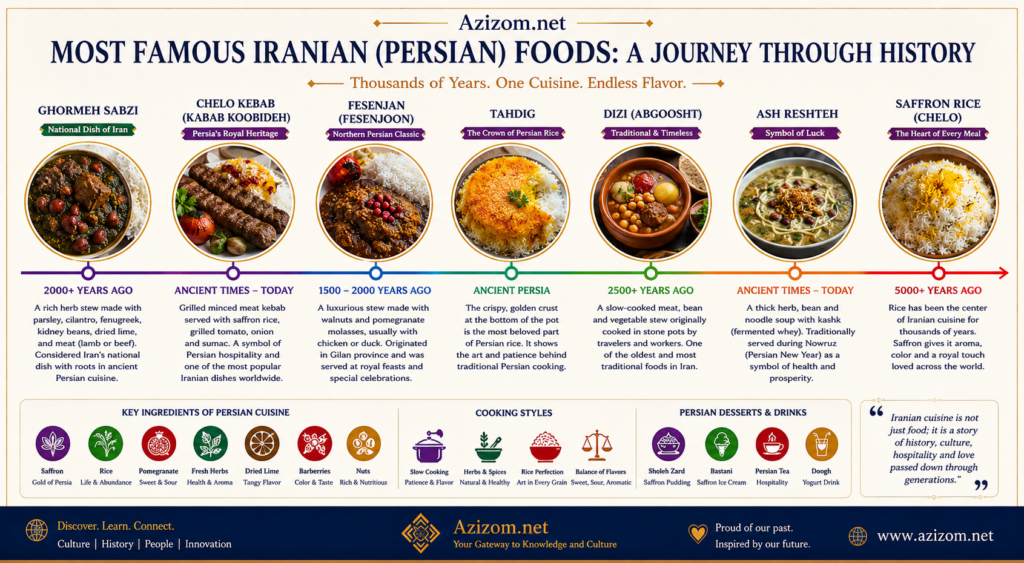
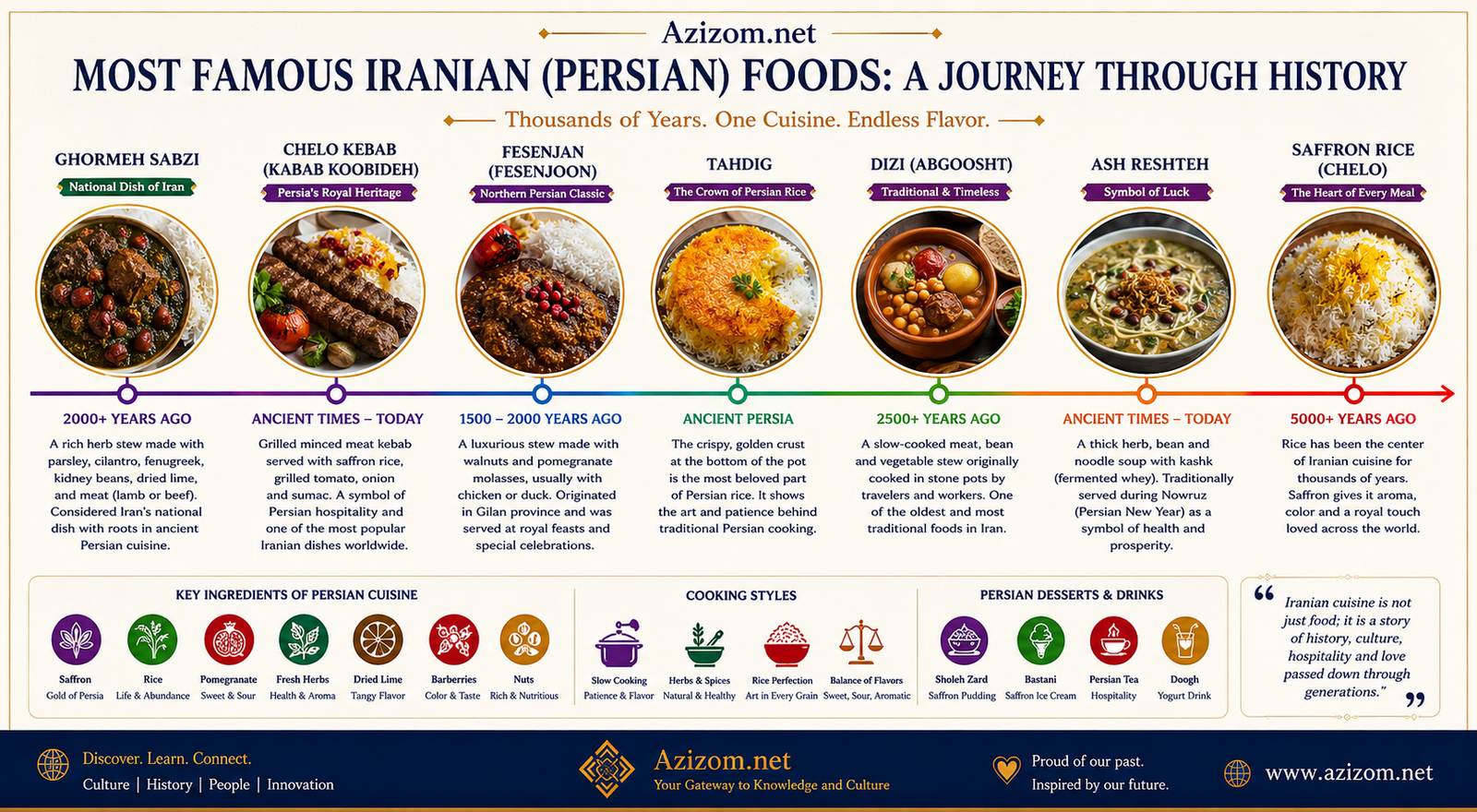
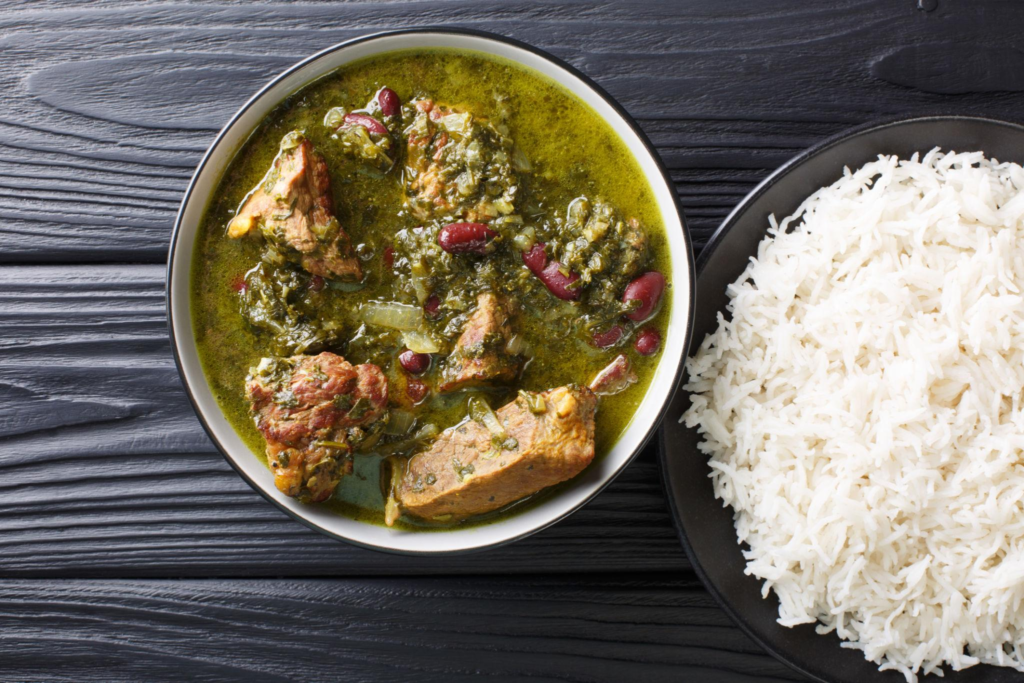
Ghormeh Sabzi – The National Dish of Iran
Origin: Ancient Persia
Often called the national dish of Iran, Ghormeh Sabzi is a rich herb stew made with parsley, cilantro, fenugreek, kidney beans, dried limes, and tender meat.
For centuries, herbs have been central to Persian cooking, making this dish a symbol of Iran’s agricultural heritage and culinary identity.
Quick Description: A fragrant herb stew with dried lime and meat, considered the heart of Persian home cooking.
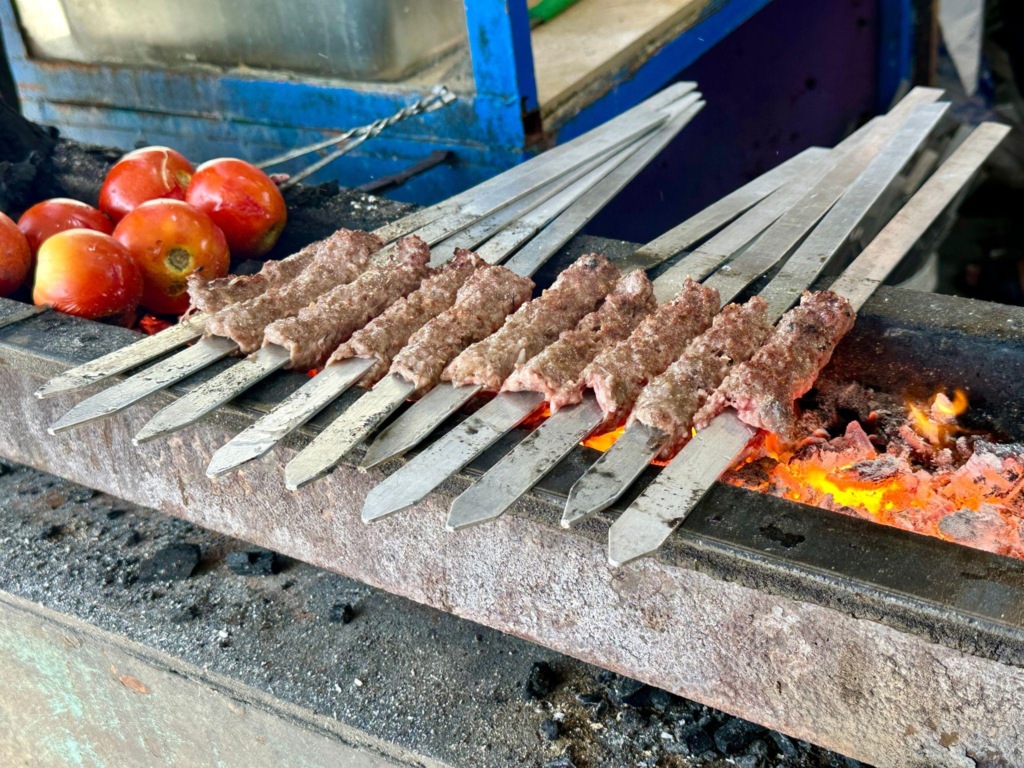
Chelo Kebab (Kabab Koobideh)
Origin: Traditional Persian grilling culture
Chelo Kebab is one of Iran’s most famous foods internationally. It combines grilled kebab with fluffy saffron-infused rice, grilled tomatoes, and onions.
The dish became particularly popular during the Qajar era and remains a staple of Iranian restaurants worldwide.
Quick Description: Grilled minced meat kebab served with saffron rice and traditional accompaniments.
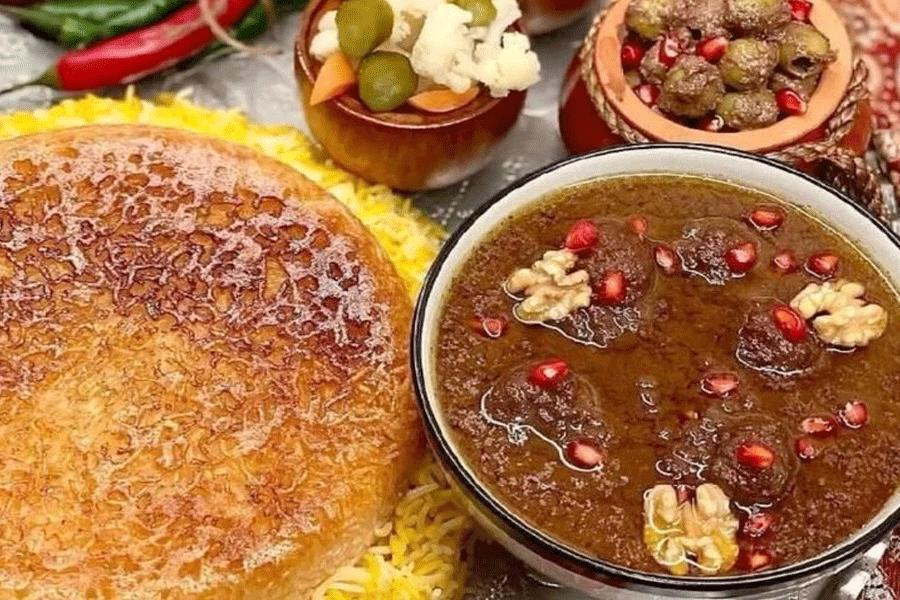
Fesenjan (Fesenjoon)
Origin: Gilan Province, Northern Iran
Fesenjan is a luxurious Persian stew made from ground walnuts and pomegranate molasses, typically cooked with chicken or duck.
Its distinctive sweet-and-sour flavor profile makes it one of the most unique dishes in Iranian cuisine.
Quick Description: A rich walnut and pomegranate stew known for its complex flavor and royal heritage.
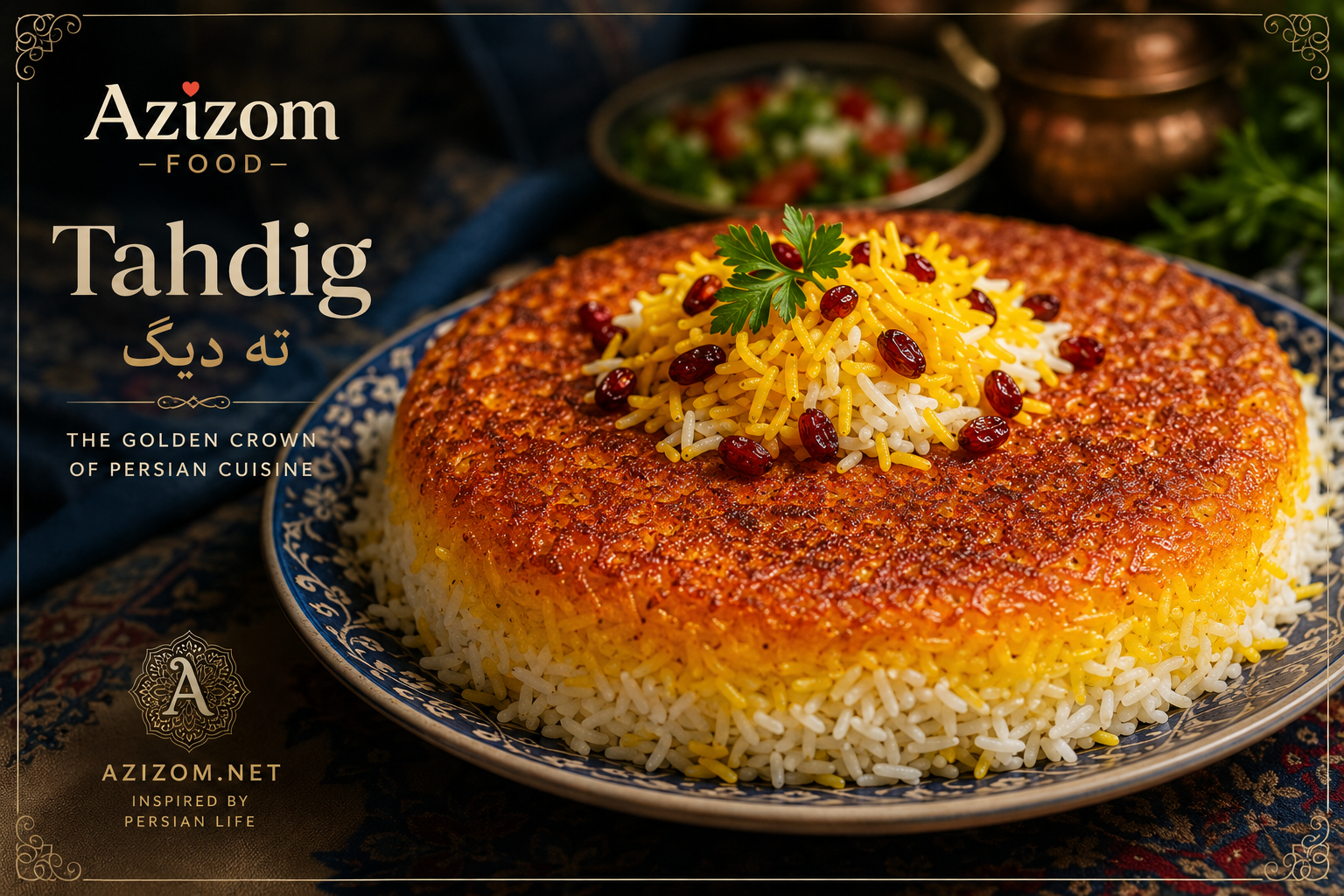
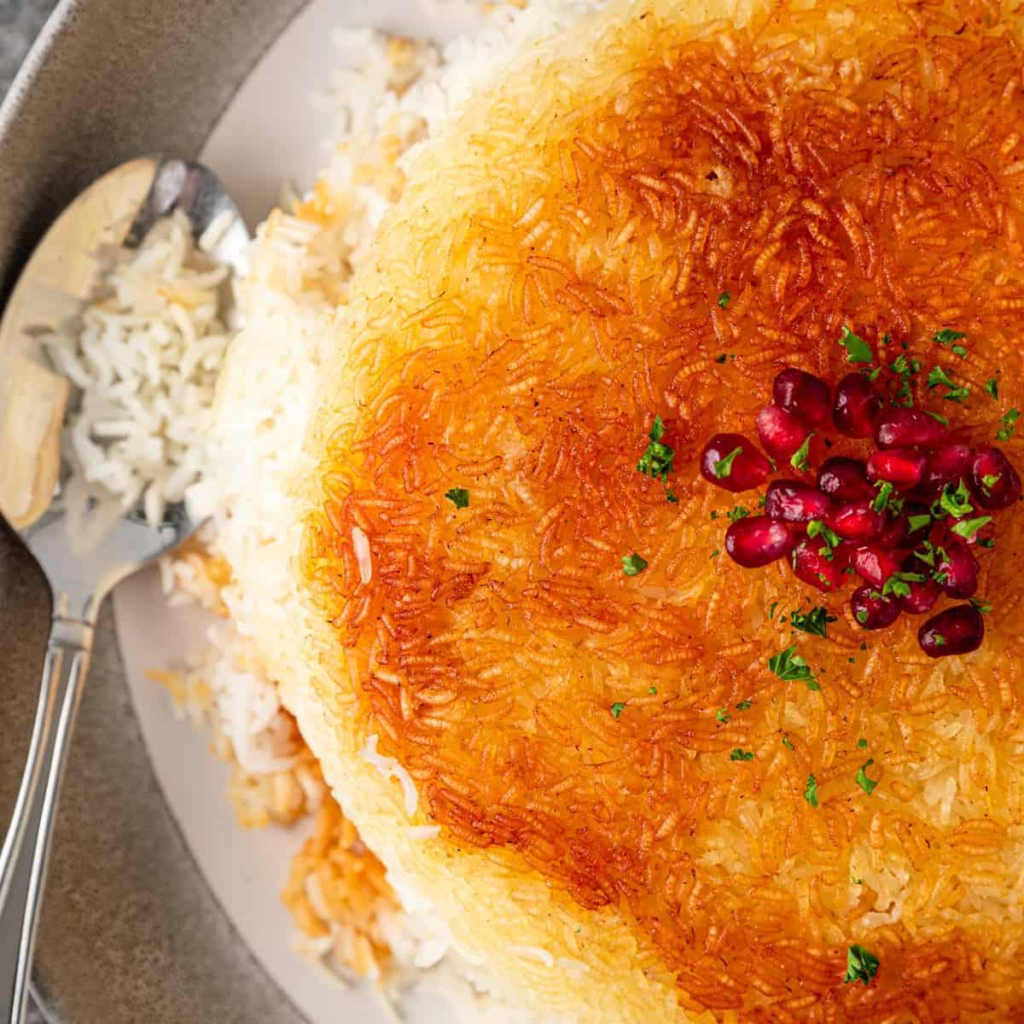
Tahdig
Origin: Traditional Persian rice preparation
Tahdig, meaning “bottom of the pot,” refers to the crispy golden layer that forms beneath cooked rice.
For many Iranians, Tahdig is the most prized part of a meal and a sign of a skilled cook.
Quick Description: Crispy golden rice crust celebrated as a Persian culinary masterpiece.
Dizi (Abgoosht)
Origin: Traditional rural and traveler cuisine
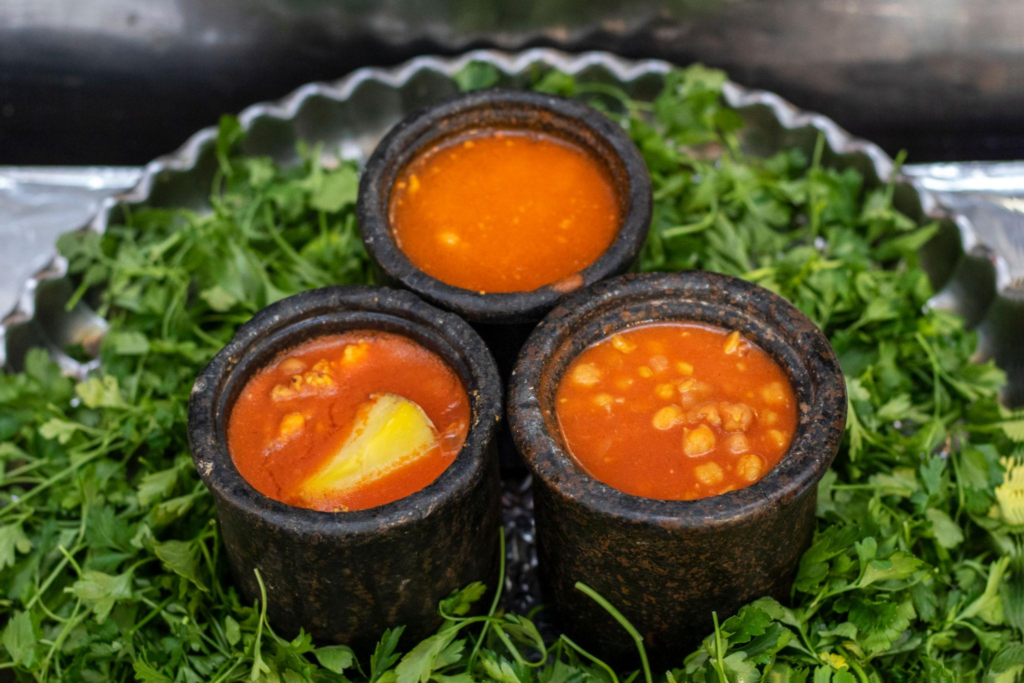
Dizi is one of Iran’s oldest dishes, traditionally cooked in stone pots using lamb, chickpeas, beans, potatoes, and tomatoes.
Historically, it was a hearty meal enjoyed by workers, travelers, and families across the country.
Quick Description: A slow-cooked meat and bean stew representing centuries of Persian comfort food.
Ash Reshteh
Origin: Persian New Year traditions
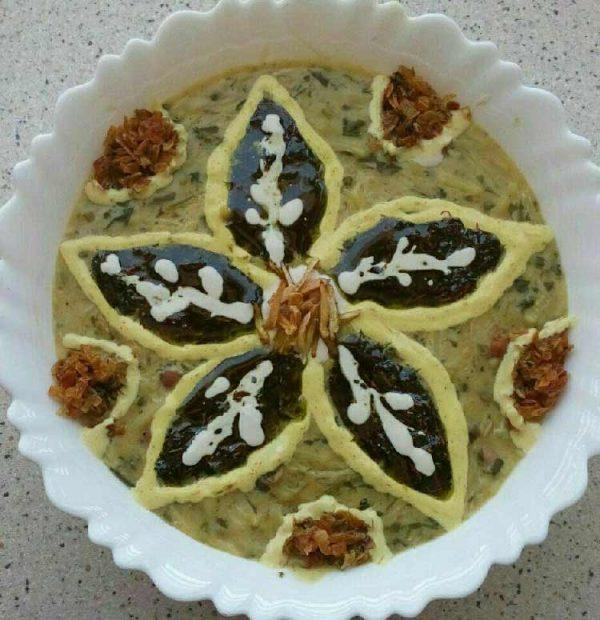
Ash Reshteh is a thick noodle and herb soup often served during Nowruz, the Persian New Year celebration.
The dish symbolizes good fortune, prosperity, and new beginnings.
Quick Description: A nourishing herb and noodle soup associated with celebration and renewal.
Zereshk Polo
Origin: Northern and Central Iran
This elegant rice dish combines saffron rice with bright red barberries and chicken.
The contrast between sweet, tart, and savory flavors makes it a favorite at celebrations and family gatherings.
Quick Description: Saffron rice topped with tangy barberries and tender chicken.
Baghali Polo
Origin: Northern Iran
Baghali Polo combines fragrant rice with dill and broad beans and is commonly served with lamb.
It is frequently prepared during weddings, holidays, and special occasions.
Quick Description: Aromatic dill and broad bean rice traditionally paired with lamb.
Essential Ingredients of Persian Cooking
Several ingredients define the character of Iranian cuisine:
Saffron
Known as “red gold,” Iranian saffron is considered the finest in the world and adds color, aroma, and flavor to countless dishes.
Rice
Rice is the foundation of many Persian meals and is prepared using techniques perfected over centuries.
Pomegranate
Used in sauces, stews, and drinks, pomegranate provides the sweet-and-sour flavor loved in Persian cooking.
Fresh Herbs
Parsley, mint, cilantro, dill, and fenugreek appear in many traditional recipes.
Dried Lime
A uniquely Persian ingredient that adds depth and citrus notes to stews.
Barberries
These small ruby-red berries contribute a pleasant tartness to rice dishes.
The Cultural Importance of Food in Iran
In Iranian culture, food is closely tied to hospitality. Guests are welcomed with generous meals, tea, sweets, and warm conversation.
Family recipes are often passed down through generations, preserving culinary traditions that have survived for centuries. Many dishes are connected to seasonal festivals, religious celebrations, and important life events.
Sharing food is considered an expression of respect, friendship, and community.
Persian Cuisine Around the World
Today, Persian restaurants can be found across Europe, North America, Australia, and the Middle East. The growing popularity of Iranian food reflects global appreciation for its healthy ingredients, balanced flavors, and rich cultural heritage.
From saffron rice and kebabs to traditional stews and desserts, Persian cuisine continues to introduce people around the world to the tastes of ancient Persia.
Conclusion
Iranian cuisine is a remarkable blend of history, culture, and artistry. Every dish carries a story that connects modern Iran to the civilizations of ancient Persia. Whether it is the herb-filled Ghormeh Sabzi, the royal flavors of Fesenjan, or the iconic Chelo Kebab, Persian food offers a culinary experience shaped by thousands of years of tradition.
At Azizom.net, we celebrate the culture, history, and heritage of Iran by exploring the stories behind its people, traditions, and remarkable cuisine.