Fesenjan (Fesenjoon) Recipe – The Ultimate Persian Walnut & Pomegranate Stew Guide
Persian Name: فسنجان
Preparation Time: 20 Minutes
Cooking Time: 2 Hours
Total Time: 2 Hours 20 Minutes
Servings: 4–6 People
Difficulty: Intermediate
Fesenjan (Fesenjoon): A Timeless Persian Masterpiece
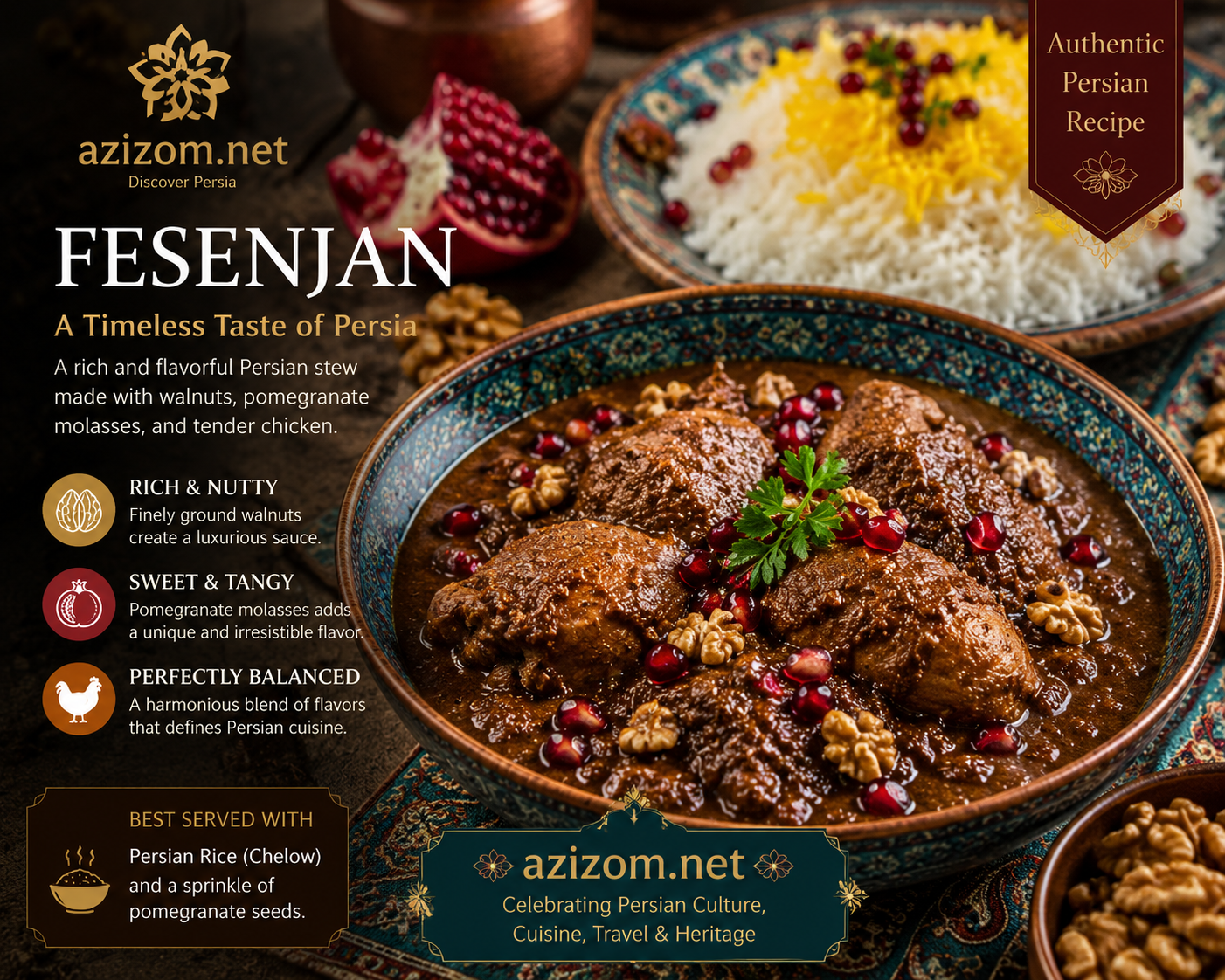
Among the hundreds of traditional dishes found throughout Iran, few are as beloved and iconic as Fesenjan (Fesenjoon). This luxurious Persian stew combines two ingredients that have been treasured in Iranian cuisine for thousands of years: walnuts and pomegranates.
The result is a rich, velvety stew with a unique sweet-and-sour flavour profile that cannot be compared to any other dish in the world. Slow-cooked chicken simmers in a sauce made from finely ground walnuts and pomegranate molasses until it becomes incredibly tender and infused with flavour.
At Azizom.net, we celebrate authentic Persian cuisine, and Fesenjan is a perfect example of how Iranian cooking transforms simple ingredients into extraordinary meals.
Whether you’re discovering Persian food for the first time or recreating memories of family gatherings in Iran, this detailed guide will help you prepare an authentic and delicious Fesenjan at home.
What Makes Fesenjan Special?
Unlike many stews that rely heavily on tomatoes or spices, Fesenjan gets its distinctive taste from:
- Ground walnuts
- Pomegranate molasses
- Slow cooking
- Carefully balanced sweetness and acidity
As the walnuts cook, they release natural oils that enrich the sauce and create the dish’s famous silky texture.
In Iran, many families consider Fesenjan a celebration dish and often serve it during:
- Weddings
- Yalda Night celebrations
- Family reunions
- Persian New Year gatherings
- Special dinners with guests
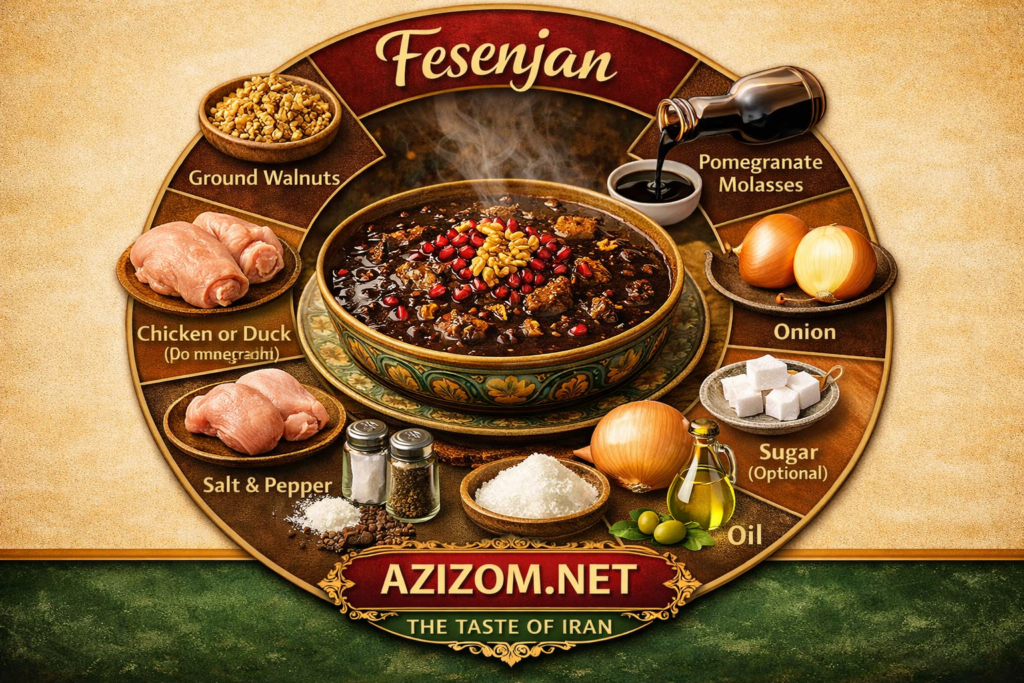
Ingredients
Main Ingredients
| Ingredient | Quantity |
|---|---|
| Chicken thighs or drumsticks | 500g |
| Ground walnuts | 300g |
| Onion (finely chopped) | 1 large |
| Pomegranate molasses | 3–4 tbsp |
| Vegetable oil | 2 tbsp |
| Water or chicken stock | 750ml |
| Turmeric | ½ tsp |
| Salt | To taste |
| Black pepper | To taste |
| Sugar (optional) | 1 tbsp |
Optional Garnishes
| Ingredient | Purpose |
|---|---|
| Pomegranate seeds | Freshness and colour |
| Crushed walnuts | Extra texture |
| Saffron rice | Traditional serving |
| Fresh parsley | Decoration |
Equipment Needed
- Large heavy-bottomed pot
- Wooden spoon
- Food processor
- Measuring spoons
- Sharp knife
- Cutting board
Step 1: Prepare the Walnuts
The secret to a great Fesenjan starts with the walnuts.
Use fresh walnuts and grind them until they resemble a coarse powder.
Do not over-process them into walnut butter.
Why This Matters
Fresh walnuts release natural oils during cooking, creating the rich texture that authentic Fesenjan is known for.
Old walnuts can produce bitterness and negatively affect the flavour.
Step 2: Brown the Onions
Heat the oil in a large pot over medium heat.
Add the chopped onions and sauté until golden brown.
This process usually takes 8–10 minutes.
The onions provide sweetness and depth to the finished stew.
Step 3: Season the Base
Add:
- Turmeric
- Black pepper
Cook for approximately one minute until fragrant.
The turmeric adds subtle warmth and a beautiful earthy aroma without overpowering the dish.
Step 4: Brown the Chicken
Add the chicken pieces to the pot.
Cook for 5–7 minutes until lightly golden.
You do not need to cook the chicken completely at this stage.
The goal is simply to develop flavour.
Once browned, remove the chicken and set aside.
Step 5: Toast the Walnuts
Add the ground walnuts to the pot.
Cook over medium heat while stirring continuously.
Toast for 5–7 minutes.
You’ll notice a wonderful nutty aroma filling your kitchen.
Important Tip
Never leave the walnuts unattended.
Walnuts can burn quickly and become bitter.
Step 6: Add Water or Stock
Slowly pour in:
- 750ml water
or - Chicken stock
Stir continuously while adding liquid.
This prevents lumps from forming.
Bring the mixture to a gentle boil.
Reduce heat immediately.
Step 7: Simmer the Walnut Sauce
Allow the walnut mixture to simmer gently for 30–40 minutes.
During this stage:
- Stir occasionally
- Monitor the consistency
- Add small amounts of water if necessary
As the walnuts cook, they gradually release oils.
This is one of the defining characteristics of authentic Fesenjan.
You may notice small pools of walnut oil appearing on the surface.
This is a sign that the dish is developing correctly.
Step 8: Add Pomegranate Molasses
Now add:
- 3–4 tablespoons pomegranate molasses
Stir thoroughly.
Immediately, the colour of the stew begins changing from light brown to a deeper reddish-brown hue.
Understanding Pomegranate Molasses
Pomegranate molasses is made by reducing pomegranate juice into a thick syrup.
It provides:
- Sweetness
- Tartness
- Complexity
- Rich colour
The quality of your pomegranate molasses can significantly influence the final result.
Step 9: Return the Chicken
Place the chicken back into the pot.
Ensure the pieces are mostly submerged.
Cover partially with a lid.
Simmer gently for:
60–90 minutes
The chicken should become fork-tender.
Step 10: Adjust the Flavour
Every Iranian family has their own preferred balance of sweetness and acidity.
Taste the stew and adjust accordingly.
For More Tartness
Add:
- Extra pomegranate molasses
For More Sweetness
Add:
- Sugar
- Honey (optional)
For More Depth
Allow additional simmering time.
The longer Fesenjan cooks, the richer it becomes.
Traditional Regional Variations
Northern Iran Style
In the lush Caspian regions of Iran, particularly Gilan, Fesenjan is often:
- More sour
- Darker in colour
- Less sweet
Tehran Style
In central Iran and Tehran:
- Sweet and sour flavours are balanced
- The sauce tends to be smoother
Family Recipes
Many households develop their own variations including:
- Duck instead of chicken
- Meatballs
- Lamb
- Turkey
Common Mistakes to Avoid
1. Using Old Walnuts
Old walnuts can ruin the flavour.
Always use fresh walnuts whenever possible.
2. Rushing the Cooking Process
Fesenjan is not a quick meal.
The magic happens through slow cooking.
3. Too Much Pomegranate Molasses
Adding too much at once can overwhelm the dish.
Always adjust gradually.
4. High Heat
High temperatures can scorch the walnuts.
Maintain a gentle simmer throughout cooking.
How to Serve Fesenjan
Traditionally, Fesenjan is served with:
Persian Steamed Rice (Chelow)
The fluffy rice perfectly absorbs the rich sauce.
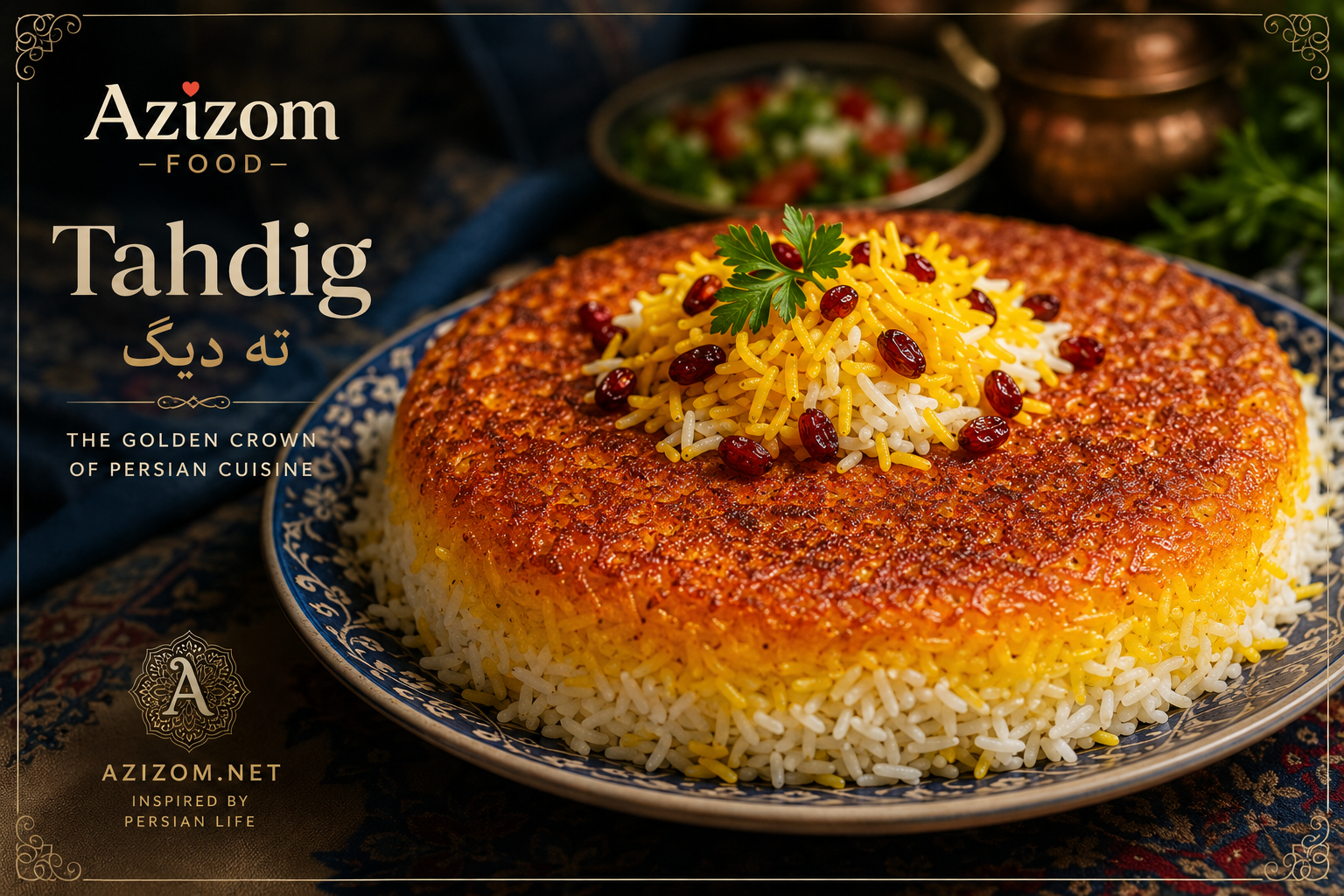
Tahdig
Crispy Persian rice at the bottom of the pot is an excellent accompaniment.
Shirazi Salad
The fresh vegetables provide a refreshing contrast.
Fresh Herbs
Mint, basil, parsley and tarragon pair beautifully with Fesenjan.
Suggested Serving Presentation
- Place steamed saffron rice on a large serving platter.
- Spoon the Fesenjan alongside or over the rice.
- Garnish with:
- Pomegranate seeds
- Crushed walnuts
- Fresh herbs
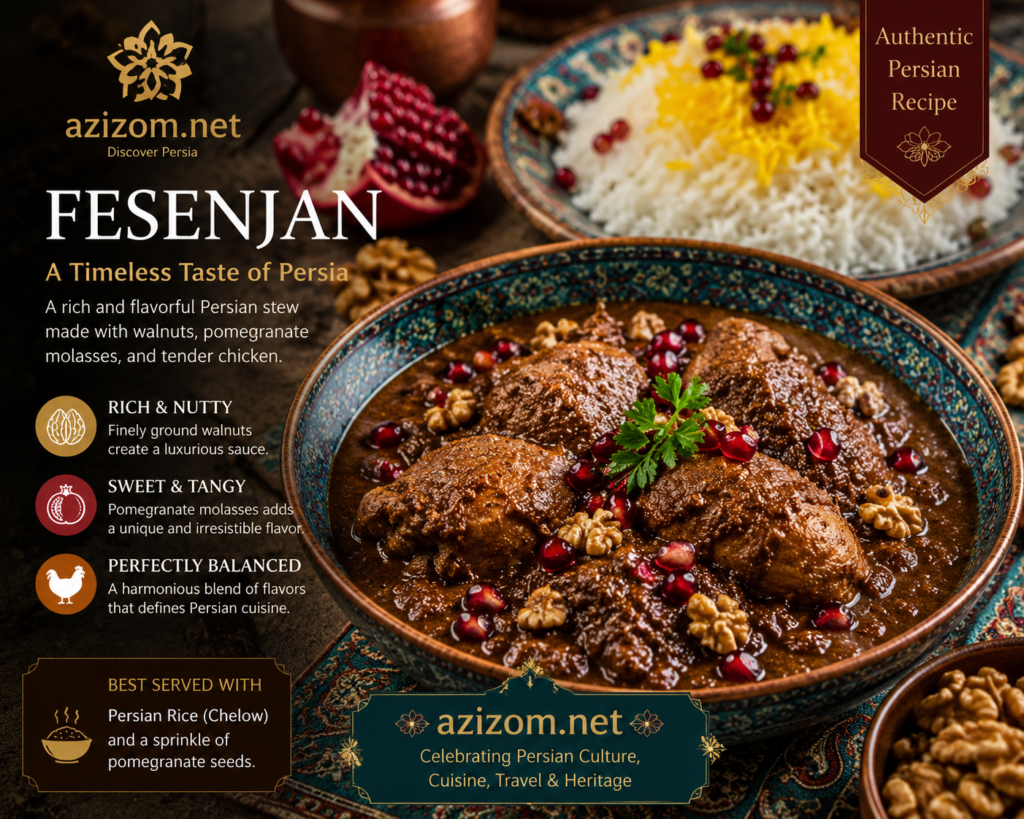
The deep brown colour of the stew contrasted with bright red pomegranate seeds creates a stunning presentation.
Storage Instructions
Refrigerator
Store in an airtight container for up to 4 days.
Freezer
Freeze for up to 3 months.
Thaw overnight in the refrigerator before reheating.
Reheating Tips
Reheat slowly over low heat.
Add a small amount of water if the sauce becomes too thick.
Many Iranians believe Fesenjan tastes even better the following day because the flavours continue to develop.
Nutritional Information (Approximate Per Serving)
| Nutrient | Amount |
|---|---|
| Calories | 520 kcal |
| Protein | 30g |
| Carbohydrates | 14g |
| Fat | 38g |
| Fibre | 4g |
| Sugar | 8g |
My Experience
One of the most memorable aspects of making Fesenjan is watching the transformation that occurs during cooking. What begins as a simple mixture of walnuts and water slowly develops into a luxurious sauce filled with depth and complexity.
The aroma of toasted walnuts combined with pomegranate molasses creates a fragrance that instantly transports many Iranians back to childhood family gatherings and festive occasions.
Patience is the key ingredient. While modern life often encourages quick meals, Fesenjan rewards those who take their time.
Key Takeaways
✅ One of Iran’s most famous traditional dishes
✅ Combines walnuts and pomegranate molasses
✅ Rich, nutty, sweet-and-sour flavour
✅ Best cooked slowly over low heat
✅ Perfect for family meals and celebrations
✅ Tastes even better the next day
✅ Traditionally served with Persian rice
Related Persian Recipes
If you enjoyed this Fesenjan recipe, you may also like:
Ghormeh Sabzi
Iran’s beloved herb stew featuring kidney beans and dried lime.
Khoresht Gheimeh
A comforting split pea and beef stew topped with crispy potatoes.
Zereshk Polo
Saffron rice with barberries and chicken.
Tahchin
A beautiful saffron rice cake with chicken and yoghurt.
Ash Reshteh
A hearty Persian noodle and herb soup.
Frequently Asked Questions
Can I make Fesenjan vegetarian?
Absolutely.
Popular vegetarian substitutes include:
- Pumpkin
- Butternut squash
- Mushrooms
- Aubergine
- Tofu
Why is my Fesenjan too thick?
Add small amounts of warm water while simmering.
Why is my Fesenjan too sour?
Add a small amount of sugar or honey.
Why isn’t walnut oil appearing?
The walnuts may not have cooked long enough or may not be fresh.
Continue simmering patiently.
Disclaimer: This recipe is provided for informational and educational purposes only. Cooking times may vary depending on ingredients, equipment, and personal preferences. Always ensure poultry is fully cooked before consumption.
Affiliate Disclaimer: Azizom.net participates in various affiliate advertising programs, including the Amazon Services LLC Associates Program. As an Amazon Associate, we may earn from qualifying purchases made through links on our website. This comes at no additional cost to you and helps support the creation of authentic Persian food, travel, and cultural content.
All images used on Azizom.net are for illustrative and reference purposes only unless otherwise stated.
About Azizom.net
Azizom.net is dedicated to celebrating Persian culture, cuisine, travel, history, and heritage. Our mission is to share authentic Iranian recipes, cultural insights, travel guides, and stories that connect readers around the world with the beauty of Persia.
Website: www.azizom.net
Tagline: Inspired by Persian Life ❤️
Azizom.net — Celebrating Persian Culture, Cuisine, Travel, and Heritage.