Ghormeh Sabzi Recipe: The Ultimate Guide to Iran’s Most Beloved Herb Stew
By Azizom.net – Inspired by Persian Life
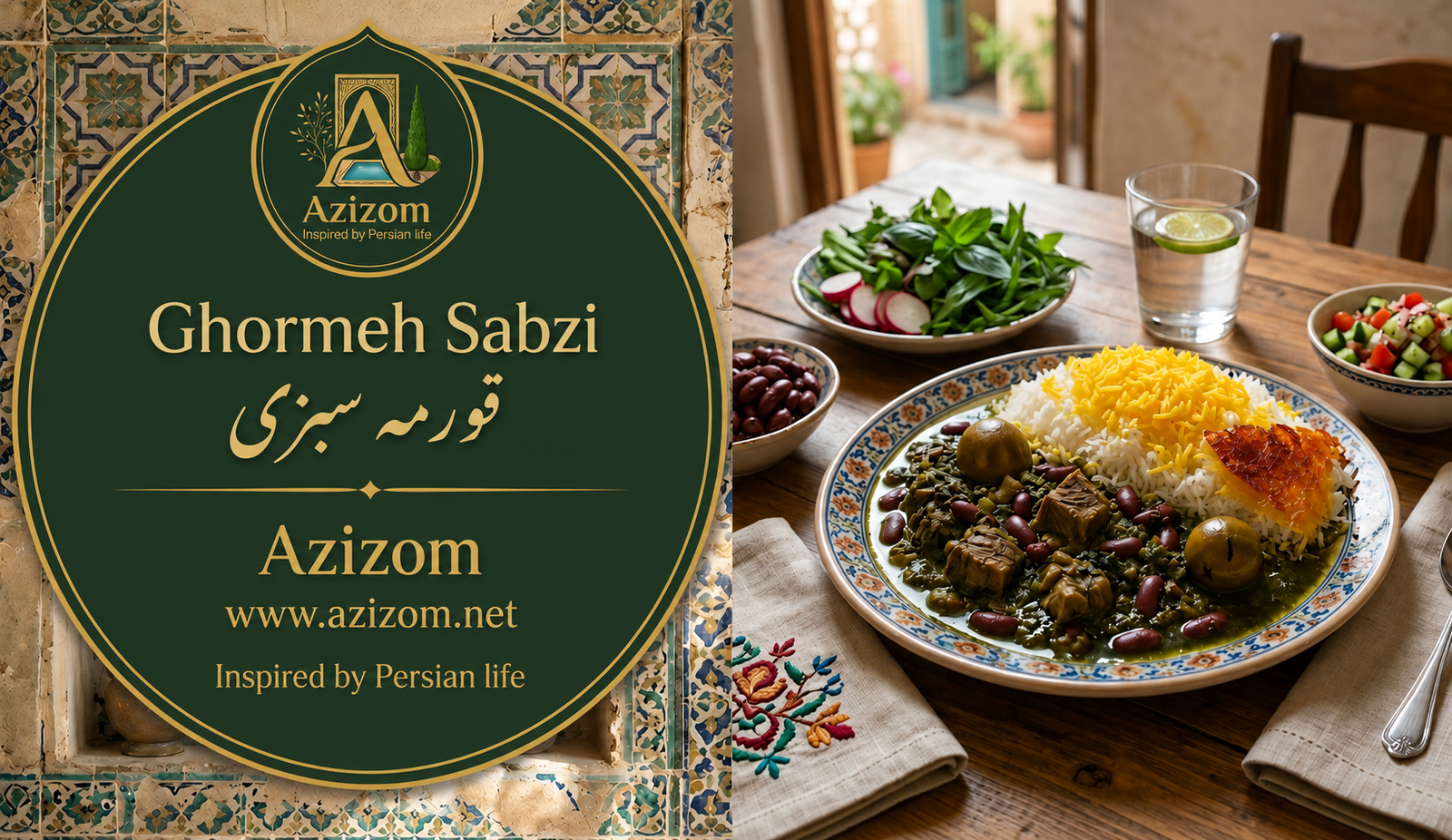
Few dishes capture the essence of Persian cuisine quite like Ghormeh Sabzi (قورمه سبزی). Rich in flavor, steeped in history, and deeply connected to Iranian culture, this iconic herb stew is often considered the national dish of Iran. Combining fresh herbs, tender meat, kidney beans, and dried Persian limes, Ghormeh Sabzi delivers a unique balance of earthy, savory, and tangy flavors that have delighted generations of families across the country.
For many Iranians, the aroma of Ghormeh Sabzi simmering on the stove evokes memories of family gatherings, festive occasions, and comforting home-cooked meals. While every household has its own treasured recipe, the heart of the dish remains the same: a slow-cooked stew where patience and quality ingredients create something truly extraordinary.
In this comprehensive guide from Azizom.net, you’ll learn everything you need to know about preparing authentic Ghormeh Sabzi at home, including ingredients, cooking techniques, serving suggestions, storage tips, and cultural insights.
What Is Ghormeh Sabzi?
Ghormeh Sabzi is a traditional Persian stew made primarily from fresh herbs, meat, beans, and dried limes.
The name itself tells the story:
- Ghormeh means braised or stewed meat.
- Sabzi means herbs or greens.
Unlike many stews around the world where meat takes center stage, Ghormeh Sabzi celebrates herbs as the primary ingredient. The generous use of parsley, cilantro, chives, and fenugreek gives the dish its distinctive dark green color and unmistakable aroma.
The secret to a truly authentic Ghormeh Sabzi lies not only in the ingredients but also in the cooking process. The herbs must be properly sautéed, the dried limes carefully prepared, and the stew slowly simmered to allow all the flavors to meld together.
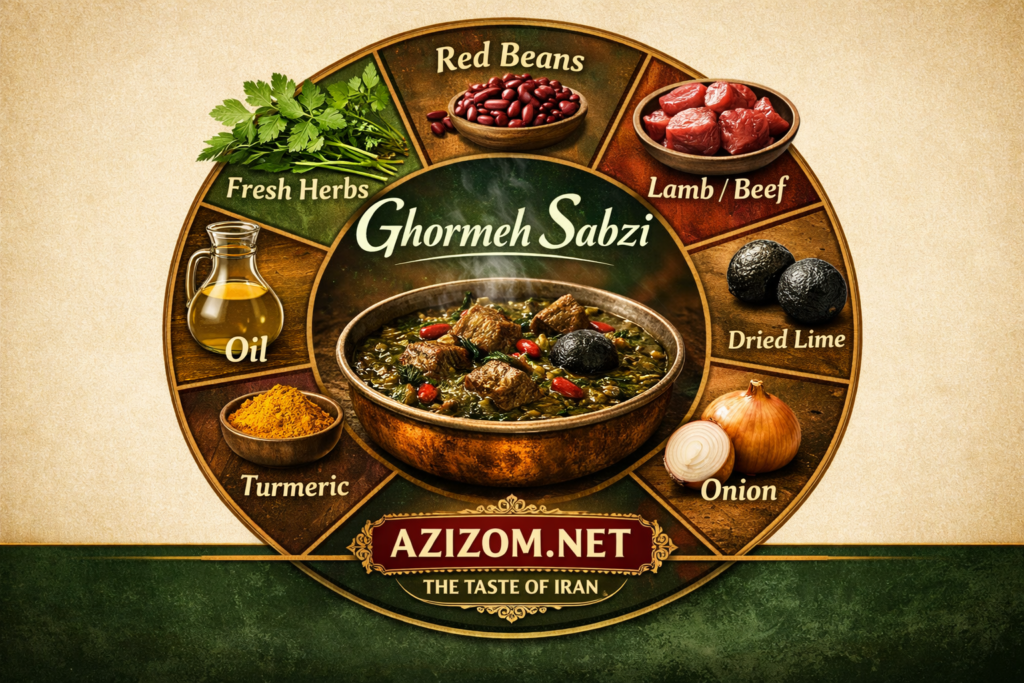
Ingredients Serves 4–6 People
Main Ingredients
| Ingredient | Quantity |
|---|---|
| Lamb or beef, cubed | 500g |
| Kidney beans | 1 cup |
| Large onion | 1 |
| Garlic cloves | 3 |
| Parsley (chopped) | 2 cups |
| Cilantro (chopped) | 1 cup |
| Chives or green onions (chopped) | 1 cup |
| Fenugreek leaves | 1 cup fresh or 2 tbsp dried |
| Dried Persian limes (Limoo Amani) | 4–5 |
| Turmeric | 1 tsp |
| Salt | To taste |
| Black pepper | To taste |
| Vegetable oil | 4 tbsp |
| Water | 6 cups |
Preparation Time
| Task | Time |
|---|---|
| Bean soaking | Overnight |
| Ingredient preparation | 20 minutes |
| Cooking herbs | 15 minutes |
| Meat preparation | 15 minutes |
| Simmering stew | 2.5–4 hours |
| Total Active Time | 50 minutes |
| Total Cooking Time | 3–5 hours |
Step 1: Soak the Kidney Beans
Properly preparing the beans is essential.
Place the kidney beans in a large bowl and cover them with water. Allow them to soak overnight, ideally for 8–12 hours.
Soaking helps:
- Reduce cooking time
- Improve texture
- Enhance digestibility
- Ensure even cooking
The next day, drain and rinse the beans thoroughly.
Transfer them to a saucepan, cover with fresh water, and boil for approximately 30 minutes. Once partially cooked, set them aside while preparing the stew.
Step 2: Prepare the Herbs
The herbs are the soul of Ghormeh Sabzi.
Wash all herbs thoroughly and remove any tough stems.
Finely chop:
- Parsley
- Cilantro
- Chives or green onions
- Fenugreek
The herbs should be chopped uniformly to create the characteristic texture of the stew.
Many Iranian cooks prefer hand-chopping rather than using a food processor, as it preserves the texture and prevents the herbs from becoming mushy.
Step 3: Fry the Herbs
This stage is one of the most important parts of the recipe.
Heat 2 tablespoons of oil in a large frying pan over medium heat.
Add the chopped herbs and sauté gently for 10–15 minutes.
The herbs should:
- Darken slightly
- Release their aroma
- Lose excess moisture
Avoid burning them, as overcooked herbs can introduce bitterness.
This frying process develops the deep, rich flavor that makes Ghormeh Sabzi so distinctive.
Step 4: Prepare the Meat Base
In a large cooking pot, heat the remaining oil.
Add the finely chopped onion and cook until golden brown.
Stir in:
- Garlic
- Turmeric
Cook for another minute until fragrant.
Add the cubed lamb or beef.
Brown the meat on all sides for approximately 8–10 minutes.
This step builds the savory foundation of the stew.
Step 5: Combine Ingredients
Add the sautéed herbs to the pot with the meat.
Then add:
- Cooked kidney beans
- Dried Persian limes
- Salt
- Black pepper
Pour in approximately 6 cups of water.
Stir everything gently and bring the mixture to a boil.
Step 6: Prepare the Dried Limes
Dried Persian limes are one of the defining ingredients of Ghormeh Sabzi.
Before adding them:
- Wash thoroughly.
- Pierce each lime several times using a fork or knife.
This allows the citrusy flavor to infuse the stew while preventing the limes from bursting.
The dried limes provide:
- Tanginess
- Depth
- Authentic Persian flavor
Without them, the dish loses much of its character.
Step 7: Simmer Slowly
Once boiling, reduce the heat to low.
Cover partially and simmer gently.
Recommended cooking times:
| Meat Type | Cooking Time |
|---|---|
| Lamb | 2.5–3 hours |
| Beef | 3–4 hours |
During cooking:
- Stir occasionally
- Add small amounts of water if needed
- Keep the stew thick rather than watery
Long cooking times allow the flavors to develop fully and create the rich consistency associated with authentic Ghormeh Sabzi.
Step 8: Final Seasoning
About 20 minutes before serving:
Taste the stew carefully.
Adjust:
- Salt
- Pepper
- Acidity
Some cooks add a small squeeze of fresh lime juice for extra brightness.
The finished stew should have a balance of:
- Herbaceous flavor
- Savory richness
- Gentle acidity
No single element should dominate.
How to Serve Ghormeh Sabzi
Ghormeh Sabzi is traditionally served with Persian steamed rice (Chelo).
The fluffy rice absorbs the rich stew beautifully and creates one of the most beloved food combinations in Iranian cuisine.
Traditional Accompaniments
Sabzi Khordan
A platter of fresh herbs including:
- Mint
- Basil
- Tarragon
- Radishes
Mast-o-Khiar
Persian yogurt with cucumber and herbs.
Shirazi Salad
A refreshing salad made from:
- Tomatoes
- Cucumbers
- Onions
- Lime juice
Torshi
Persian pickled vegetables.
Common Mistakes to Avoid
Not Frying the Herbs Long Enough
Proper herb frying creates the characteristic depth of flavor.
Using Too Much Fenugreek
Fenugreek is powerful. Excessive amounts can make the stew bitter.
Skipping Dried Limes
Authentic Ghormeh Sabzi requires dried Persian limes.
Cooking Too Quickly
The stew needs time for the flavors to develop.
Adding Too Much Water
Ghormeh Sabzi should be thick and rich, not soupy.
Traditional Variations
Every Iranian family has its own version of Ghormeh Sabzi.
Northern Iran
Often includes:
- Additional herbs
- Spinach
- Local greens
Central Iran
Follows the classic recipe most closely.
Southern Iran
Uses:
- More dried lime
- Stronger seasoning
Kurdish Regions
May include regional herbs unique to the area.
Storage and Reheating
One of the remarkable qualities of Ghormeh Sabzi is that it often tastes even better the next day.
Refrigeration
Store in an airtight container for up to 4 days.
Freezing
Freeze for up to 3 months.
Reheating
Warm slowly over low heat.
Add a splash of water if necessary.
Avoid rapid boiling, which can alter the texture.
Nutritional Information
Approximate values per serving:
| Nutrient | Amount |
|---|---|
| Calories | 380–450 |
| Protein | 25–30g |
| Carbohydrates | 20–25g |
| Fat | 15–20g |
| Fiber | 8–10g |
The dish is rich in:
- Protein
- Iron
- Vitamins A, C, and K
- Antioxidants
- Dietary fiber
The Cultural Importance of Ghormeh Sabzi
Few foods are as deeply woven into Iranian culture as Ghormeh Sabzi.
Across Iran, families gather around steaming pots of this beloved stew during:
- Weekend lunches
- Family reunions
- Holidays
- Special celebrations
For many Iranians living abroad, Ghormeh Sabzi serves as a connection to home and heritage.
The preparation itself often becomes a family activity, with multiple generations working together to wash herbs, prepare ingredients, and share stories.
This sense of connection and tradition is one reason why Ghormeh Sabzi remains one of the most treasured dishes in Persian cuisine.
My Experience
Having enjoyed countless versions of Ghormeh Sabzi across different regions and households, one thing becomes clear: no two recipes are exactly the same. Some families prefer stronger lime flavors, while others emphasize the herbs. Yet every version carries the same comforting essence that makes Ghormeh Sabzi one of Iran’s most beloved dishes.
The best bowls are often those cooked slowly, shared with family, and served alongside perfectly prepared Persian rice and fresh herbs.
Key Takeaways
✔ Ghormeh Sabzi is often considered Iran’s national dish.
✔ Fresh herbs are the most important ingredient.
✔ Dried Persian limes provide the signature tangy flavor.
✔ Slow cooking creates the best texture and depth.
✔ The stew is traditionally served with Persian rice.
✔ Many Iranians believe it tastes even better the next day.
✔ Every family has its own treasured variation.
Related Articles
- Fesenjan: Iran’s Famous Pomegranate and Walnut Stew
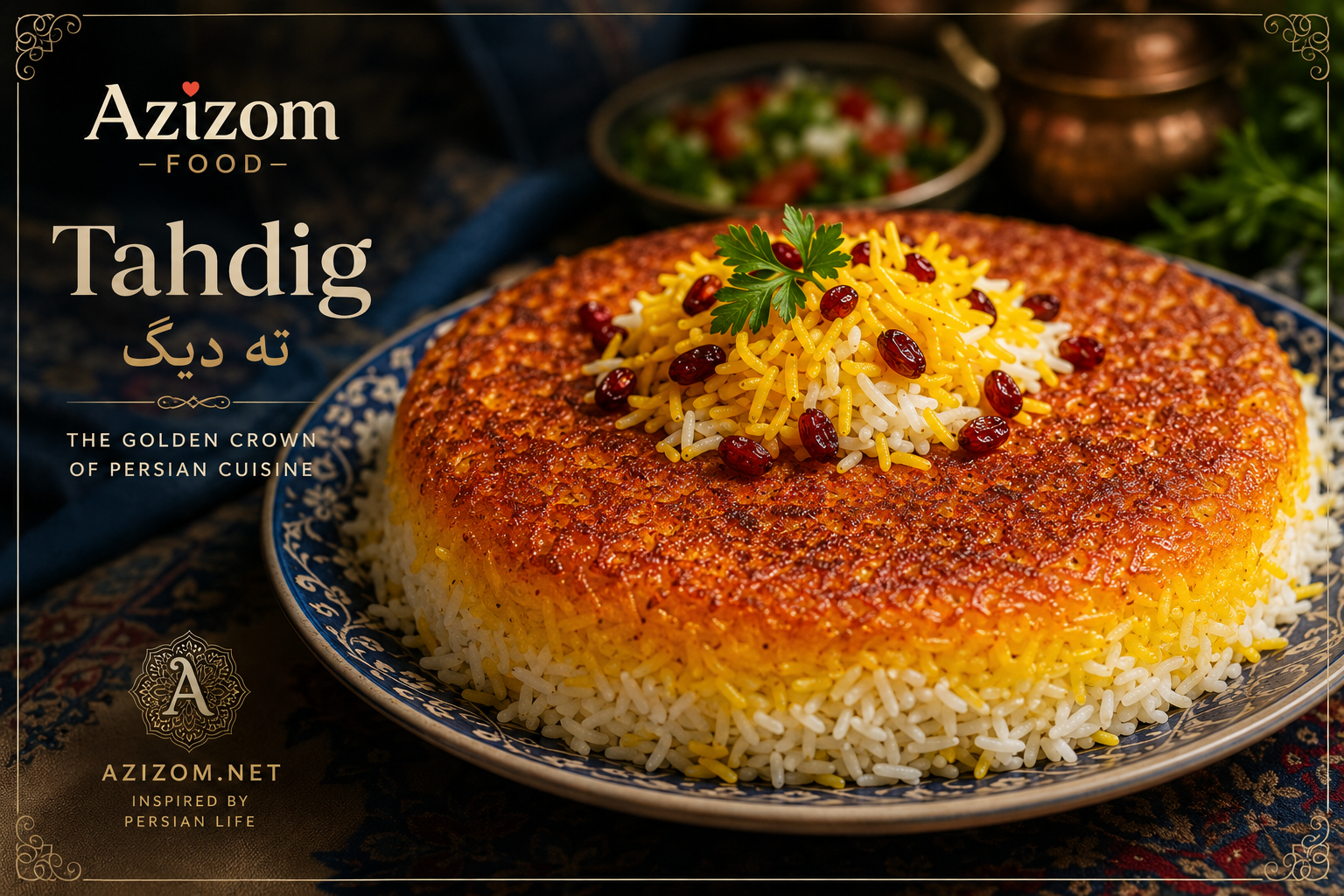
- Tahdig: The Crispy Crown of Persian Rice
- Chelo Kabab: Iran’s National Dish
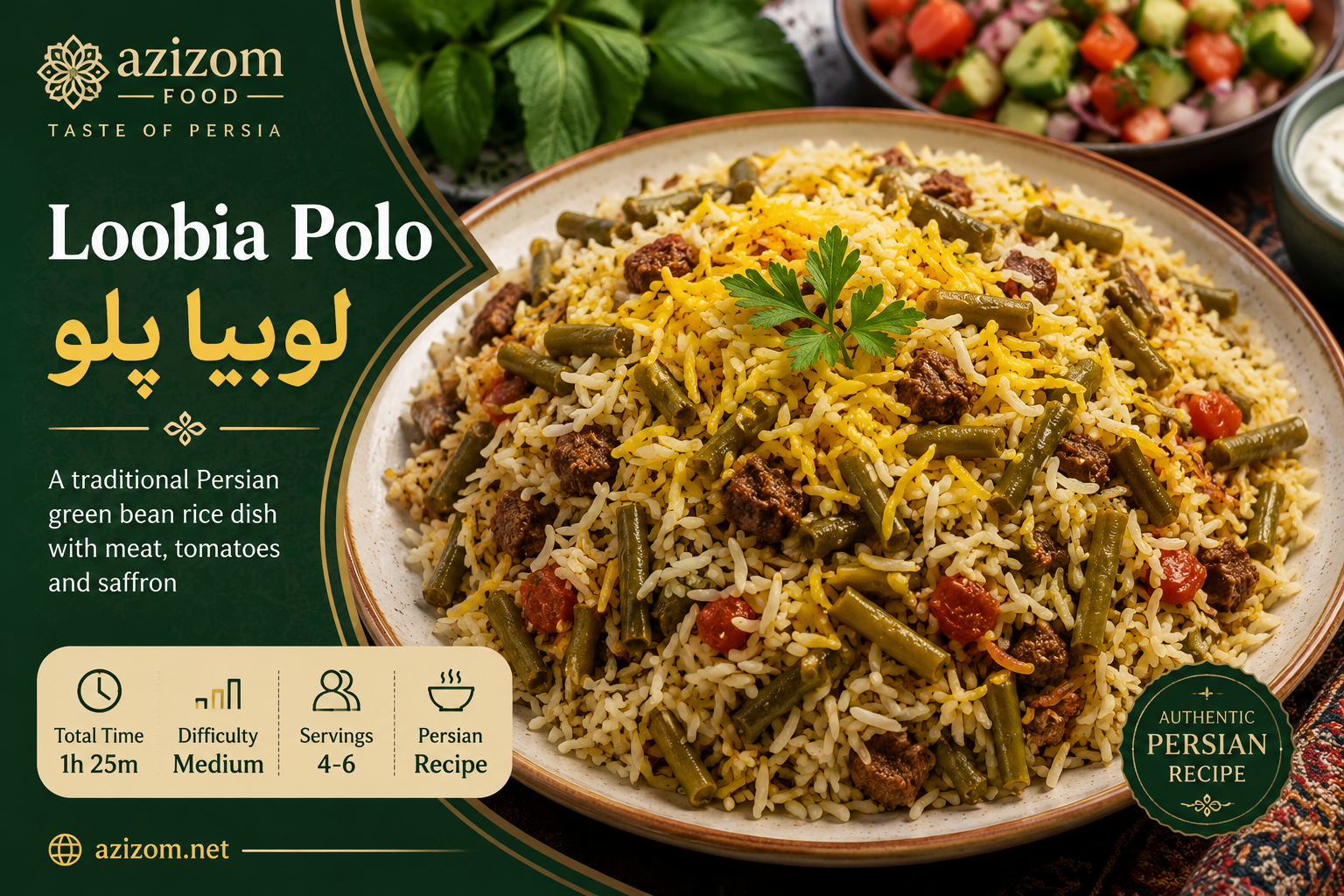
- Zereshk Polo: Persian Saffron Rice with Barberries
- 20 Traditional Iranian Foods Every Visitor Should Try
Disclaimer
This recipe is provided for informational and educational purposes only. Ingredient quantities and cooking times may vary depending on personal preference, regional traditions, and available ingredients.
All images are for reference purposes only.
Affiliate Disclaimer:
This article may contain affiliate links. If you purchase through these links, Azizom.net may earn a commission at no extra cost to you. As an Amazon Associate, we earn from qualifying purchases.
Azizom.net celebrates the rich culture, history, cuisine, destinations, and traditions of Iran, helping readers discover the authentic beauty of Persian heritage one story at a time.
All images are for reference purposes only.
www.azizom.net
Inspired by Persian Life