Zereshk Polo ba Morgh (زرشک پلو با مرغ)
Authentic Persian Barberry Rice with Saffron Chicken, The Complete Traditional Recipe
Published by Azizom.net
“The Taste of Iran – Inspired by Persian Life”
Zereshk Polo at a Glance
| Recipe Information | Details |
|---|---|
| Persian Name | زرشک پلو با مرغ |
| English Name | Barberry Rice with Saffron Chicken |
| Cuisine | Persian (Iranian) |
| Course | Main Course |
| Difficulty | Medium |
| Preparation Time | 30 Minutes |
| Soaking Time | 1–2 Hours |
| Cooking Time | 90 Minutes |
| Total Time | Around 3 Hours |
| Servings | 6 |
| Calories | Approximately 700 kcal |
Introduction
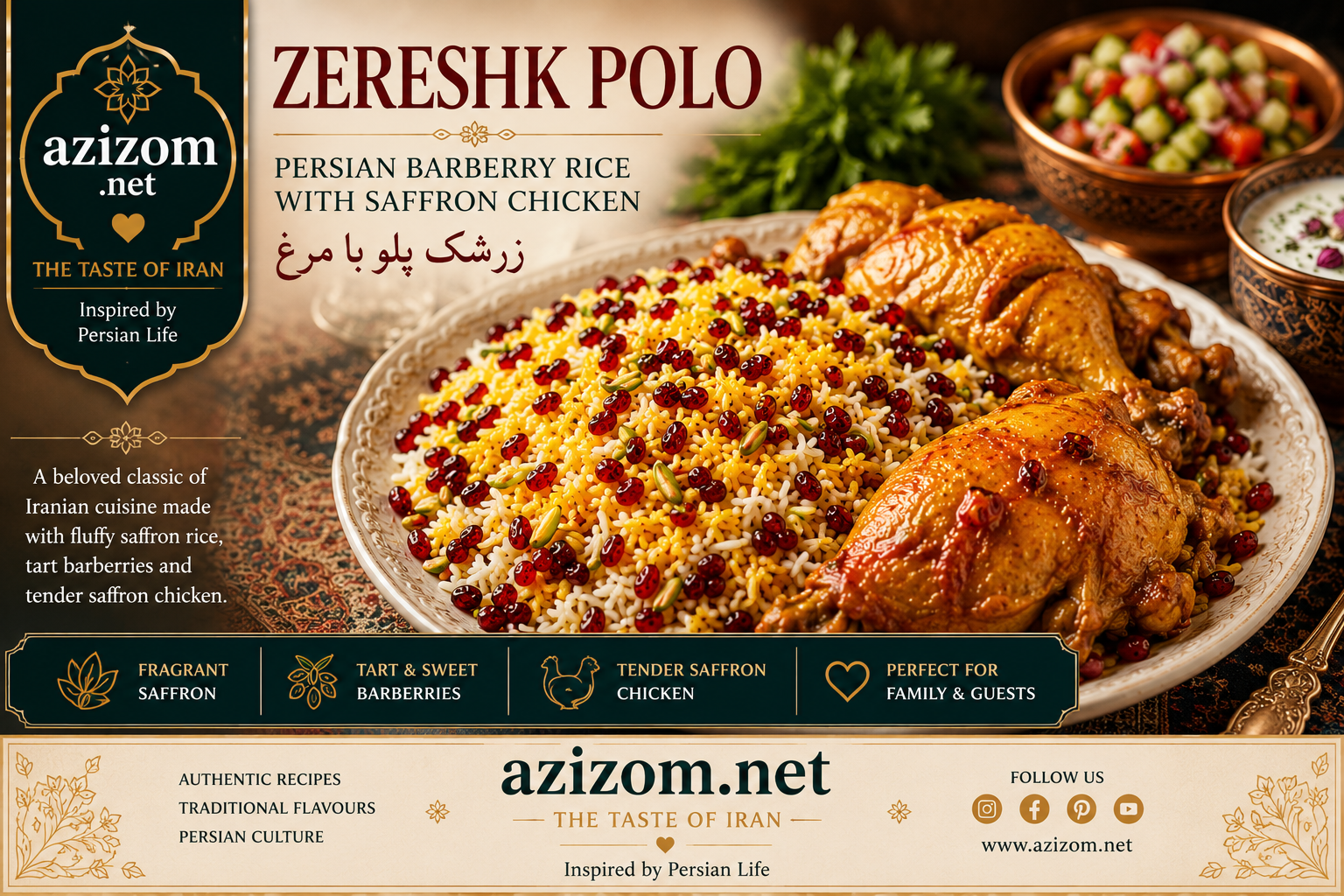
Few Persian dishes are as instantly recognisable as Zereshk Polo ba Morgh. With its snowy white basmati rice, vibrant saffron, jewel-like crimson barberries, and succulent chicken, this classic meal is one of the finest examples of the elegance of Iranian cuisine.
Across Iran, Zereshk Polo is more than a recipe—it is a dish of celebration. It is served at weddings, family gatherings, religious holidays, and festive occasions, symbolising hospitality, abundance, and tradition. Every grain of rice is carefully prepared, every strand of saffron is treasured, and every handful of barberries brings a burst of sweet-tart flavour that makes this dish unforgettable.
At Azizom.net, our goal is to preserve authentic Persian cooking while making it approachable for home cooks around the world. This guide follows traditional Iranian techniques with practical tips to help you create restaurant-quality Zereshk Polo in your own kitchen.
What Makes Zereshk Polo Special?
Unlike many rice dishes, Zereshk Polo relies on balance rather than complexity. The fluffy basmati rice provides a delicate base, saffron adds its unmistakable floral aroma and golden colour, while tart barberries contrast beautifully with the rich, savoury chicken.
The dish also showcases one of the defining features of Persian cuisine—Dam Kardan, the traditional steaming technique that produces perfectly separated rice grains and the prized crispy Tahdig.
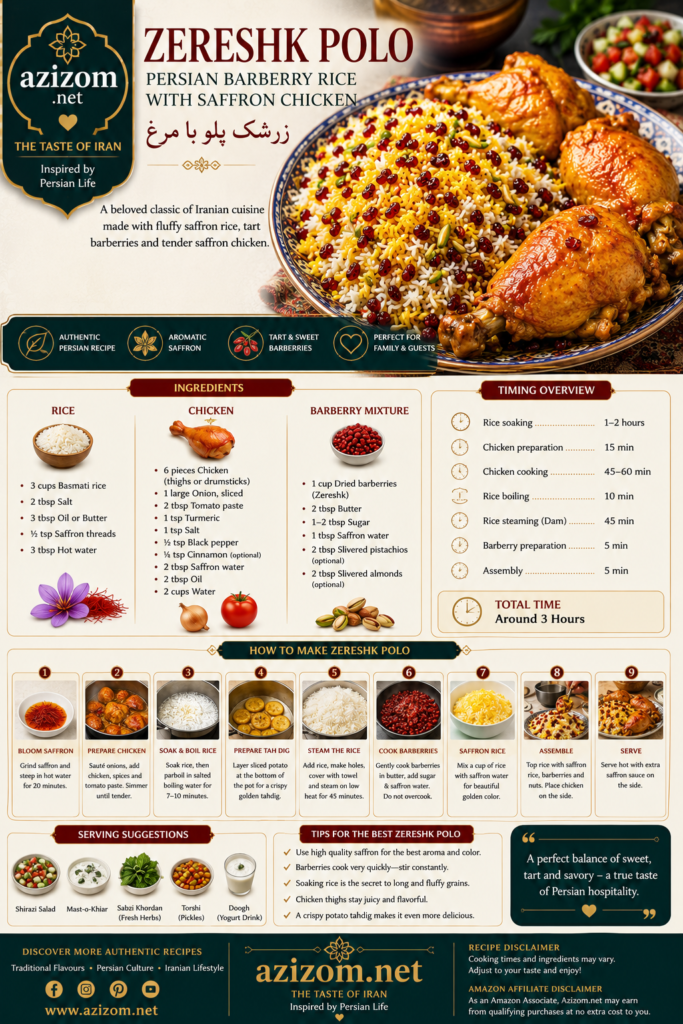
Ingredients
Rice
| Ingredient | Quantity |
|---|---|
| Premium Basmati Rice | 3 cups |
| Salt | 2 tbsp |
| Water | For soaking & boiling |
| Butter or Vegetable Oil | 3 tbsp |
| Saffron Threads | ½ tsp |
| Hot Water | 3 tbsp |
Chicken
| Ingredient | Quantity |
|---|---|
| Chicken Thighs or Drumsticks | 6 |
| Onion | 1 Large |
| Tomato Paste | 2 tbsp |
| Turmeric | 1 tsp |
| Salt | 1 tsp |
| Black Pepper | ½ tsp |
| Cinnamon (Optional) | ¼ tsp |
| Saffron Water | 2 tbsp |
| Vegetable Oil | 2 tbsp |
| Water | 2 cups |
Barberry Mixture
| Ingredient | Quantity |
|---|---|
| Dried Barberries (Zereshk) | 1 cup |
| Butter | 2 tbsp |
| Sugar | 1–2 tbsp |
| Saffron Water | 1 tbsp |
| Pistachio Slivers (Optional) | 2 tbsp |
| Almond Slivers (Optional) | 2 tbsp |
Kitchen Equipment
- Large cooking pot
- Heavy-bottom rice pot
- Fine sieve
- Frying pan
- Wooden spoon
- Mortar and pestle
- Tea towel for steaming
Preparation Timeline
| Stage | Time |
|---|---|
| Wash Rice | 10 min |
| Soak Rice | 1–2 hrs |
| Prepare Chicken | 15 min |
| Simmer Chicken | 45–60 min |
| Boil Rice | 10 min |
| Steam Rice | 45 min |
| Prepare Barberries | 5 min |
| Assemble | 5 min |
Total Time: Approximately 3 Hours
Step 1 – Bloom the Saffron
Authentic Persian cooking begins with properly blooming saffron. Grind the saffron into a fine powder, then pour hot (not boiling) water over it. Allow it to infuse for at least 20 minutes. This simple process releases the colour, fragrance, and flavour that make saffron one of the world’s most treasured spices.
Azizom Tip: For an even deeper aroma, place the bowl over a cup of hot water while it steeps.
Step 2 – Wash and Soak the Rice
Persian rice is famous for its long, fluffy grains. Achieving this texture starts by rinsing the rice several times until the water runs clear. Soak it in salted water for at least one hour.
This step removes excess starch, helping each grain remain separate after cooking.
Step 3 – Cook the Chicken
Heat oil in a heavy pot and sauté sliced onions until lightly golden. Stir in turmeric before adding the chicken pieces. Brown them gently on all sides, then add tomato paste and cook for two minutes to remove any raw flavour.
Season with salt, pepper, and cinnamon if using. Add water, bring to a gentle boil, then reduce the heat and simmer for about an hour.
Finish by stirring saffron water into the sauce during the last ten minutes of cooking.
The chicken should be tender enough that it almost falls from the bone.
Step 4 – Parboil the Rice
Bring a large pot of salted water to a rolling boil. Add the soaked rice and cook for around 7–10 minutes.
The grains should feel soft on the outside while remaining slightly firm in the centre.
Drain immediately.
Step 5 – Prepare the Tahdig
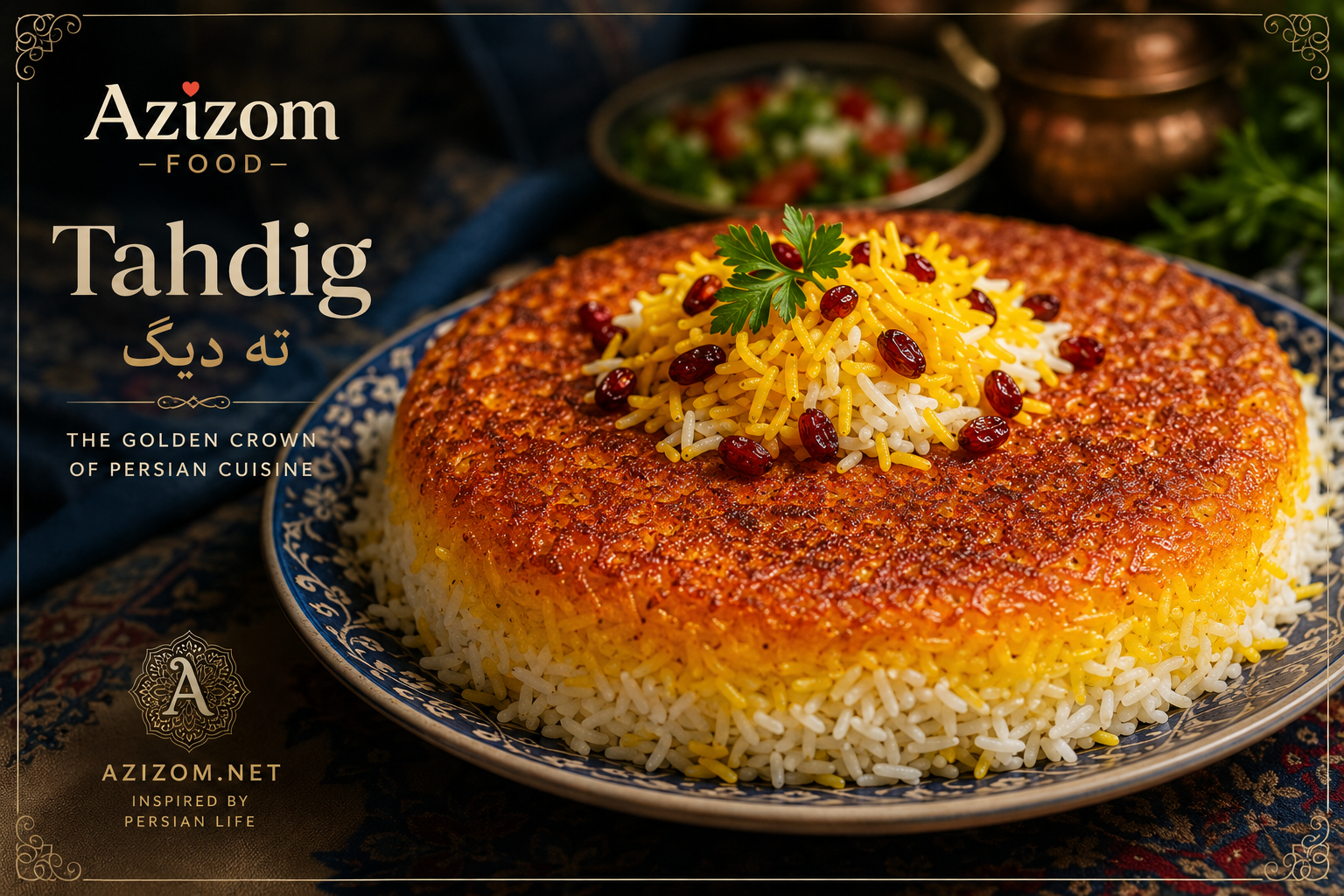
One of the highlights of Persian cuisine is Tahdig, the famous crispy golden crust at the bottom of the rice pot.
Heat oil in the pot and arrange thin potato slices in a single layer. Alternatively, use lavash bread for an equally delicious crust.
Carefully spoon the rice over the potatoes without disturbing the layer.
Step 6 – Steam the Rice (Dam Kardan)
Shape the rice into a gentle pyramid and create several small steam holes using the handle of a wooden spoon.
Drizzle with butter or oil, then cover the lid with a clean tea towel before placing it on the pot.
Cook over medium heat for five minutes before reducing to the lowest heat for approximately 45 minutes.
The towel absorbs condensation, preventing water droplets from falling back onto the rice.
Step 7 – Cook the Barberries
Barberries require special care.
Melt butter over very low heat and add the washed barberries. Stir gently for no more than one minute before adding sugar and saffron water.
Immediately remove from the heat.
Never overcook barberries, as they can quickly become bitter.
Step 8 – Make the Saffron Rice
Remove one cup of cooked rice and gently mix it with saffron water until every grain is coated in a vibrant golden colour.
This colourful rice is traditionally used to decorate the finished dish.
Step 9 – Assemble the Zereshk Polo
Transfer the white rice to a serving platter, then arrange the saffron rice over the top. Scatter the glossy barberries evenly across the surface and garnish with pistachio and almond slivers if desired.
Arrange the chicken alongside the rice and spoon some of the fragrant saffron sauce over the chicken.
Serve the remaining sauce separately.
Chef’s Secrets
✔ Use Iranian Grade-A saffron whenever possible.
✔ Never boil saffron.
✔ Cook barberries for less than two minutes.
✔ Chicken thighs remain juicier than chicken breast.
✔ A heavy-bottomed pot creates the best Tahdig.
✔ Let the rice rest for five minutes before serving.
✔ Taste the barberries before cooking. If they are particularly sour, increase the sugar slightly.
Serving Suggestions
Traditionally served with:
- Fresh Sabzi Khordan
- Shirazi Salad
- Mast-o-Khiar
- Doogh
- Torshi (Persian Pickles)
Storage
Refrigerate leftovers for up to three days.
Freeze the chicken separately for up to three months.
Reheat the rice gently with a splash of water to restore its fluffy texture.
Nutritional Information (Approximate Per Serving)
| Nutrient | Amount |
|---|---|
| Calories | 700 kcal |
| Protein | 38 g |
| Carbohydrates | 75 g |
| Fat | 24 g |
| Fibre | 4 g |
Frequently Asked Questions
Can I use chicken breast instead of thighs?
Yes, but thighs remain more tender and flavourful during the longer cooking process.
Can I make Zereshk Polo vegetarian?
Absolutely. Replace the chicken with roasted vegetables or grilled mushrooms and prepare a vegetable stock-based sauce.
Where can I buy barberries?
Middle Eastern, Persian, and many international supermarkets stock dried barberries. They are also widely available from reputable online retailers.
Why are my barberries bitter?
They were likely cooked for too long or over high heat. They should only be warmed briefly in butter.
Can I prepare this dish in advance?
Yes. The chicken can be cooked a day ahead, and the rice can be steamed shortly before serving for the freshest texture.
The Cultural Importance of Zereshk Polo
Originating in eastern Iran, where barberries are cultivated in abundance, Zereshk Polo has become a national favourite. The province of South Khorasan is particularly famous for producing some of the world’s finest barberries, making this ingredient a symbol of regional pride.
In Persian households, serving Zereshk Polo to guests is considered a gesture of generosity and respect. Its vibrant colours and refined presentation reflect the importance of hospitality in Iranian culture.
Final Thoughts
Zereshk Polo ba Morgh is a beautiful expression of Persian culinary artistry. From the delicate fragrance of saffron to the bright acidity of barberries and the comforting richness of slow-cooked chicken, every component works in harmony. While it takes time and care to prepare, the result is a spectacular dish that captures the warmth, elegance, and generosity of Iranian home cooking.
Whether you’re preparing it for a family dinner or a special celebration, this timeless recipe brings the authentic flavours of Iran to your table.
Related Recipes on Azizom.net
- Ghormeh Sabzi – Iran’s iconic herb stew.
- Khoresht Gheimeh – A comforting tomato and split pea stew.
- Fesenjan – Rich, sweet, and tangy.
- Tahchin – Crispy saffron rice layered with chicken.
- Baghali Polo – A fragrant rice dish often served with lamb.
Recipe Disclaimer
Cooking times, ingredient quantities, and seasoning preferences may vary depending on the ingredients, cookware, and individual taste. This recipe is based on traditional Persian home-style cooking and is intended as a practical guide. Adjust spices, salt, and cooking times to suit your kitchen and preferences.
Affiliate Disclaimer
As an Amazon Associate, Azizom.net may earn from qualifying purchases. This comes at no extra cost to you and helps support our work in sharing authentic Persian recipes, culture, and travel guides.
About Azizom.net
Azizom.net is your destination for authentic Persian recipes, Iranian travel inspiration, culture, history, traditions, and lifestyle. We are passionate about preserving and sharing the rich heritage of Iran with readers around the world through trusted recipes, in-depth guides, and beautifully curated content.
THE TASTE OF IRAN – Inspired by Persian Life