The Pearl of the Persian Gulf & Oil Capital
Abadan: Where History, Oil, and Culture Meet
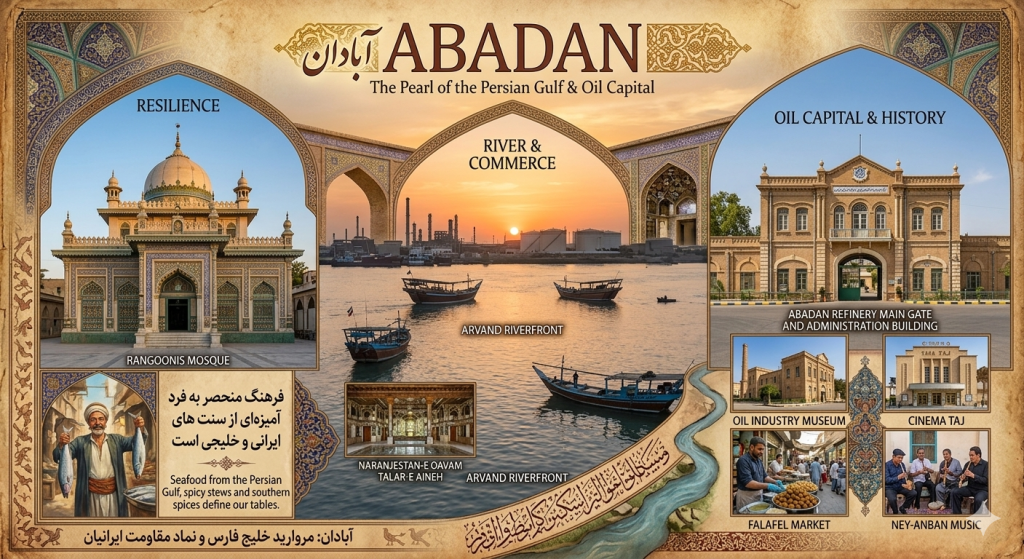
In the far southwest of Iran, where the waters of the Arvand River flow toward the Persian Gulf, lies the vibrant city of Abadan. Known as the “Pearl of the Persian Gulf” and widely recognized as Iran’s oil capital, Abadan is a city shaped by history, resilience, and cultural diversity. From its globally famous oil refinery to its warm southern hospitality, Abadan has long held a unique place in Iran’s identity.
A Strategic City by the Water
Abadan is located in Khuzestan Province on Abadan Island, surrounded by rivers that connect the city to international waterways and the Persian Gulf. This strategic location turned Abadan into one of the Middle East’s most important commercial and industrial centers during the 20th century.
The city’s connection to water has influenced every aspect of life. Fishing boats, river trade, and port activities have historically played major roles in the local economy. Even today, the rivers remain part of the city’s character and beauty.
The Rise of Iran’s Oil Capital
Abadan’s modern transformation began after the discovery of oil in southern Iran in the early 1900s. The establishment of the Abadan Refinery quickly changed the city from a small settlement into a booming industrial hub. At one time, the refinery was considered among the largest in the world, attracting engineers, workers, and businesses from many countries.
The oil industry not only shaped the economy but also influenced the city’s architecture, lifestyle, and multicultural atmosphere. Neighborhoods built during the refinery era introduced modern urban planning and created a unique blend of Iranian and international influences.
Because of this industrial importance, Abadan became a symbol of economic progress and modernization in Iran.

A City of Resilience
Abadan faced one of the most difficult periods in its history during the Iran–Iraq War in the 1980s. Due to its strategic location near the border, the city suffered heavy damage and endured a long siege. Many residents were forced to leave their homes, while important infrastructure was destroyed.
Despite these hardships, Abadan never lost its spirit. After the war, reconstruction projects helped revive the city and restore much of its industrial activity. Today, Abadan stands as a powerful symbol of resilience, determination, and recovery.
Culture, Food, and Southern Hospitality
One of Abadan’s greatest strengths is its rich cultural identity. The city reflects a fascinating mixture of Persian, Arab, and Gulf traditions. Music, language accents, clothing styles, and local customs all contribute to Abadan’s distinctive atmosphere.
The food culture is especially famous across Iran. Seafood plays a central role in local cuisine, with dishes often prepared using southern spices and fresh herbs. Popular meals include grilled fish, shrimp rice, and spicy seafood stews that capture the flavors of the Persian Gulf region.
Visitors to Abadan often remember the city for the friendliness and warmth of its people. Southern hospitality is deeply rooted in everyday life, making guests feel welcome from the moment they arrive.
Attractions and Landmarks
Abadan offers visitors a blend of historical, industrial, and cultural attractions. The city’s old refinery districts reflect its important role in global oil history, while riverside areas provide beautiful evening scenery. Historic mosques, traditional markets, and local cafés add to the city’s charm.
The famous Rangoonis Mosque is one of Abadan’s most recognized landmarks, admired for its architectural style and historical significance. Nearby riverfront areas also offer relaxing views and opportunities to experience local life.

The Future of Abadan
Today, Abadan continues to play a major role in Iran’s energy sector while also developing tourism, trade, and urban infrastructure. New projects aim to strengthen the local economy and improve living conditions while preserving the city’s historical identity.
As Iran’s legendary oil capital and a gateway to the Persian Gulf, Abadan remains a city where history and modern industry coexist. Its story is one of ambition, survival, and cultural richness — a true jewel of southern Iran.
Conclusion
Abadan is far more than an industrial city. It is a place where rivers meet the sea, where cultures blend together, and where resilience has shaped generations. Whether remembered for its world-famous refinery, its wartime endurance, or its lively southern culture, Abadan continues to shine as the Pearl of the Persian Gulf.