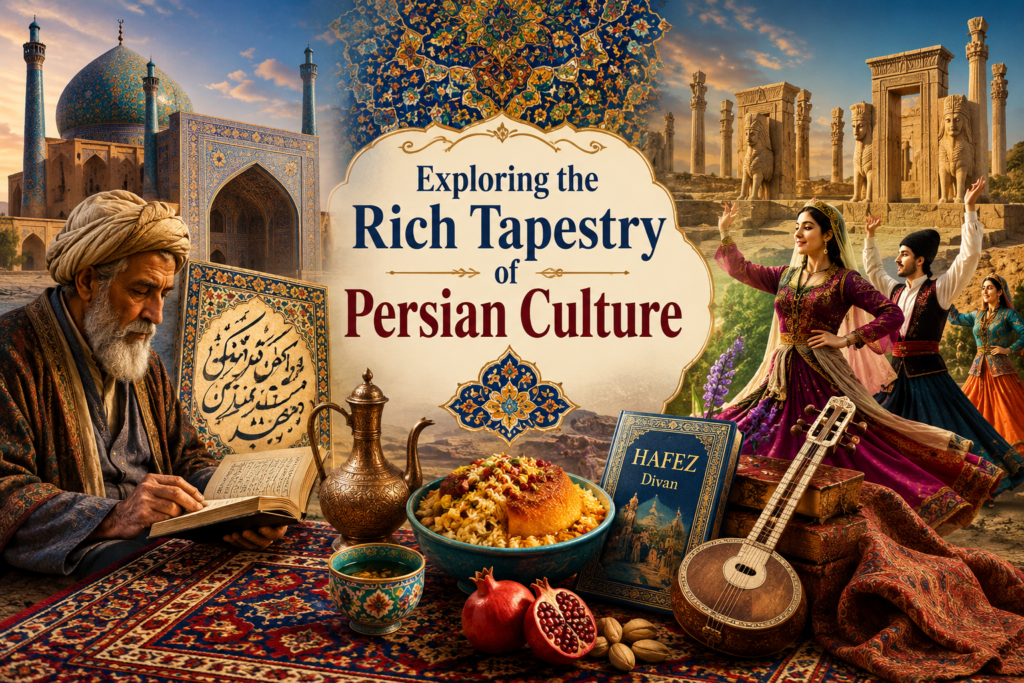
Exploring the Rich Tapestry of Persian Culture
Introduction
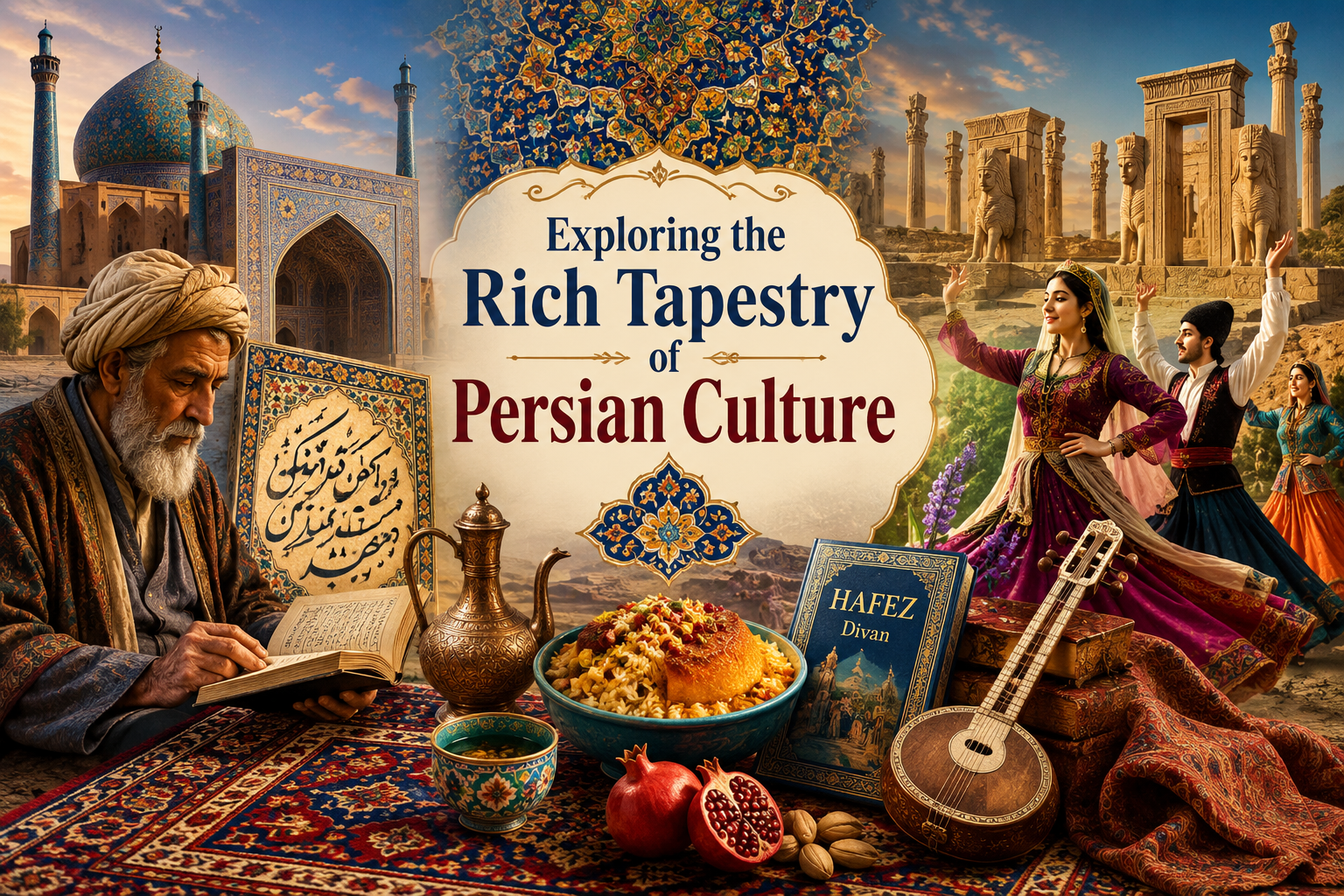
Persian culture stands among the world’s oldest and most influential civilizations, stretching back thousands of years and leaving an enduring mark on art, literature, science, architecture, and human thought. Rooted in the ancient lands of Iran, Persian culture is far more than a collection of traditions; it is a living heritage that continues to inspire millions across the globe.
From the magnificent ruins of ancient empires to the colorful bazaars of modern cities, Persian culture reflects a remarkable blend of history, creativity, spirituality, and hospitality. Its influence can be seen in everything from world-famous poetry and exquisite carpets to architectural masterpieces and culinary traditions that have traveled far beyond Iran’s borders.
For visitors, historians, and culture enthusiasts alike, exploring Persian culture offers a fascinating journey into a civilization that has shaped human history for over two millennia. This rich tapestry of customs, beliefs, and artistic achievements continues to thrive, connecting the past with the present in meaningful ways.
The Ancient Foundations of Persian Civilization
The story of Persian culture begins thousands of years ago with some of humanity’s earliest settlements on the Iranian Plateau. Ancient Persia rose to prominence through powerful dynasties such as the Achaemenids, Parthians, and Sasanians, creating one of the most sophisticated civilizations of the ancient world.
The Achaemenid Empire, founded by the legendary King Cyrus the Great in the 6th century BCE, became one of history’s largest empires. Stretching from the Mediterranean Sea to Central Asia, it united diverse peoples while promoting religious tolerance, efficient administration, and cultural exchange.
The remains of Persepolis, one of ancient Persia’s most magnificent ceremonial capitals, continue to demonstrate the remarkable achievements of Persian architects and craftsmen. The intricate carvings, towering columns, and detailed reliefs tell stories of royal ceremonies, international diplomacy, and the multicultural nature of the empire.
Throughout centuries of change, conquest, and renewal, Persia maintained its unique cultural identity while absorbing influences from neighboring civilizations. This ability to preserve tradition while embracing innovation remains a defining characteristic of Persian culture today.
Persian Art: A Celebration of Beauty and Detail
Art occupies a central place in Persian culture, reflecting centuries of creativity and refined craftsmanship. Persian artists have long sought to capture beauty, harmony, and spiritual meaning through various artistic forms.
Persian Carpets
Perhaps the most famous symbol of Persian artistic excellence is the Persian carpet. Renowned worldwide for their intricate patterns, vibrant colors, and exceptional craftsmanship, Persian rugs are often considered works of art rather than mere floor coverings.
Each region of Iran produces distinctive carpet styles, featuring unique motifs inspired by nature, geometry, history, and local traditions. The weaving process itself is a cherished cultural practice passed down through generations.
Miniature Painting
Persian miniature paintings represent another extraordinary artistic tradition. These detailed illustrations often depict scenes from literature, history, and mythology. Their vibrant colors, delicate brushwork, and imaginative compositions continue to influence artists worldwide.
Calligraphy
Persian calligraphy transforms written language into visual art. Beautifully crafted scripts adorn manuscripts, mosques, palaces, and public spaces, showcasing the importance of language and literature within Persian culture.
The Splendor of Persian Architecture
Persian architecture is among the most admired in the world, blending mathematical precision with artistic expression. Across Iran, visitors encounter breathtaking examples of architectural brilliance spanning many centuries.
Magnificent Mosques
The mosques of Iran are renowned for their stunning tilework, soaring domes, and elegant minarets. Cities such as Isfahan, Shiraz, and Yazd feature some of the finest Islamic architecture ever created.
Intricate geometric patterns, floral motifs, and vibrant blue tiles create mesmerizing visual effects. Sunlight interacting with these decorative elements transforms buildings into living works of art throughout the day.
Historic Gardens
Persian gardens represent humanity’s attempt to create paradise on Earth. Carefully designed with water channels, trees, flowers, and shaded walkways, these gardens symbolize harmony between nature and human creativity.
The concept of the Persian garden has influenced landscape architecture across the Middle East, South Asia, and Europe. UNESCO-recognized Persian gardens continue to attract visitors seeking tranquility and beauty.
Windcatchers and Desert Innovation
In desert cities such as Yazd, traditional windcatchers demonstrate the ingenuity of Persian engineering. These ancient cooling systems provided natural air conditioning long before modern technology, highlighting the practical intelligence embedded within Persian architectural traditions.
The Heart of Persian Culture: Poetry and Literature
Few cultures place as much importance on poetry as Persian culture. Poetry is woven into everyday life, family gatherings, celebrations, and personal reflection.
Rumi: The Universal Poet
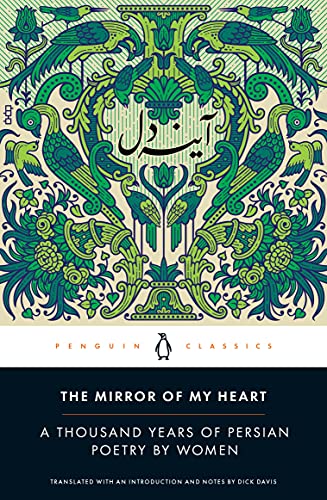
Among the most celebrated Persian poets is Rumi, whose spiritual verses continue to inspire readers worldwide. His poetry explores themes of love, self-discovery, and humanity’s relationship with the divine.
Hafez: The Master of Lyric Poetry
Hafez remains one of Iran’s most beloved literary figures. His poetry combines beauty, wisdom, romance, and philosophical reflection. Many Iranian families keep copies of his poems at home and consult them during important occasions.
Ferdowsi and the Shahnameh
The epic poem Shahnameh, written by Ferdowsi, preserves the myths, legends, and history of ancient Persia. Consisting of thousands of verses, it remains one of the world’s greatest literary achievements and plays a crucial role in preserving Persian identity.
Today, poetry readings and literary discussions continue to thrive across Iran, demonstrating the enduring importance of literature within Persian society.
Persian Music and Traditional Performing Arts
Music has long been an essential element of Persian culture. Traditional Persian music features intricate melodies, emotional expression, and deep spiritual connections.
Classical Persian musicians use instruments such as the tar, setar, santur, ney, and kamancheh to create distinctive sounds that reflect centuries of artistic development.
Traditional dance and performance arts also play important roles during celebrations, festivals, and cultural events. These artistic expressions vary across different regions, reflecting the diverse cultural heritage found throughout Iran.
Modern Iranian musicians continue to blend traditional influences with contemporary styles, ensuring that Persian musical traditions remain vibrant and relevant.
The Rich Flavors of Persian Cuisine
Persian cuisine is celebrated worldwide for its balance of flavors, fragrant spices, and emphasis on fresh ingredients. Food serves as an important expression of hospitality and family life.
Signature Dishes
Popular Persian dishes include:
-
Chelo Kebab
-
Ghormeh Sabzi
-
Fesenjan
-
Zereshk Polo
-
Tahchin
-
Ash Reshteh
These dishes often combine herbs, fruits, nuts, and aromatic spices to create complex and memorable flavors.
Tea Culture
Tea occupies a special place in Persian daily life. Sharing tea symbolizes friendship, hospitality, and meaningful conversation. Guests are frequently welcomed with tea and sweets, reflecting the warmth of Persian social customs.
Family Gatherings
Meals in Persian culture are often communal experiences where family members gather to share food, stories, and companionship. Hospitality remains one of the most admired aspects of Persian society.
Festivals and Celebrations
Persian culture is enriched by vibrant festivals that celebrate history, nature, and community.
Nowruz: Persian New Year
Nowruz, meaning “New Day,” marks the arrival of spring and the beginning of the Persian New Year. With roots extending back more than 3,000 years, it remains one of the most significant celebrations in Persian culture.
Families prepare special tables known as Haft-Seen, visit relatives, exchange gifts, and participate in traditions that symbolize renewal and prosperity.
Yalda Night
Yalda Night celebrates the winter solstice and the triumph of light over darkness. Families gather to read poetry, share fruits such as pomegranates and watermelons, and enjoy each other’s company.
These celebrations strengthen family bonds while preserving ancient cultural traditions.
Exploring Iran’s Diverse Regions
Iran’s vast geography contributes to its extraordinary cultural diversity. Each province offers unique customs, dialects, architecture, cuisine, and traditions.
Tehran
As the capital city, Tehran combines modern development with historical attractions, museums, cultural centers, and vibrant urban life.
Isfahan
Often called “Half the World,” Isfahan is famous for its magnificent squares, bridges, mosques, and artistic heritage.
Shiraz
Known as the city of poets and gardens, Shiraz is closely associated with Hafez and Saadi and offers a rich cultural atmosphere.
Yazd
Situated in the desert, Yazd is renowned for its windcatchers, ancient architecture, and Zoroastrian heritage.
Tabriz
A historic center of trade and culture, Tabriz boasts impressive bazaars and centuries of cultural significance.
Kerman
Kerman showcases unique desert landscapes, ancient fortresses, and remarkable historical sites.
Together, these regions create a fascinating mosaic that highlights the richness and diversity of Persian culture.
Persian Hospitality: A Timeless Tradition
One of the most memorable aspects of Persian culture is its hospitality. Guests are treated with exceptional respect and generosity, often becoming honorary members of the household during their visit.
Persian hospitality extends beyond the home into everyday interactions. Kindness, respect, and community spirit remain deeply valued qualities throughout Iranian society.
Visitors frequently describe the warmth and friendliness of the Iranian people as one of their most memorable experiences.
The Global Influence of Persian Culture
Persian culture has influenced civilizations across Asia, Europe, and the Middle East for centuries. Its contributions to literature, mathematics, astronomy, medicine, architecture, and philosophy have enriched human civilization.
Today, Persian cultural traditions continue to inspire artists, writers, musicians, scholars, and travelers worldwide. Through literature, cinema, cuisine, and cultural exchange, the legacy of Persia remains vibrant and influential.
Conclusion
Persian culture represents a remarkable blend of history, creativity, spirituality, and resilience. From the grandeur of ancient empires to the beauty of poetry, architecture, cuisine, and hospitality, it offers endless opportunities for exploration and appreciation.
Understanding Persian culture means discovering a civilization that has contributed profoundly to human history while continuing to thrive in the modern world. Whether through its art, literature, traditions, or people, Persian culture remains one of humanity’s most enduring and inspiring treasures.
For anyone seeking a deeper understanding of Iran and its heritage, exploring the rich tapestry of Persian culture is a journey well worth taking.
Affiliate Disclaimer: Azizom.net participates in the Amazon Associates Program. As an Amazon Associate, we may earn a commission from qualifying purchases made through links on this website, at no additional cost to you. Prices and availability are subject to change. Thank you for supporting Azizom.net.