Isfahan Iran: The Timeless Jewel of Persian Civilization
Introduction
Among the many remarkable cities of Iran, Isfahan stands apart as a shining symbol of Persian culture, architecture, and history. Often referred to as “Nesf-e Jahan” or “Half of the World,” Isfahan has captivated travelers, historians, and artists for centuries.
Situated in central Iran along the historic Zayandeh River, Isfahan combines magnificent Islamic architecture, vibrant bazaars, elegant gardens, and a rich cultural heritage that stretches back thousands of years. Whether you are interested in history, architecture, photography, food, or cultural exploration, Isfahan offers an unforgettable experience.
For many visitors, Isfahan is not merely a city—it is an open-air museum showcasing the finest achievements of Persian civilization.
Where Is Isfahan Located?
Isfahan is the capital of Isfahan Province and is located approximately 440 kilometers south of Tehran. Its central position made it a strategic hub for trade and commerce throughout Persian history.
The city sits on a broad plain surrounded by mountains and desert landscapes, creating a unique geographical setting that contributed to its historical importance.
Today, Isfahan remains one of Iran’s largest cities and an important center for education, industry, tourism, and culture.
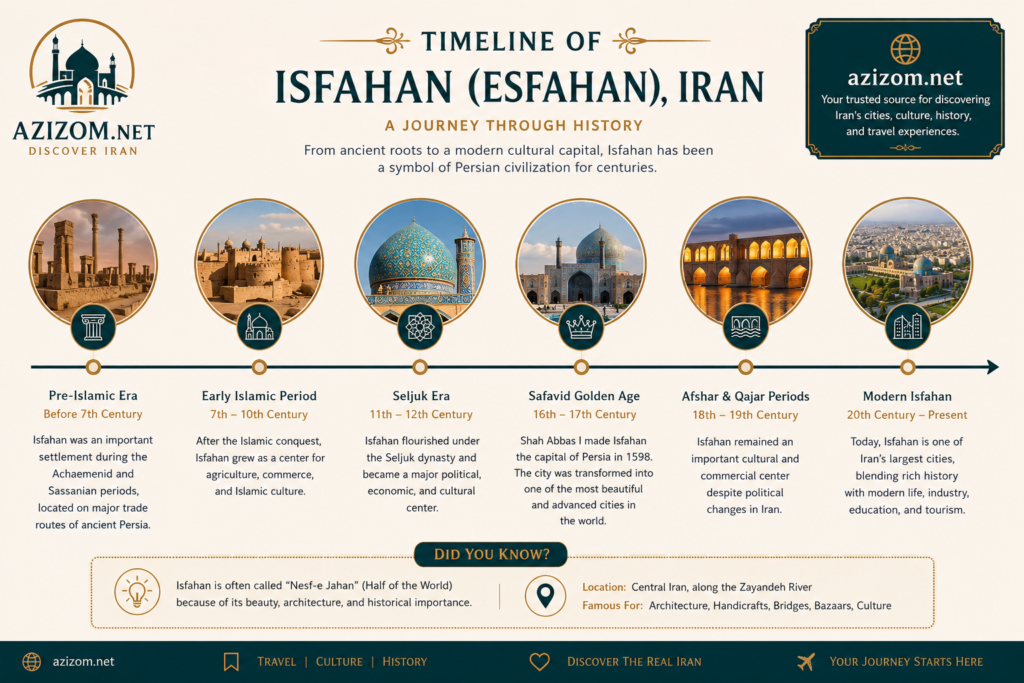
The Fascinating History of Isfahan
The story of Isfahan spans more than two millennia. Archaeological evidence suggests human settlement in the area dates back to ancient times.
Early History
Before the arrival of Islam, Isfahan was already an important settlement during the Achaemenid and Sassanian periods. Its location along major trade routes helped the city prosper economically and culturally.
The Islamic Era
Following the Islamic conquest of Persia in the 7th century, Isfahan continued to grow in significance. The city became a center for learning, commerce, and religious scholarship.
The Safavid Golden Age
The city’s greatest period arrived during the Safavid Dynasty.
In 1598, Shah Abbas I moved the Persian capital to Isfahan and launched one of the most ambitious urban development projects in world history. New palaces, mosques, bridges, gardens, and marketplaces transformed Isfahan into one of the largest and most beautiful cities on Earth.
European travelers who visited during this period frequently described Isfahan as one of the world’s greatest cities.
The famous Persian saying:
“Isfahan is Half the World”
originated during this golden age, reflecting the city’s extraordinary beauty and importance.
Naqsh-e Jahan Square: The Heart of Isfahan
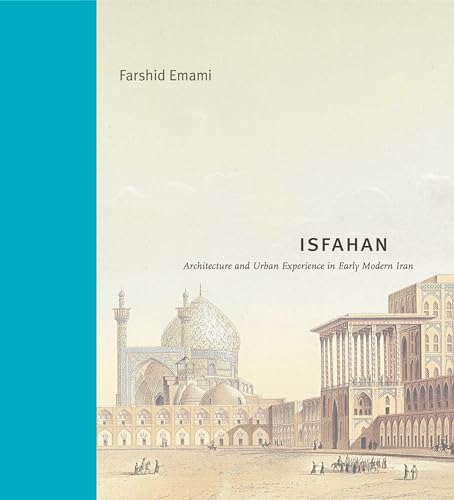
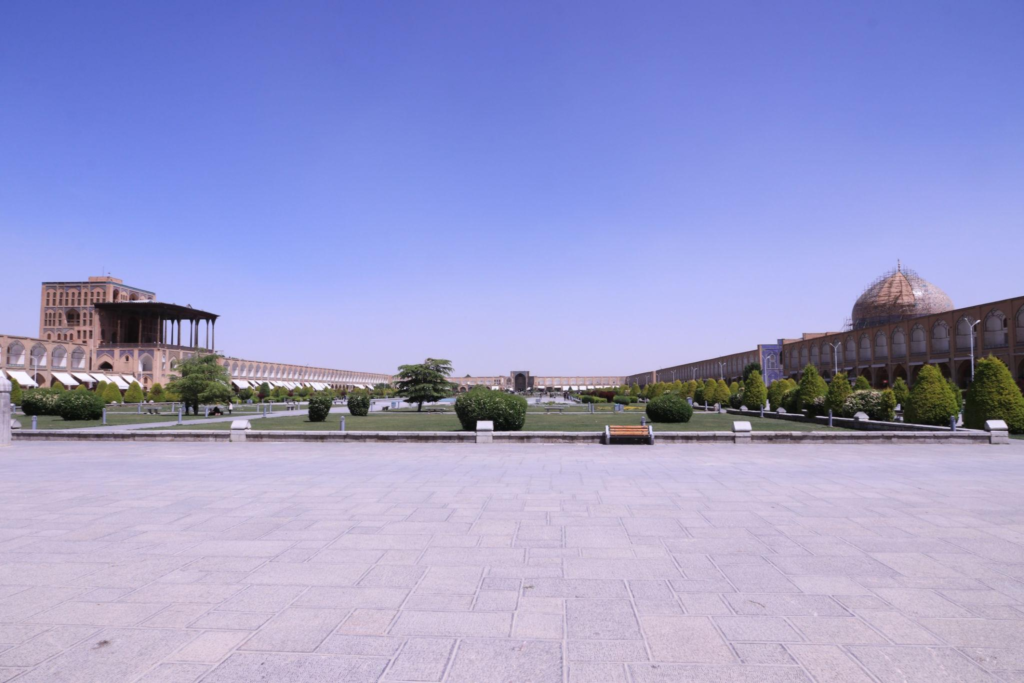
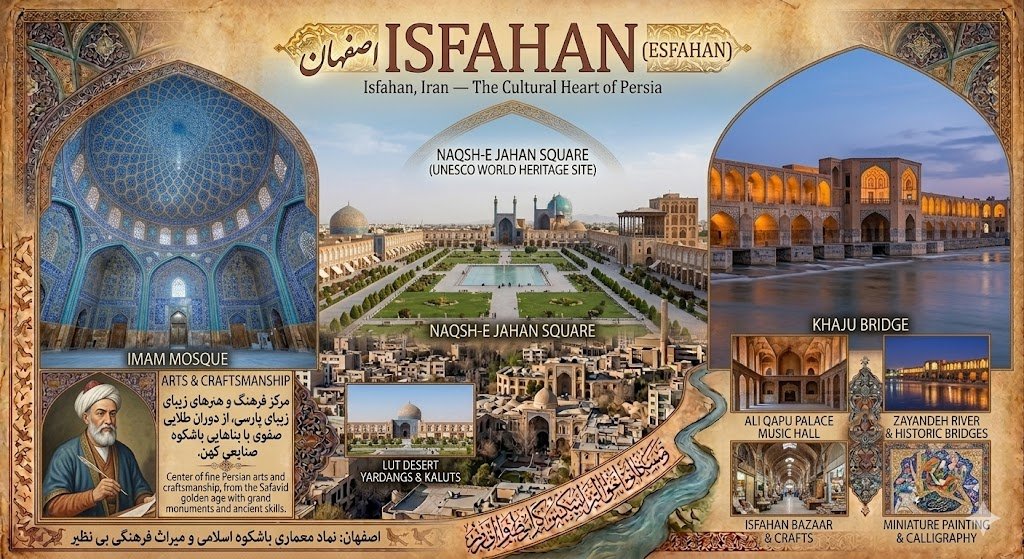
One of the most recognizable landmarks in Iran is Naqsh-e Jahan Square, also known as Imam Square.
Built during the Safavid period, the square covers approximately 89,600 square meters and remains one of the largest historic public squares in the world.
Surrounding the square are some of Isfahan’s most important monuments:
- Imam Mosque
- Sheikh Lotfollah Mosque
- Ali Qapu Palace
- Grand Bazaar
The square has served as a gathering place for commerce, celebrations, sports, and public events for over four centuries.
Today, it is one of Iran’s most visited tourist attractions and a UNESCO World Heritage Site.
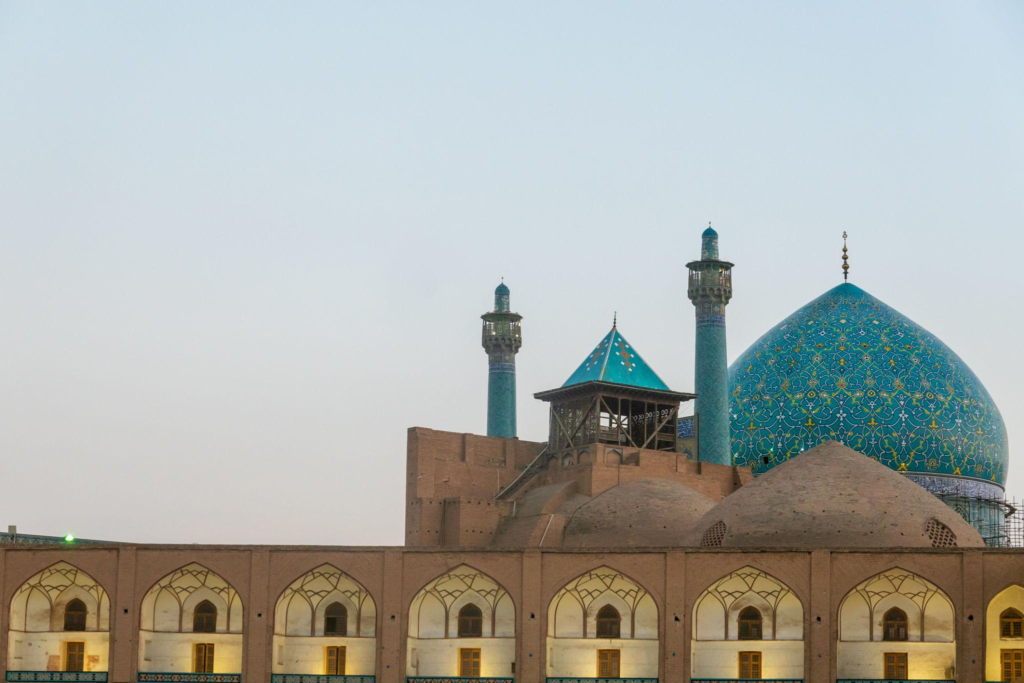
The Magnificent Imam Mosque
The Imam Mosque is widely considered one of the masterpieces of Islamic architecture.
Construction began in 1611 during the reign of Shah Abbas I and continued for many years.
The mosque is famous for:
- Stunning turquoise domes
- Intricate Persian tilework
- Elegant calligraphy
- Remarkable acoustics
- Symmetrical architectural design
Visitors often describe the mosque as one of the most beautiful religious buildings in the world.
Sheikh Lotfollah Mosque: A Hidden Architectural Gem
Unlike most grand mosques, Sheikh Lotfollah Mosque was designed as a private royal mosque.
The building lacks minarets and a central courtyard, making it unique among Persian mosques.
Its interior decoration is breathtaking, featuring delicate tilework and a famous peacock-like pattern that appears beneath the central dome when illuminated by sunlight.
Many architecture experts consider it one of the finest examples of Persian artistic achievement.
Ali Qapu Palace
Standing six stories high, Ali Qapu Palace served as the ceremonial residence of Safavid rulers.
Its most famous feature is the Music Hall, where specially designed wall recesses enhance acoustics.
The palace balcony offers one of the best views of Naqsh-e Jahan Square and provides excellent opportunities for photography.
The Beautiful Bridges of Isfahan
Khaju Bridge
Khaju Bridge is perhaps the city’s most beloved landmark.
Built in the 17th century, it functions as both a bridge and a gathering place.
The structure combines engineering excellence with artistic beauty and remains one of the finest examples of Persian bridge architecture.
Si-o-se-pol Bridge
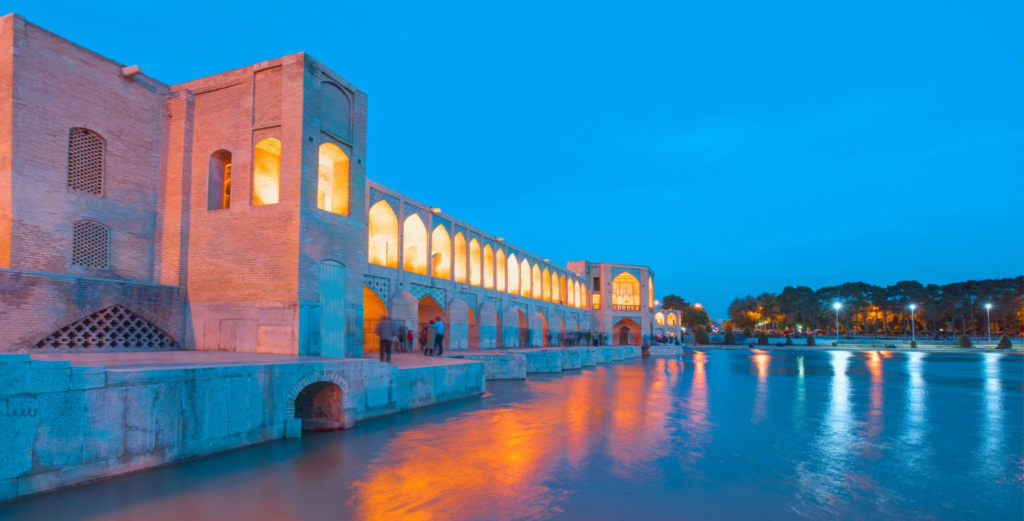
Another iconic bridge is Si-o-se-pol, meaning “Bridge of Thirty-Three Arches.”
Stretching across the Zayandeh River, it is one of the longest and most famous historic bridges in Iran.
The bridge becomes particularly magical during sunset and evening hours.
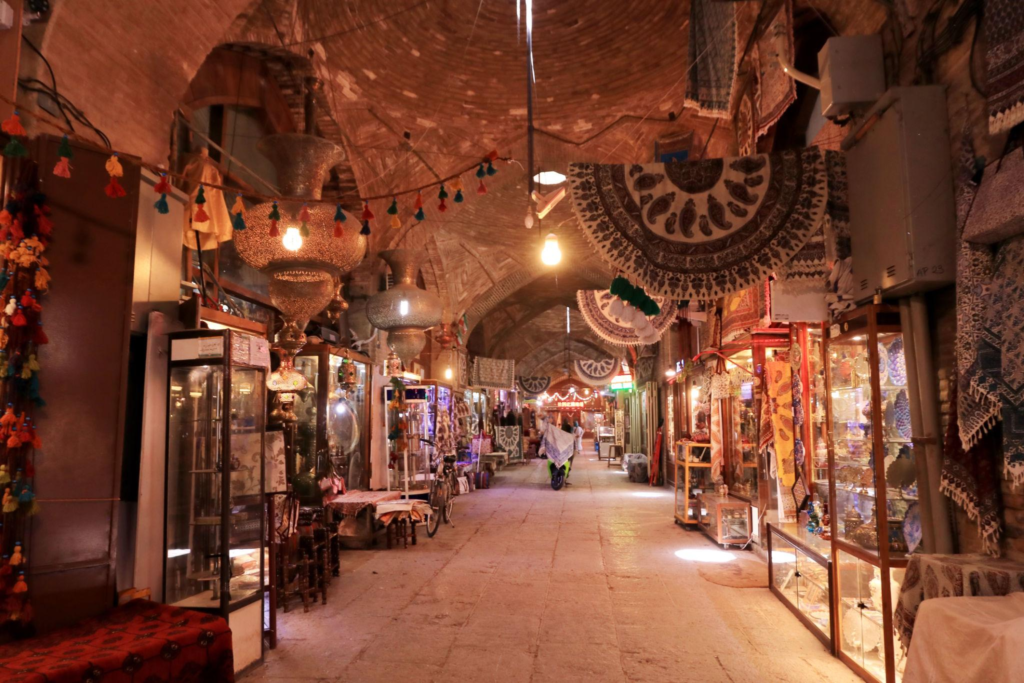
Exploring Isfahan Grand Bazaar
No visit to Isfahan is complete without exploring the historic Grand Bazaar.
The market has served merchants and travelers for centuries.
Visitors can browse:
- Persian carpets
- Handcrafted jewelry
- Traditional textiles
- Copperware
- Pottery
- Miniature paintings
- Decorative artwork
The bazaar offers an authentic glimpse into Persian commercial traditions that have survived for generations.
Persian Art and Handicrafts
Isfahan is considered one of Iran’s leading centers for traditional arts.
Local craftsmen continue producing handmade works using techniques passed down through generations.
Popular handicrafts include:
Persian Carpets
Isfahan carpets are renowned worldwide for their quality and intricate designs.
Minakari
This beautiful art form involves decorating metal surfaces with colorful enamel patterns.
Khatamkari
An ancient Persian marquetry technique using wood, ivory, and metal to create geometric patterns.
Copper Engraving
Traditional engraved copperware remains one of Isfahan’s most popular souvenirs.
Local Cuisine of Isfahan
Food lovers will find plenty to enjoy in Isfahan.
Some local specialties include:
Beryani
A famous Isfahani meat dish served with traditional bread.
Khoresht Mast
A unique sweet saffron yogurt dish often enjoyed as a dessert.
Gaz
Perhaps Isfahan’s most famous sweet, Gaz is a Persian nougat made with pistachios and almonds.
Traditional Persian Tea
Served throughout the city in tea houses and cafés.
Gardens and Green Spaces
Persian gardens play an important role in Iranian culture.
Several beautiful gardens can be found throughout Isfahan, offering peaceful retreats from busy city streets.
These gardens reflect centuries-old Persian concepts of harmony between architecture, water, and nature.
Modern Isfahan
While preserving its historical treasures, Isfahan has also embraced modern development.
The city is home to:
- Major universities
- Technology centers
- Manufacturing industries
- Cultural institutions
- Art galleries
- Museums
This blend of tradition and innovation makes Isfahan one of Iran’s most dynamic cities.
Best Time to Visit Isfahan
The ideal seasons for visiting Isfahan are:
Spring (March-May)
Comfortable temperatures and blooming gardens.
Autumn (September-November)
Pleasant weather and excellent sightseeing conditions.
Summer can be quite hot, while winter temperatures are generally cool but manageable.
Travel Tips for Visitors
- Wear comfortable walking shoes.
- Carry water during warmer months.
- Allow multiple days to explore the city.
- Visit major attractions early in the morning.
- Spend time exploring side streets and local neighborhoods.
- Experience the city’s bridges after sunset.
Why Isfahan Should Be on Every Traveler’s Bucket List
Few cities in the world combine history, architecture, culture, and artistry as successfully as Isfahan.
From its breathtaking mosques and royal palaces to its bustling bazaars and beautiful bridges, the city offers visitors a unique journey through centuries of Persian civilization.
Every corner of Isfahan tells a story, making it one of the most rewarding destinations in the Middle East.
Key Takeaways
✓ Isfahan is one of Iran’s most historically important cities.
✓ The city reached its peak during the Safavid Dynasty.
✓ Naqsh-e Jahan Square is a UNESCO World Heritage Site.
✓ Isfahan is famous for Persian architecture, bridges, and handicrafts.
✓ Traditional arts such as carpet weaving and Minakari remain important today.
✓ The city offers a unique combination of history, culture, food, and modern life.
✓ Spring and autumn are the best times to visit.
Related Articles
- Tehran: The Dynamic Capital of Iran
- Mashhad: Iran’s Spiritual Heart
- Kerman: Gateway to the Iranian Desert
- Karaj: Modern Living Near Tehran
- Abadan: The Historic Port City of Southern Iran
- Persian Culture and Traditions Explained
- The Most Beautiful UNESCO Sites in Iran
Disclaimer
The information in this article is provided for general educational and travel information purposes only. Travel regulations, opening hours, transportation services, and local conditions may change over time. Readers should verify current information with official sources before making travel plans.
All images used in connection with this article are for illustrative and reference purposes only. Ownership and copyrights remain with their respective creators and rights holders.
Final Thoughts
Isfahan is more than a destination—it is a living masterpiece of Persian civilization. Its magnificent architecture, welcoming atmosphere, artistic traditions, and rich history continue to inspire visitors from around the world.
Whether you are exploring the grandeur of Naqsh-e Jahan Square, admiring the intricate beauty of the Imam Mosque, shopping in traditional bazaars, or simply enjoying the atmosphere of Khaju Bridge at sunset, Isfahan offers experiences that stay with you long after your journey ends.
For travelers seeking to understand the true spirit of Iran, Isfahan remains one of the country’s most rewarding and unforgettable cities.
Published by Azizom.net – Discover Iran’s cities, culture, history, and travel experiences.
Affiliate Disclaimer: As an Amazon Associate, Azizom.net may earn from qualifying purchases. This comes at no additional cost to you and helps support our website. Thank you for your support.