Ahvaz: The Industrial Soul of Iran and the City of the Karun River
Introduction
Ahvaz is one of Iran’s most significant and strategically important cities, located in the southwest of the country within Khuzestan Province. As the provincial capital, Ahvaz serves as a vital hub for industry, transportation, energy production, and cultural diversity.
The city is uniquely positioned along the banks of the mighty Karun River, the longest river in Iran, which divides Ahvaz into eastern and western sections. This river is not only a geographical landmark but also a historical lifeline that shaped the city’s development for thousands of years.
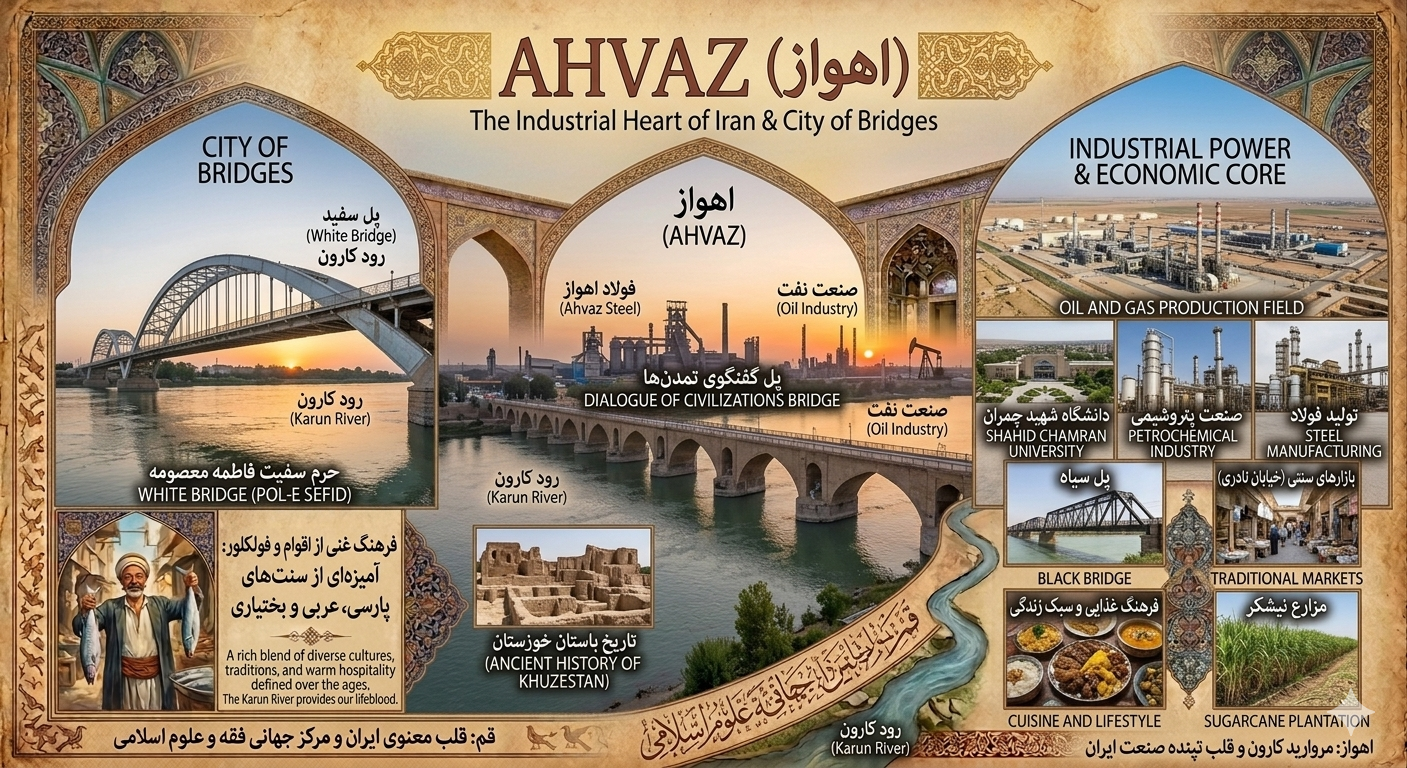
Known as the “City of Bridges” and the “Oil Capital of Iran,” Ahvaz represents a blend of ancient civilization, modern industry, and multicultural society. Despite facing environmental challenges such as extreme heat and dust storms, the city continues to grow as one of Iran’s most influential urban centers.
Historical Background of Ahvaz
Ancient Origins
The history of Ahvaz stretches back to ancient civilizations, including the Elamite period. Archaeological evidence suggests that early settlements existed in the region due to fertile land and access to water from the Karun River.
During the Achaemenid Empire, the region was an important agricultural and trade corridor. Its fertile plains supported farming communities, while its river routes allowed goods to move across southwestern Persia.
Sassanid Era Development
A major transformation occurred during the Sassanid Empire when the city was rebuilt and renamed Hormuz-Ardashir. This period marked the development of irrigation systems, bridges, and urban infrastructure that strengthened its role as a regional center.
The Sassanids recognized the strategic importance of controlling water resources, and Ahvaz became a key administrative and trade city.
Islamic Period and the Rise of Souq al-Ahvaz
After the Islamic conquest of Persia in the 7th century, the city became known as “Souq al-Ahvaz” (Market of Ahvaz). It evolved into a commercial hub where traders exchanged goods such as agricultural products, textiles, and handicrafts.
However, over centuries, natural changes in river flow and political instability caused periods of decline, and the city lost some of its earlier importance.
Modern Revival and Oil Discovery
The modern revival of Ahvaz began in the 20th century with the discovery of oil in the region of Khuzestan Province. This discovery transformed Ahvaz into one of the most important industrial and economic centers in Iran.
Massive investments in oil extraction, refining, and petrochemical industries led to rapid urbanization and population growth, reshaping Ahvaz into a modern industrial city.
Geography and Climate
Ahvaz is located in a lowland desert region in southwestern Iran. Its geographical position near the Iraqi border makes it a key point for trade and logistics between Iran and neighboring countries.
Karun River Influence
The Karun River plays a crucial role in shaping the city’s geography. It provides water for agriculture, industry, and urban use while also serving as a symbolic landmark.
The river has also influenced city planning, resulting in the construction of multiple bridges that connect different districts.
Climate Conditions
Ahvaz is known for its extreme hot desert climate, making it one of the hottest cities in the world during summer months.
Key climate characteristics include:
- Summer temperatures often exceeding 45°C
- Mild winters with occasional rainfall
- High humidity at certain times of the year
- Frequent dust and sand storms
These environmental conditions significantly affect daily life, infrastructure, and health in the city.
Economy and Industrial Power
Ahvaz is widely recognized as one of Iran’s industrial powerhouses. Its economy is heavily dependent on energy production and related industries.
Oil and Gas Sector
The oil industry is the backbone of Ahvaz’s economy. The city is located near some of Iran’s richest oil fields, making it a central hub for extraction, refining, and distribution.
Major activities include:
- Crude oil production
- Petrochemical manufacturing
- Pipeline infrastructure
- Energy export logistics
Steel and Heavy Industry
Ahvaz is also home to large steel manufacturing plants and heavy industrial complexes. These industries contribute significantly to national production and employment.
Agriculture
Despite its industrial focus, the surrounding region supports agriculture, especially:
- Sugarcane plantations
- Wheat and barley cultivation
- Rice farming in irrigated areas
The Karun River provides essential irrigation support for these activities.
Trade and Transportation
Due to its strategic location, Ahvaz serves as a transportation hub connecting southern Iran with Iraq and other neighboring regions. Railways, highways, and river routes all contribute to its economic importance.
Culture and Society
Ahvaz is one of the most culturally diverse cities in Iran. Its population includes Persians, Arabs, Bakhtiari, Lurs, and other ethnic groups.
Language and Traditions
Multiple languages and dialects are spoken in the city, contributing to its rich cultural identity. This diversity is reflected in:
- Traditional music and dance
- Local storytelling
- Festivals and ceremonies
Cuisine
Ahvaz is famous for its flavorful cuisine influenced by Arab and Persian traditions. Common foods include:
- Spicy grilled meats
- Rice dishes with herbs and spices
- Seafood from nearby southern regions
- Traditional sweets and desserts
Hospitality
One of the defining traits of Ahvaz is its strong culture of hospitality. Visitors often experience warm welcomes and generous treatment from locals.
Education and Infrastructure
Ahvaz is an important educational center in southwestern Iran. One of its leading institutions is Shahid Chamran University of Ahvaz, which offers programs in engineering, science, humanities, and environmental studies.
Urban Development
In recent decades, Ahvaz has undergone significant modernization, including:
- Expansion of highways and road networks
- Construction of new residential districts
- Development of industrial zones
- Improvement of public services
Despite this growth, infrastructure development continues to face challenges due to rapid population increase and environmental pressures.
City of Bridges
Ahvaz is famously known as the “City of Bridges” due to the numerous bridges crossing the Karun River.
Key bridges include:
- White Bridge (Pol-e Sefid)
- Black Bridge (historical structure)
- Modern suspension bridges
- Cultural and architectural landmark bridges
These bridges are not only functional but also symbolic of connection and unity between different parts of the city.
Environmental Challenges
Despite its economic importance, Ahvaz faces several serious environmental challenges.
Heat and Climate Stress
Extreme summer heat makes daily life difficult and increases energy consumption for cooling systems.
Dust Storms
Dust storms originating from desert regions frequently affect air quality, leading to health concerns such as respiratory issues.
Industrial Pollution
Oil refineries and heavy industries contribute to air and water pollution, making environmental management a critical issue for the city’s future sustainability.
Key Takeaways
- Ahvaz is the capital of Khuzestan Province and a major industrial city in Iran
- The Karun River is central to its geography and development
- It is known as the “City of Bridges” and “Oil Capital of Iran”
- The economy is driven by oil, steel, agriculture, and transportation
- The city has a diverse multicultural population
- Environmental challenges include heat, dust storms, and pollution
- Ahvaz has deep historical roots dating back to ancient civilizations
Related Articles (for azizom.net)
- Tehran: The Political and Economic Capital of Iran
- Isfahan: The Cultural Jewel of Persia
- Mashhad: Iran’s Spiritual Center and Pilgrimage City
- Shiraz: The City of Poetry and Gardens
- Kerman: Desert Heritage and Ancient Trade Routes
Final Thoughts
Ahvaz stands as a powerful example of how geography, history, and industry can shape a city’s identity. From its ancient roots along the Karun River to its modern role as a major oil and industrial hub, the city continues to evolve despite environmental and infrastructural challenges.
Its diversity, resilience, and economic importance make it one of the most influential cities in Iran. For travelers, researchers, and history enthusiasts, Ahvaz offers a deep and complex story that reflects both the challenges and strengths of modern urban development in the region.
Disclaimer
Article: The information provided in this article is for general informational and educational purposes only. While efforts are made to ensure accuracy, azizom.net does not guarantee that all details are fully up to date or error-free.
Images: Any images referenced or suggested in relation to this article are for illustrative purposes only and may not represent the exact current appearance of Ahvaz or its landmarks.
Affiliate: This article may contain affiliate links. As an Amazon Associate, azizom.net may earn a small commission from qualifying purchases at no additional cost to the user. This helps support the website and its content creation.