Qom City, Iran: The Spiritual Heart of a Nation
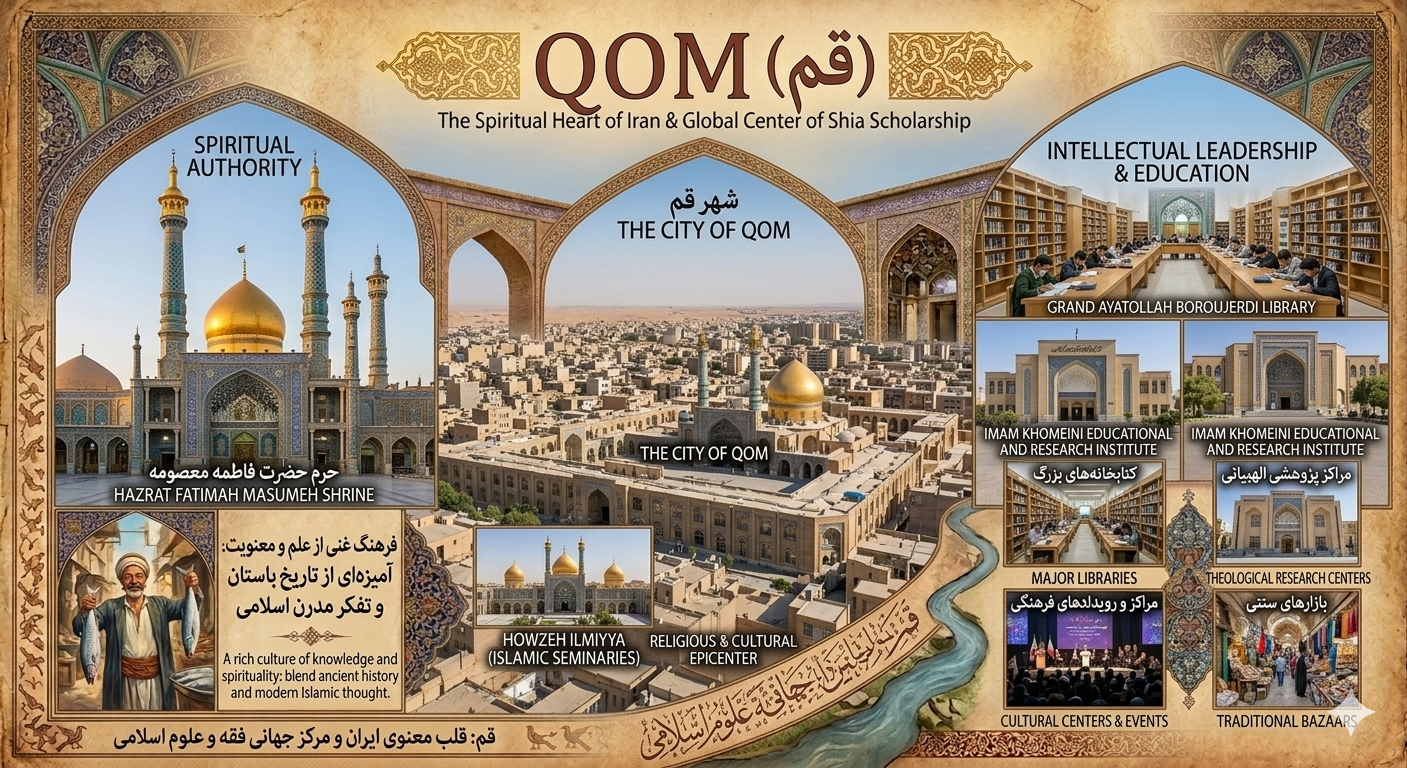
Located approximately 140 kilometers south of Tehran, Qom is one of Iran’s most influential cities. Renowned as a center of religious learning, pilgrimage, and cultural heritage, Qom attracts millions of visitors each year from across Iran and the wider Islamic world. While many know the city for its religious significance, Qom is also a fascinating destination rich in history, architecture, education, commerce, and tradition.
Often referred to as the spiritual capital of Iran, Qom plays a central role in shaping religious scholarship and preserving centuries of Persian-Islamic heritage. From magnificent shrines and historic seminaries to bustling markets and modern developments, the city offers a unique glimpse into the heart of Iranian culture.
This guide explores the history, attractions, economy, culture, and enduring importance of Qom, providing readers with a complete understanding of one of Iran’s most remarkable cities.
Where Is Qom?
Qom is situated in central Iran and serves as the capital of Qom Province. Its strategic location along major transportation routes connecting Tehran to southern Iran has contributed significantly to its growth and importance.
The city lies on the edge of the central Iranian plateau near the Dasht-e Kavir desert region. This location gives Qom a dry climate characterized by hot summers, cool winters, and low annual rainfall.
Despite its desert surroundings, Qom has developed into a thriving urban center with modern infrastructure, educational institutions, and commercial districts.
The Origins of Qom
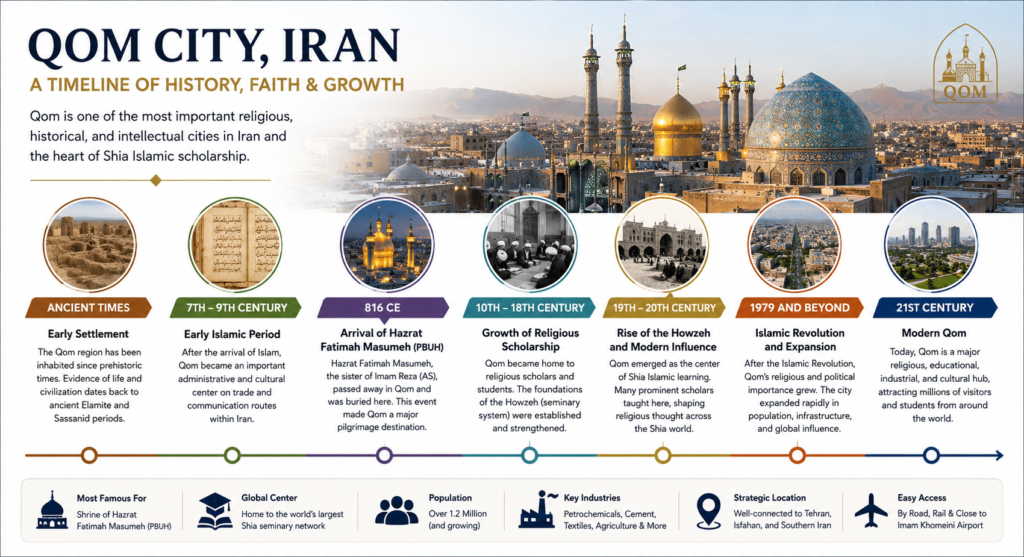
The history of Qom stretches back thousands of years. Archaeological discoveries indicate that settlements existed in the region long before the arrival of Islam. Various civilizations occupied the area throughout ancient Persian history, including communities during the Sassanian period.
However, Qom’s rise to prominence began after the spread of Islam throughout Persia during the seventh century. Arab tribes settled in the region, helping transform the city into an important religious and cultural center.
Over the centuries, Qom continued to expand, eventually becoming one of the most respected centers of Islamic scholarship in the world.
The Arrival of Hazrat Fatimah Masumeh (SA)
One of the most significant events in Qom’s history occurred in 816 CE when Hazrat Fatimah Masumeh, the sister of Imam Reza, journeyed toward Khorasan.
During her travels, she became ill and passed away in Qom. She was subsequently buried there, and her resting place evolved into one of the most sacred pilgrimage destinations in Shia Islam.
Her shrine transformed Qom into a spiritual center that continues to attract millions of pilgrims annually. Today, the Shrine of Hazrat Fatimah Masumeh remains the city’s most iconic landmark and a symbol of devotion for visitors worldwide.
The Shrine of Hazrat Fatimah Masumeh
The shrine complex is the heart of Qom and one of Iran’s most beautiful religious sites.
Visitors are immediately captivated by:
- Golden domes
- Elegant minarets
- Intricate tilework
- Magnificent courtyards
- Ornate calligraphy
- Traditional Persian-Islamic architecture
The shrine serves not only as a place of worship but also as a center for education, charity, and community activities. Throughout the year, pilgrims gather here to pray, reflect, and participate in religious ceremonies.
The atmosphere surrounding the shrine reflects the city’s deeply spiritual character.
Qom as a Global Center of Shia Scholarship
Perhaps no aspect of Qom is more influential than its role as a center of Islamic education.
The city hosts the famous Hawza Ilmiyya (Islamic Seminary), one of the largest and most respected religious institutions in the world.
Thousands of students from countries including:
- Iraq
- Pakistan
- India
- Afghanistan
- Lebanon
- Bahrain
- Nigeria
- Indonesia
travel to Qom to study theology, philosophy, jurisprudence, ethics, and Islamic sciences.
Many of the most respected contemporary Shia scholars have taught or studied in Qom, reinforcing its status as an intellectual capital of the Islamic world.
Libraries and Research Institutions
Qom is home to numerous libraries and research centers dedicated to preserving Islamic scholarship.
Many institutions house rare manuscripts, historical documents, and religious texts dating back centuries. Researchers from around the globe visit Qom to access these collections and contribute to ongoing academic studies.
The city’s educational influence extends far beyond Iran, impacting religious discourse across multiple continents.
Architecture and Urban Beauty
Qom’s architecture reflects a blend of traditional Persian artistry and Islamic design.
Visitors can admire:
- Historic mosques
- Religious schools
- Traditional bazaars
- Decorative tilework
- Islamic geometric patterns
- Grand courtyards and gardens
The city’s skyline is dominated by the golden dome of Hazrat Fatimah Masumeh’s shrine, which serves as a visual reminder of Qom’s religious identity.
At night, illuminated minarets create a stunning scene that attracts photographers and visitors alike.
Local Culture and Traditions
Life in Qom revolves around faith, hospitality, and community.
Residents take pride in preserving cultural traditions that have been passed down through generations. Religious holidays and commemorative events play an important role in daily life.
Visitors often experience:
- Warm hospitality
- Traditional Persian customs
- Religious gatherings
- Cultural festivals
- Community celebrations
These traditions contribute to the city’s unique atmosphere and enduring appeal.
Traditional Markets and Shopping
Qom’s bazaars offer an authentic glimpse into local commerce and craftsmanship.
Popular items include:
- Religious books
- Prayer rugs
- Islamic artwork
- Handcrafted souvenirs
- Traditional Persian sweets
- Decorative ceramics
The historic markets remain important centers of trade while also preserving centuries-old traditions.
Walking through these bustling streets provides visitors with a memorable cultural experience.
Famous Sohan: Qom’s Signature Sweet
No discussion of Qom would be complete without mentioning Sohan.
This traditional Persian confection is among the city’s most famous products and is often purchased as a gift by visitors.
Made from ingredients such as:
- Wheat sprouts
- Butter
- Saffron
- Pistachios
- Sugar
Sohan is known for its rich flavor and delicate texture.
Today, Qom’s confectionery industry exports Sohan throughout Iran and internationally.
Economic Development in Qom
Although religion remains central to Qom’s identity, the city has developed a diverse economy.
Key sectors include:
Religious Tourism
Millions of pilgrims visit annually, supporting:
- Hotels
- Restaurants
- Transportation services
- Retail businesses
Manufacturing
Industries include:
- Construction materials
- Cement production
- Textiles
- Food processing
Education
Educational institutions generate employment and attract international students.
Commerce
Qom’s location along major transportation routes supports trade and logistics activities.
Together, these sectors contribute significantly to the city’s economic growth.
Transportation and Connectivity
Qom enjoys excellent transportation links.
The city is connected to major Iranian destinations through:
- Modern highways
- National railway networks
- Intercity bus routes
Its proximity to Tehran and Imam Khomeini International Airport makes travel convenient for both domestic and international visitors.
As transportation infrastructure continues to improve, Qom’s accessibility and economic influence are expected to grow further.
Tourism Beyond Religious Sites
While pilgrimage remains the primary reason many people visit Qom, the city offers additional attractions.
Visitors can explore:
Jamkaran Mosque
One of Iran’s most famous religious sites, attracting large numbers of worshippers throughout the year.
Salt Lake of Qom
A unique natural attraction located outside the city, known for its striking landscapes and photography opportunities.
Historic Districts
Older neighborhoods showcase traditional architecture and local heritage.
Museums
Several museums preserve artifacts related to religious history and Persian culture.
These destinations add depth to the visitor experience and highlight the city’s diverse appeal.
Modern Qom
Today’s Qom is a rapidly developing urban center.
Modern developments include:
- Universities
- Shopping complexes
- Residential communities
- Technology initiatives
- Transportation improvements
Despite modernization, the city has successfully maintained its spiritual identity and cultural traditions.
This balance between heritage and progress is one of Qom’s defining characteristics.
Why Qom Matters Today
Qom occupies a unique position within Iran and the wider Islamic world.
Its influence extends across:
- Religious scholarship
- Education
- Cultural preservation
- Pilgrimage tourism
- International dialogue
The city’s institutions shape theological discussions and contribute to the intellectual development of Shia communities worldwide.
As both a historic destination and a modern metropolis, Qom continues to play a vital role in Iran’s national identity.
Key Takeaways
- Qom is one of the holiest cities in Iran and the Shia Islamic world.
- The city is home to the Shrine of Hazrat Fatimah Masumeh.
- Qom serves as a major center for Islamic scholarship and religious education.
- Millions of pilgrims visit annually, supporting the local economy.
- Traditional markets and Sohan sweets are among the city’s cultural highlights.
- Modern development continues alongside centuries-old traditions.
- Qom remains an influential center of spirituality, learning, and culture.
Related Articles
- Tehran: The Dynamic Capital of Iran
- Mashhad: Iran’s Most Visited Pilgrimage City
- Isfahan: The Jewel of Persian Architecture
- Shiraz: The City of Poetry and Gardens
- Kerman: Gateway to Iran’s Desert Heritage
- Ahvaz: The Economic Hub of Southwest Iran
- Karaj: Iran’s Fast-Growing Metropolitan Center
- Abadan: A Historic City of Oil and Trade
Final Thoughts
Qom is far more than a religious destination. It is a city where history, scholarship, spirituality, and modern life converge. Its magnificent shrine, world-renowned seminaries, vibrant markets, and growing economy make it one of Iran’s most fascinating urban centers.
Whether viewed through the lens of faith, history, culture, or education, Qom offers a unique perspective on Iranian civilization and the enduring legacy of Persian-Islamic heritage. For travelers, students, researchers, and anyone interested in understanding Iran’s cultural landscape, Qom remains an essential destination worthy of exploration.
Disclaimer:
This article is intended for informational and educational purposes only. Historical information, cultural descriptions, and travel-related content are based on publicly available sources and general knowledge available at the time of writing. Readers should verify travel requirements, local regulations, and attraction opening hours before planning a visit.
Image Disclaimer: All images used with this article are for illustrative and reference purposes only. Ownership and copyrights remain with their respective creators and rights holders.
Amazon Affiliate Disclaimer: Azizom.net participates in the Amazon Associates Program and may earn a commission from qualifying purchases made through affiliate links. This comes at no additional cost to the reader and helps support the website.