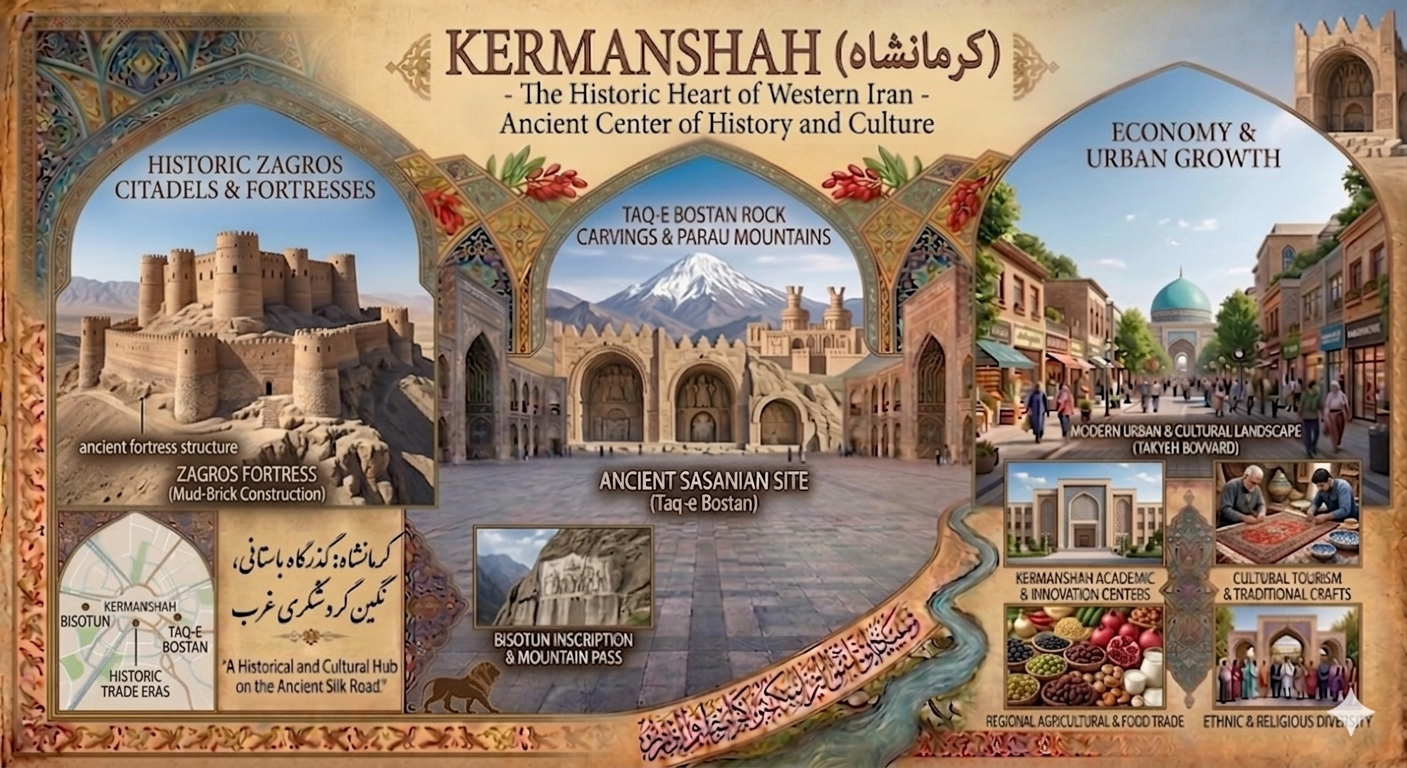
Discovering One of Iran’s Most Fascinating Cultural Treasures
When travelers think of Iran, famous destinations such as Tehran, Isfahan, Shiraz, and Mashhad often come to mind first. Yet beyond these well-known cities lies a destination that many historians, archaeologists, and seasoned travelers consider one of the country’s greatest hidden gems: Kermanshah.
Situated in the foothills of the magnificent Zagros Mountains in western Iran, Kermanshah is a city where history, culture, nature, and tradition converge. For thousands of years, this remarkable region has served as a gateway between the Iranian Plateau and Mesopotamia, making it one of the most strategically important locations in the Middle East.
From ancient kings carving their achievements into mountain cliffs to merchants traveling along historic trade routes, Kermanshah has witnessed the rise and fall of empires, the movement of civilizations, and the development of cultures that helped shape the region we know today.
Today, Kermanshah remains a vibrant city that proudly preserves its heritage while embracing modern development. Visitors can explore UNESCO-listed archaeological treasures, experience rich Kurdish traditions, enjoy spectacular mountain scenery, and sample some of Iran’s most beloved cuisine.
Whether you are passionate about history, fascinated by ancient civilizations, or simply seeking a unique travel destination, Kermanshah offers an unforgettable journey into the heart of western Iran.
Where Is Kermanshah?
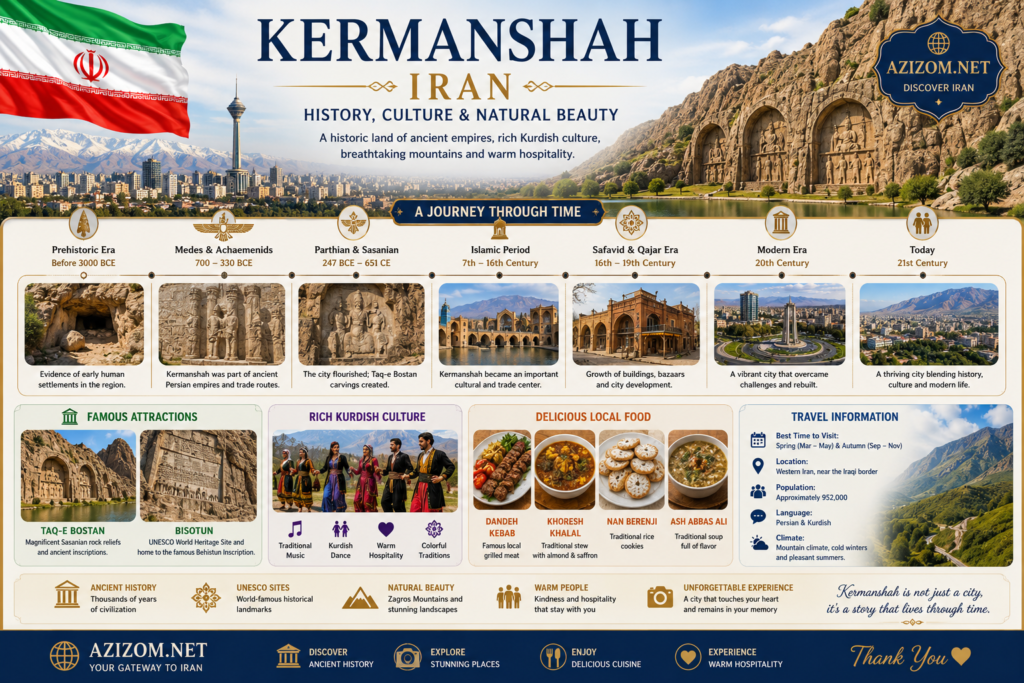
Kermanshah is located in western Iran, approximately 525 kilometers southwest of Tehran. As the capital of Kermanshah Province, it serves as a major cultural, economic, and transportation hub for the region.
The city’s strategic position near the border with Iraq has made it an important center for trade and cultural exchange throughout history. Surrounded by the dramatic landscapes of the Zagros Mountains, Kermanshah enjoys a setting that combines natural beauty with historical significance.
The region’s fertile valleys, abundant springs, and moderate climate have attracted human settlement for thousands of years. Archaeological discoveries indicate that the area around Kermanshah has been inhabited since prehistoric times, making it one of the oldest continuously occupied regions in Iran.
Today, Kermanshah is home to more than one million residents and remains one of the largest and most influential cities in western Iran.
A City Shaped by Thousands of Years of History
One of the most remarkable aspects of Kermanshah is its incredible historical depth.
The region has played a significant role in nearly every major chapter of Iranian history. Archaeological evidence suggests that human communities existed here long before the emergence of organized states and empires.
Throughout the centuries, Kermanshah has been influenced by numerous civilizations, including:
- The Medes
- The Achaemenid Persians
- The Seleucids
- The Parthians
- The Sassanians
- Various Islamic dynasties
Because of its location along major trade and military routes, Kermanshah often served as a meeting point between East and West. Merchants, scholars, soldiers, and travelers passed through the region, bringing new ideas, technologies, and cultural influences.
This unique historical role helped create the diverse and dynamic identity that continues to characterize Kermanshah today.
Bisotun: A UNESCO Treasure Carved Into Stone
No discussion of Kermanshah would be complete without mentioning Bisotun, one of the most important archaeological sites in the world.
Located approximately 30 kilometers northeast of the city, Bisotun is a UNESCO World Heritage Site that attracts historians and travelers from across the globe.
The site’s most famous feature is the monumental inscription commissioned by Darius the Great around 521 BCE.
Carved high into a limestone cliff, the inscription tells the story of Darius’s rise to power and his victories over rival claimants to the Persian throne. It includes text written in three ancient languages:
- Old Persian
- Elamite
- Babylonian
The multilingual nature of the inscription proved invaluable to modern scholars. Much like the Rosetta Stone helped decipher Egyptian hieroglyphics, the Bisotun Inscription played a crucial role in unlocking the mysteries of ancient cuneiform writing.
Beyond the inscription itself, Bisotun contains archaeological remains from numerous historical periods, reflecting thousands of years of human activity in the region.
Visitors walking through the site can witness layers of history that span prehistoric settlements, imperial monuments, and medieval structures, all preserved within a single extraordinary landscape.
Taq-e Bostan: The Crown Jewel of Sassanian Art
Among Kermanshah’s most iconic attractions is Taq-e Bostan, a breathtaking collection of rock carvings and monumental arches created during the Sassanian Empire.
Situated at the edge of a natural spring-fed lake, Taq-e Bostan combines artistic excellence with stunning natural scenery.
The site contains some of the finest surviving examples of Sassanian stone reliefs anywhere in the world. These carvings celebrate royal power, military victories, and ceremonial events.
Visitors can admire detailed depictions of kings including:
- Ardashir II
- Shapur III
- Khosrow II
Perhaps the most famous image is that of King Khosrow II mounted on horseback, wearing elaborate armor and royal attire. The extraordinary craftsmanship visible in every detail demonstrates the artistic sophistication of the Sassanian Empire.
What makes Taq-e Bostan especially unique is its setting. Natural springs flow through the area, creating reflective pools that enhance the beauty of the monuments. The surrounding mountains provide a dramatic backdrop that has captivated visitors for centuries.
For many travelers, Taq-e Bostan represents the perfect combination of history, art, and nature.
The Rich Heritage of Kurdish Culture
Kermanshah occupies a special place within Iran’s cultural landscape because of its strong connection to Kurdish heritage.
The province is home to a large Kurdish population whose traditions have helped shape local identity for generations.
Visitors to Kermanshah often notice the distinct cultural atmosphere reflected in:
- Traditional clothing
- Folk music
- Regional cuisine
- Language and dialects
- Community celebrations
Kurdish hospitality is legendary throughout the region. Guests are often welcomed warmly and encouraged to experience local customs firsthand.
Music plays a particularly important role in cultural life. Traditional instruments such as the daf and tanbur produce powerful sounds that accompany ceremonies, celebrations, and spiritual gatherings.
These traditions continue to thrive in modern Kermanshah, creating a fascinating blend of ancient heritage and contemporary life.
The Magnificent Zagros Mountains
While history draws many visitors to Kermanshah, nature provides equally compelling reasons to explore the region.
The Zagros Mountains dominate the landscape, creating some of the most beautiful scenery in Iran.
Towering peaks, fertile valleys, winding rivers, and lush springtime meadows provide endless opportunities for outdoor adventure.
Nature enthusiasts can enjoy:
- Hiking
- Mountain climbing
- Photography
- Bird watching
- Scenic drives
Spring is widely considered the best season to experience Kermanshah’s natural beauty. During this time, wildflowers bloom across the hillsides and the countryside transforms into a vibrant green landscape.
The mountains have influenced life in Kermanshah for centuries, providing natural protection, water resources, and fertile agricultural land.
A Culinary Journey Through Kermanshah
Food is one of the most enjoyable ways to experience the culture of Kermanshah.
The region is famous throughout Iran for its distinctive cuisine, which combines local ingredients with centuries-old cooking traditions.
Dandeh Kebab
The city’s signature dish is Dandeh Kebab.
Prepared using carefully marinated lamb ribs grilled over open flames, this delicious specialty is widely regarded as one of Iran’s finest kebab dishes.
Its tender texture and rich flavor make it a must-try for visitors.
Kermanshahi Roghan
Another local treasure is Kermanshahi Roghan, a traditional clarified butter known for its exceptional aroma and taste.
This product is used in numerous regional recipes and is highly valued throughout the country.
Traditional Sweets
Kermanshah is also known for its delicious desserts and pastries.
Popular examples include:
- Nan Berenji
- Kak
- Date pastries
- Traditional cookies
Many travelers purchase these treats as souvenirs to take home.
Historical Markets and Local Shopping
Traditional bazaars remain an important part of daily life in Kermanshah.
Walking through these bustling marketplaces offers visitors an authentic glimpse into local culture.
Shops sell a variety of goods including:
- Handcrafted textiles
- Traditional clothing
- Local spices
- Jewelry
- Handmade crafts
The atmosphere of the bazaar reflects centuries of commercial activity that helped establish Kermanshah as a regional trading center.
For photographers and cultural enthusiasts, the markets provide endless opportunities to observe everyday life and interact with local residents.
Religious and Cultural Significance
Kermanshah has long been a center of religious diversity and cultural exchange.
Throughout history, the region has been influenced by:
- Ancient Persian beliefs
- Zoroastrian traditions
- Islamic culture
- Sufi spirituality
This rich spiritual heritage is reflected in the architecture, customs, and historical landmarks found throughout the province.
Numerous mosques, shrines, and religious sites continue to serve local communities while attracting visitors interested in Iran’s cultural history.
Modern Kermanshah
Despite its ancient roots, Kermanshah is also a modern and dynamic city.
Over recent decades, significant investments have supported growth in:
- Education
- Healthcare
- Infrastructure
- Industry
- Tourism
Several universities and educational institutions contribute to the city’s intellectual and cultural development.
Modern shopping centers, hotels, restaurants, and transportation networks ensure that visitors can enjoy comfortable travel experiences while exploring the city’s historic attractions.
This balance between tradition and progress gives Kermanshah a unique character that distinguishes it from many other destinations.
Hidden Gems Beyond the City
The wider province contains numerous attractions that deserve exploration.
Paveh
Known as the “City of Stairs,” Paveh is famous for its hillside architecture and spectacular mountain views.
Ravansar
This charming town offers beautiful landscapes, caves, and opportunities to experience traditional rural life.
Sarab-e Niloufar
A picturesque spring known for its lotus flowers and peaceful atmosphere.
Kangavar
Home to important archaeological remains, including structures associated with ancient Persian civilization.
Each of these destinations reveals a different aspect of the province’s cultural and natural diversity.
Why Kermanshah Should Be on Every Traveler’s List
Many travelers who visit Kermanshah describe it as one of Iran’s most rewarding destinations.
Unlike more crowded tourist centers, Kermanshah offers:
- Authentic cultural experiences
- Extraordinary historical sites
- Stunning mountain landscapes
- Friendly local communities
- Exceptional cuisine
- Rich Kurdish heritage
The city provides an opportunity to explore a side of Iran that many international visitors never experience.
Its combination of history, culture, and natural beauty creates a destination that appeals to travelers of all interests.
Sustainable Tourism and Preservation
As interest in Kermanshah continues to grow, preserving the region’s heritage remains a top priority.
Conservation projects are helping protect archaeological treasures such as Bisotun and Taq-e Bostan for future generations.
At the same time, sustainable tourism initiatives aim to support local communities while minimizing environmental impact.
Responsible travel practices can help ensure that Kermanshah’s cultural and natural wonders remain intact for decades to come.
Key Takeaways
- Kermanshah is one of Iran’s oldest and most historically important cities.
- The city served as a major crossroads between Persia and Mesopotamia.
- Bisotun contains one of the world’s most significant ancient inscriptions.
- Taq-e Bostan showcases extraordinary Sassanian art and architecture.
- Kurdish culture plays a central role in local identity.
- The Zagros Mountains provide spectacular scenery and outdoor opportunities.
- Kermanshah is famous for Dandeh Kebab and traditional sweets.
- The city successfully combines ancient heritage with modern development.
- Numerous nearby attractions expand the region’s tourism appeal.
- Kermanshah remains one of the most authentic destinations in Iran.
Related Articles on Azizom.net
- Tehran – Exploring Iran’s Dynamic Capital
- Isfahan – The Architectural Masterpiece of Persia
- Shiraz – Gardens, Poetry, and Persian Elegance
- Mashhad – Iran’s Spiritual Capital
- Ahvaz – Gateway to Khuzestan
- Kerman – The Desert Jewel of Iran
- Karaj – Modern Life Near Tehran
- Qom – Center of Religious Learning
- Zahedan – The Cultural Gateway to Southeastern Iran
Final Thoughts
Kermanshah is far more than a city on the map of western Iran. It is a living archive of human civilization, where ancient inscriptions still tell the stories of kings, where magnificent rock carvings celebrate the achievements of empires, and where cultural traditions continue to thrive in modern times.
From the UNESCO-listed wonders of Bisotun to the breathtaking artistry of Taq-e Bostan, every corner of Kermanshah reveals another chapter of Iran’s remarkable history. Add the warmth of Kurdish hospitality, the beauty of the Zagros Mountains, and a cuisine renowned across the country, and it becomes clear why Kermanshah remains one of Iran’s most captivating destinations.
For travelers seeking authenticity, history, culture, and unforgettable experiences, Kermanshah truly deserves its reputation as the Historic Heart of Western Iran. Whether it is your first visit to Iran or part of a broader journey through the country, Kermanshah promises memories that will last a lifetime.
Article Disclaimer
This article is published by Azizom.net for educational, informational, and travel-related purposes. Historical facts, cultural descriptions, and tourism information are based on available research at the time of publication. Travelers should verify local regulations, transportation options, and destination information before planning their visit.
Image Disclaimer
Images used within this article may originate from licensed sources, tourism organizations, public-domain archives, photographers, or contributors. Copyright and ownership remain with their respective creators unless otherwise noted.
Affiliate Disclaimer: As an Amazon Associate, Azizom.net earns from qualifying purchases. This comes at no additional cost to you and helps support our website and content.