Introduction:
The Strategic Desert City of Southeast Iran
Zahedan, Iran is one of the most distinctive and culturally rich cities in southeastern Iran. Located close to the borders of Pakistan and Afghanistan, the city stands as a major gateway between Iran and South Asia.
Unlike Iran’s ancient Persian capitals, Zahedan has developed more recently as a modern urban center, yet it carries deep cultural roots shaped by Baluchi traditions, desert life, and centuries of regional trade.
The city is not just a transportation hub—it is a living cultural bridge where Persian, Baluchi, and South Asian influences blend into a unique identity.
Geographical Location and Landscape
Zahedan is located in a dry and elevated desert plateau in southeastern Iran. Its surroundings include:
- Vast arid plains
- Rocky mountain ranges
- Dry riverbeds
- Open desert horizons
- High-altitude desert climate
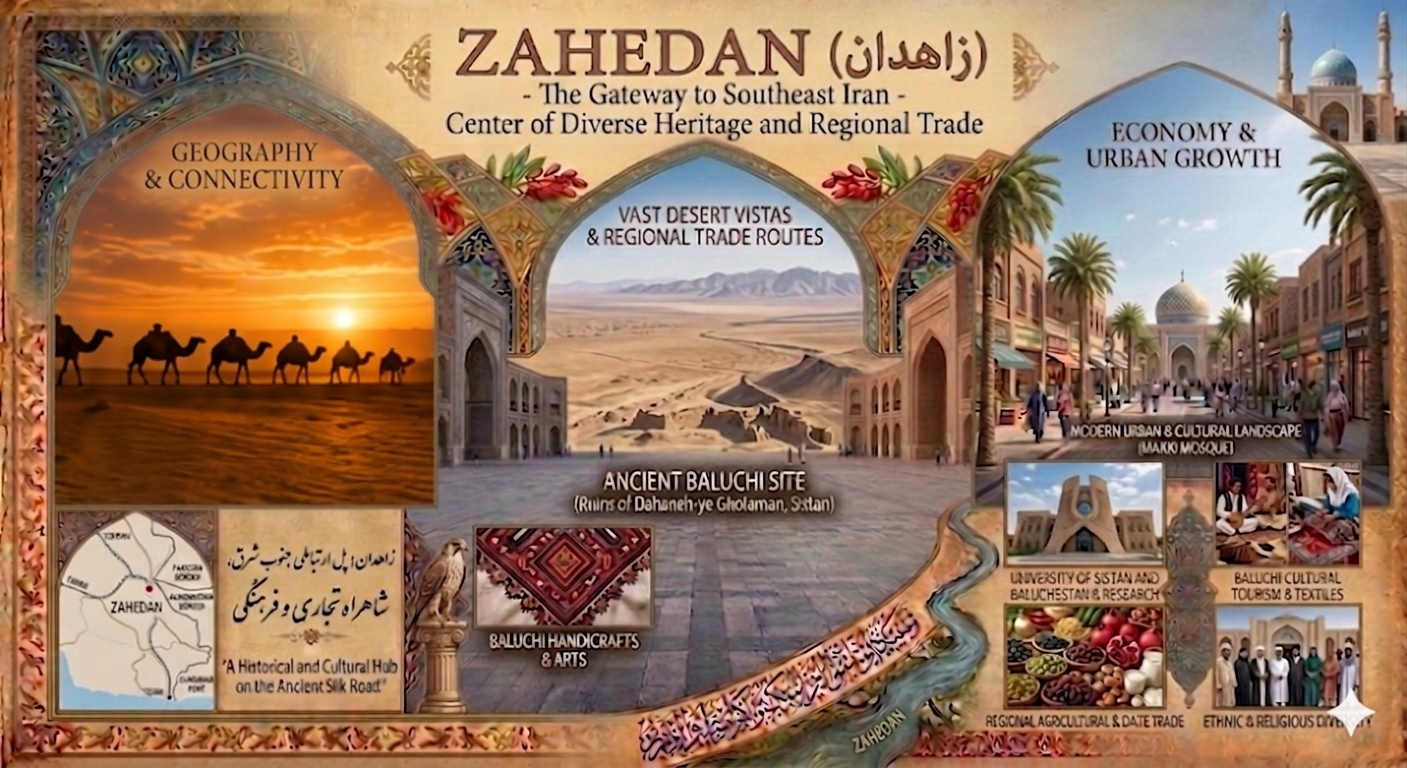
This geography shapes both the lifestyle and architecture of the region. The environment is harsh, but it has also created a resilient and culturally rich society adapted to desert life.
Its position near international borders has historically made it a crossroads for trade caravans, modern transport routes, and cultural exchange.
Historical Background of Zahedan
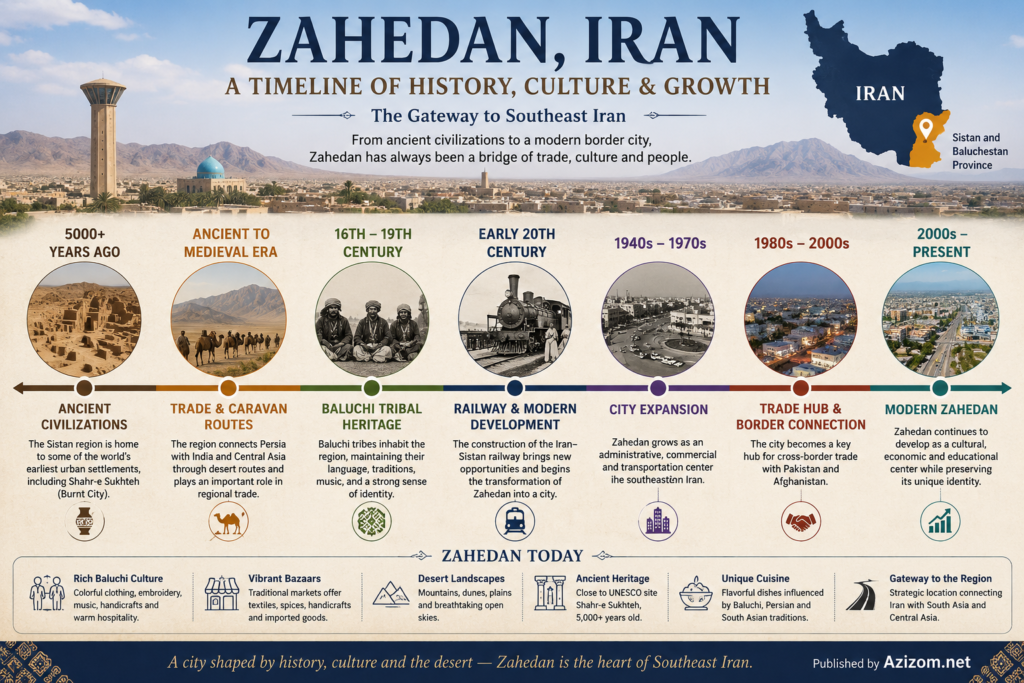
Although modern Zahedan developed significantly in the 20th century, the surrounding region of Sistan and Baluchestan has a long historical footprint.
Key historical influences include:
1. Ancient Trade Routes
The region once connected Persia with India and Central Asia through desert caravan routes.
2. Silk Road Connections
Merchants traveling between East and West passed through nearby desert corridors.
3. Tribal Baluchi Heritage
The Baluchi people have lived in the region for centuries, maintaining strong cultural traditions and social structures.
4. Railway Expansion Era
Zahedan grew rapidly during the Pahlavi era when railway infrastructure connected it to other major Iranian cities.
Today, Zahedan represents a blend of modern urban development and deep-rooted regional traditions.
Baluchi Culture and Identity
One of Zahedan’s most defining features is its strong Baluchi cultural presence.
Baluchi culture is known for:
- Bright and colorful traditional clothing
- Intricate embroidery work
- Oral poetry and storytelling traditions
- Folk music with deep rhythmic patterns
- Strong hospitality customs
Baluchi Embroidery
One of the most famous cultural crafts is Baluchi embroidery. Women in the region create highly detailed patterns using vibrant threadwork that represents identity, heritage, and artistic expression.
Each design often carries symbolic meaning, reflecting nature, spirituality, or tribal history.
Zahedan Traditional Bazaars
The bazaars of Zahedan are central to daily life and cultural identity. These markets reflect the city’s role as a trading hub connecting Iran with neighboring countries.
Visitors can find:
- Handwoven Baluchi textiles
- Traditional embroidery items
- Imported goods from Pakistan and Afghanistan
- Spices and dried fruits
- Carpets and handmade crafts
- Local food products
The atmosphere is vibrant, colorful, and deeply authentic, offering a glimpse into the everyday life of southeastern Iran.
Desert Nature and Surrounding Landscapes
The natural environment around Zahedan is dramatic and visually striking. The region features:
- Endless desert plains
- Rugged mountain formations
- Golden sand dunes
- Dry seasonal lakes
- Clear, star-filled night skies
Despite its arid climate, the landscape holds a unique beauty that attracts photographers, explorers, and adventure travelers.
Sunrises and sunsets in the desert create some of the most stunning natural views in Iran.
Nearby Historical Treasure: Shahr-e Sukhteh
One of the most important archaeological sites near Zahedan is Shahr-e Sukhteh, also known as the “Burnt City.”
This ancient settlement is more than 5,000 years old and is considered one of the earliest urban civilizations in human history.
Key discoveries include:
- Early urban planning systems
- Ancient tools and pottery
- Evidence of early medical practices
- Artistic artifacts and inscriptions
Shahr-e Sukhteh highlights the deep historical significance of the broader region surrounding Zahedan.
Traditional Cuisine of Zahedan
Zahedan’s cuisine reflects a blend of Baluchi, Persian, and South Asian influences.
Popular dishes include:
- Spiced Baluchi kebabs
- Rice dishes with aromatic spices
- Fresh traditional bread
- Dairy-based local meals
- Herbal teas and sweets
The food is often rich in flavor, with strong use of spices influenced by neighboring culinary traditions.
Economic Importance of Zahedan
Zahedan plays a critical role in regional trade and economy.
Its main economic activities include:
- Cross-border trade
- Transportation and logistics
- Agriculture in surrounding areas
- Textile and handicraft production
- Commercial markets and retail trade
Its strategic position makes it one of Iran’s key southeastern commercial gateways.
Best Time to Visit Zahedan
The climate in Zahedan is hot and dry for most of the year. However, the best travel seasons include:
- Autumn (October–November) – Comfortable temperatures
- Winter (December–February) – Cool and pleasant weather
- Early Spring (March) – Ideal for sightseeing
Summer months can be extremely hot and are generally less suitable for tourism.
Why Zahedan Is Worth Visiting
Travelers visit Zahedan for its unique cultural and geographical identity.
Main attractions include:
- Authentic Baluchi traditions
- Desert landscapes and photography opportunities
- Local bazaars and handicrafts
- Historical connection to ancient trade routes
- Cultural diversity near international borders
Unlike other Iranian cities, Zahedan offers a raw and authentic cultural experience shaped by desert life and cross-border influences.
Key Takeaways
- Zahedan is the capital of Sistan and Baluchestan Province in southeastern Iran.
- The city serves as an important gateway connecting Iran with Pakistan and Afghanistan.
- Rich Baluchi traditions make Zahedan one of Iran’s most culturally distinctive destinations.
- Traditional embroidery, colorful clothing, and local handicrafts are among the region’s most famous cultural treasures.
- The city is an important transportation and trade hub linking Iran with South Asia.
- Nearby Shahr-e Sukhteh (Burnt City) is one of the world’s oldest known urban settlements and a UNESCO World Heritage Site.
- Zahedan offers unique desert landscapes, mountain scenery, and authentic cultural experiences.
- The best time to visit is during autumn, winter, and early spring when temperatures are more comfortable.
Related Articles
- Kerman – Desert City of Ancient Persia
- Rasht – The Green City of Iran
- Hamedan – One of the Oldest Cities in the World
- Urmia – Cultural Diversity and Lake Beauty
Final Thoughts
Zahedan, Iran represents a different side of Iran—one shaped by desert landscapes, cultural diversity, and borderland connections. It is not defined by ancient monuments alone, but by living traditions, resilient communities, and vibrant cultural identity.
From Baluchi embroidery and desert horizons to ancient archaeological treasures nearby, Zahedan offers travelers an experience that feels both authentic and untouched by mass tourism.
For those seeking culture, history, and raw natural beauty, Zahedan stands as one of the most fascinating destinations in southeastern Iran.
Disclaimer
The information provided in this article is for educational, informational, and travel reference purposes only. While Azizom.net strives to ensure accuracy, historical facts, tourism information, transportation details, and local attractions may change over time. Readers are encouraged to verify information through official sources before making travel decisions.
Image Disclaimer: All images used in this article are for reference and illustrative purposes only. Actual locations, appearances, conditions, and attractions may vary.
Affiliate Disclosure: As an Amazon Associate, Azizom.net may earn commissions from qualifying purchases made through affiliate links. This comes at no additional cost to readers and helps support the maintenance and growth of the website.