The Green City of Northern Iran and the Culinary Jewel of the Caspian Region
Introduction
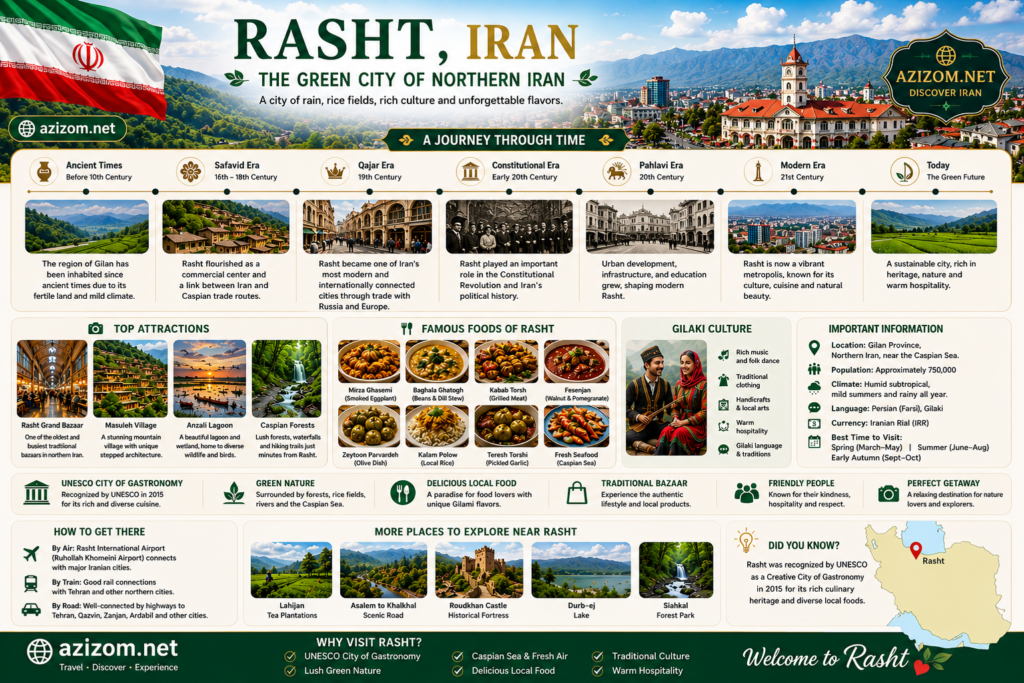
Nestled between the lush forests of northern Iran and the shimmering shores of the Caspian Sea, Rasht stands as one of the country’s most captivating destinations. Known for its abundant rainfall, vibrant culture, and world-renowned cuisine, Rasht offers visitors a completely different perspective of Iran compared to the deserts and historical cities found in the central regions of the country.
Often referred to as the “City of Rain” and the “Green Capital of Iran,” Rasht is the heart of Gilan Province and serves as a gateway to some of the most breathtaking natural landscapes in the Middle East. The city combines centuries of history, rich agricultural traditions, unique architecture, and culinary excellence, creating an unforgettable experience for travelers.
Whether you are a food enthusiast, nature lover, history buff, or cultural explorer, Rasht provides a fascinating blend of attractions that make it one of Iran’s most treasured destinations.
Where Is Rasht Located?
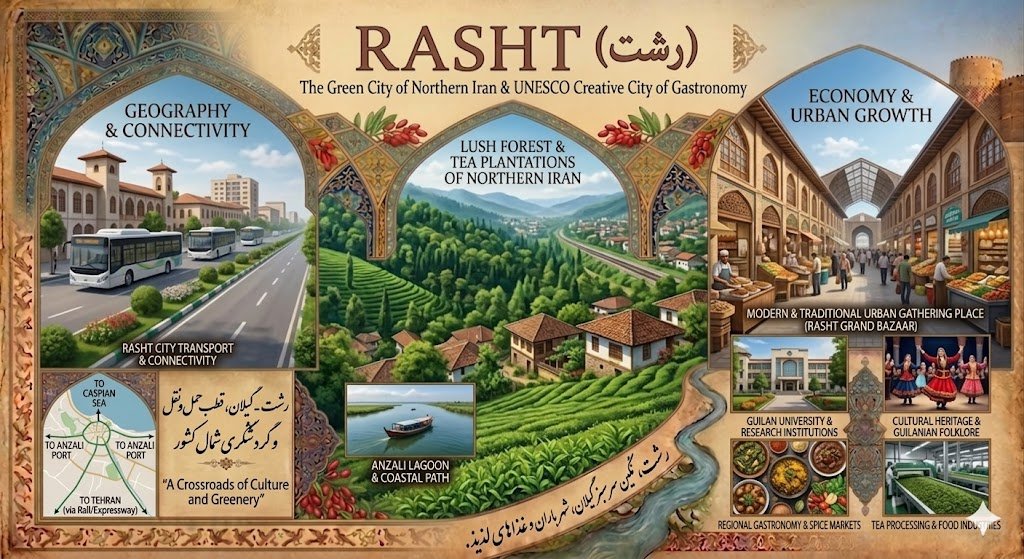
Rasht is situated in northern Iran, approximately 330 kilometers northwest of Tehran. As the capital of Gilan Province, the city occupies a strategic position between the Caspian Sea and the Alborz Mountains.
Its geographical location contributes significantly to its unique climate and landscape. Moist air from the Caspian Sea meets the mountainous terrain, resulting in frequent rainfall throughout the year. This abundance of rain nourishes dense forests, fertile agricultural lands, and expansive rice fields that characterize the region.
The city’s accessibility makes it an ideal starting point for exploring northern Iran’s famous attractions, including mountain villages, coastal towns, forests, waterfalls, and wetlands.
The History of Rasht
Rasht’s history stretches back many centuries, though it gained significant prominence during the Safavid period. Its strategic location near the Caspian Sea allowed it to become an important commercial center connecting Iran with Russia, Europe, and the Caucasus region.
Throughout history, Rasht prospered through:
- Silk production and export
- Agricultural trade
- Fishing industries
- Maritime commerce
- International trade routes
During the Qajar era, Rasht became one of the most progressive and internationally connected cities in Iran. European merchants frequently visited the region, bringing new ideas, technologies, and economic opportunities.
The city also played an important role during the Constitutional Revolution in the early twentieth century. Many political activists and reformers emerged from Gilan Province, contributing significantly to Iran’s modernization and constitutional movement.
Today, traces of Rasht’s rich past can still be found in its historical buildings, traditional neighborhoods, and cultural institutions.
The Climate That Creates a Green Paradise
One of Rasht’s most defining characteristics is its climate. Unlike many regions of Iran that experience dry conditions, Rasht enjoys a humid subtropical climate with substantial annual rainfall.
This climate supports:
- Dense forests
- Fertile farmland
- Rice cultivation
- Tea plantations
- Rich biodiversity
The result is a landscape dominated by vibrant shades of green throughout much of the year. Visitors arriving from central Iran are often amazed by the dramatic contrast between Rasht’s lush scenery and the country’s more arid regions.
The frequent rainfall has become such an integral part of local life that it influences everything from architecture and agriculture to local customs and traditions.
Rasht: A UNESCO Creative City of Gastronomy
Perhaps Rasht’s greatest international recognition came in 2015 when UNESCO designated it as a Creative City of Gastronomy.
This prestigious title highlights the city’s extraordinary culinary heritage and its deep connection to food culture.
The cuisine of Gilan Province is considered among the richest and most diverse in Iran. Local cooking emphasizes fresh ingredients, herbs, vegetables, seafood, and unique flavor combinations that distinguish it from other regional cuisines.
Many culinary experts consider Rasht the food capital of Iran.
Mirza Ghasemi
One of the region’s most iconic dishes, Mirza Ghasemi combines smoked eggplant, tomatoes, garlic, and eggs to create a flavorful and aromatic meal.
Baghala Ghatogh
This beloved local stew is made with broad beans, dill, garlic, and eggs. Its rich flavor and comforting texture make it a staple of Gilani cuisine.
Kabab Torsh
Unlike traditional kebabs found elsewhere in Iran, Kabab Torsh features meat marinated in walnuts, pomegranate paste, herbs, and spices.
Fesenjan
While popular throughout Iran, the northern version of Fesenjan is particularly renowned for its balance of sweet and sour flavors created by walnuts and pomegranate.
Fresh Seafood
Proximity to the Caspian Sea provides access to an abundance of fresh fish and seafood, which play a significant role in local cuisine.
Food lovers visiting Rasht often discover dozens of unique dishes unavailable elsewhere in the country.
Rasht Grand Bazaar: The City’s Beating Heart
The Rasht Grand Bazaar is one of the oldest and most vibrant traditional markets in northern Iran.
Unlike many enclosed markets, the Rasht Bazaar features interconnected open-air sections that create a lively atmosphere filled with color, sounds, and aromas.
Visitors can explore:
- Fresh fish markets
- Seasonal fruits and vegetables
- Rice vendors
- Tea merchants
- Traditional sweets
- Local handicrafts
- Handmade textiles
The market serves as both a commercial hub and a cultural landmark where locals gather daily.
Walking through the bazaar offers visitors an authentic glimpse into everyday life in Gilan Province.
Exploring Rasht’s Historic Architecture
Although modern development has transformed parts of the city, Rasht still preserves many examples of traditional northern Iranian architecture.
Distinctive features include:
- Wooden balconies
- Sloped roofs designed for heavy rainfall
- Decorative facades
- Spacious courtyards
- Large windows for ventilation
One of the city’s most recognizable landmarks is Municipality Square, a charming public space surrounded by European-inspired architecture dating back to the early twentieth century.
The square remains one of Rasht’s most photographed locations and serves as a gathering place for residents and visitors alike.
Natural Wonders Around Rasht
Rasht’s location provides easy access to some of Iran’s most spectacular natural attractions.
Masuleh Village
Located in the mountains near Rasht, Masuleh is famous for its unique stepped architecture. Homes are built into the mountainside, with one rooftop often serving as the courtyard for the house above.
The village offers breathtaking views, traditional markets, and a glimpse into centuries-old mountain life.
Anzali Lagoon
One of Iran’s most important wetlands, Anzali Lagoon is renowned for its biodiversity and scenic beauty.
Visitors can enjoy:
- Boat tours
- Bird watching
- Lotus flower fields
- Photography opportunities
The lagoon serves as an essential habitat for migratory birds and aquatic wildlife.
Hyrcanian Forests
The ancient forests surrounding Rasht form part of the Hyrcanian Forest ecosystem, which dates back millions of years.
These forests feature:
- Dense vegetation
- Waterfalls
- Hiking trails
- Rare plant species
- Diverse wildlife
Nature enthusiasts often rank these forests among the most beautiful landscapes in Iran.
Rice Fields and Tea Plantations
The agricultural scenery surrounding Rasht is equally impressive.
During growing seasons, endless rice paddies and tea farms create picturesque landscapes that attract photographers and travelers from across the country.
Gilaki Culture and Traditions
The people of Rasht are predominantly Gilaki, an ethnic group with a rich cultural heritage that has been preserved for generations.
Gilaki culture includes:
- Traditional music
- Folk dances
- Regional clothing
- Local festivals
- Handicrafts
- Oral storytelling traditions
The Gilaki language remains widely spoken alongside Persian, helping preserve the region’s unique identity.
Hospitality is deeply valued in Gilaki society, and visitors often remark on the warmth and friendliness of local residents.
Arts, Literature, and Intellectual Life
Rasht has long been known as a center of intellectual and artistic activity.
The city has produced numerous:
- Writers
- Poets
- Journalists
- Musicians
- Scholars
- Political thinkers
Its historical connections to international trade and cultural exchange helped create an environment where new ideas flourished.
Today, cultural centers, theaters, galleries, and educational institutions continue to contribute to the city’s vibrant intellectual life.
Economy and Agriculture
Rasht serves as an important economic center in northern Iran.
Key sectors include:
Agriculture
The fertile plains surrounding the city support extensive agricultural production.
Major products include:
- Rice
- Tea
- Olives
- Citrus fruits
- Vegetables
Fishing
The Caspian Sea supports a significant fishing industry that contributes to both local cuisine and economic activity.
Tourism
The city’s natural beauty and cultural attractions attract millions of domestic travelers annually.
Food Processing
Given the region’s agricultural abundance, food production and processing industries play a major role in the local economy.
Trade and Commerce
Rasht’s historical role as a trading center continues through modern transportation and commercial networks.
Best Time to Visit Rasht
Spring (March–May)
Spring is arguably the most beautiful season in Rasht. Temperatures are mild, flowers bloom throughout the region, and landscapes become exceptionally green.
Summer (June–August)
Summer brings warmer weather and lush scenery. It is one of the busiest tourism seasons.
Early Autumn (September–October)
Autumn offers comfortable temperatures and stunning natural colors, making it ideal for sightseeing and photography.
Winter (November–February)
Winter is cooler and often rainy, but the city retains much of its charm and experiences fewer tourists.
Why Travelers Fall in Love with Rasht
Visitors consistently praise Rasht for several reasons:
- Outstanding cuisine
- Friendly local culture
- Beautiful natural surroundings
- Historic markets
- Unique architecture
- Rich traditions
- Easy access to forests and mountains
- Authentic local experiences
Unlike many destinations focused solely on historical monuments, Rasht offers a living cultural experience where food, nature, and community remain central to daily life.
Sustainable Tourism in Rasht
As tourism continues to grow, efforts are increasingly focused on preserving the region’s natural and cultural heritage.
Responsible travelers can contribute by:
- Supporting local businesses
- Respecting natural environments
- Reducing waste
- Learning about local traditions
- Choosing eco-friendly accommodations
Sustainable tourism helps ensure future generations can continue enjoying the beauty and authenticity of Rasht.
Conclusion
Rasht represents a side of Iran that surprises and delights many visitors. Its lush landscapes, rich history, exceptional cuisine, and vibrant Gilaki culture combine to create a destination unlike any other in the country.
Whether exploring the bustling Grand Bazaar, tasting UNESCO-recognized dishes, wandering through ancient forests, or visiting nearby mountain villages, travelers quickly discover why Rasht holds such a special place in the hearts of Iranians.
As the green jewel of northern Iran, Rasht offers a perfect blend of nature, culture, and culinary excellence. For anyone seeking an authentic and unforgettable experience, this remarkable city deserves a prominent place on every travel itinerary.
Key Takeaways
- Rasht is the capital of Gilan Province in northern Iran.
- Known as the “City of Rain” and the “Green Capital of Iran.”
- UNESCO designated Rasht as a Creative City of Gastronomy in 2015.
- Famous for dishes such as Mirza Ghasemi, Baghala Ghatogh, Kabab Torsh, and Fesenjan.
- Home to the historic Rasht Grand Bazaar.
- Gateway to attractions including Masuleh Village and Anzali Lagoon.
- Rich Gilaki culture, traditions, and hospitality.
- One of Iran’s leading agricultural and tourism centers.
Related Articles for Azizom.net
- Tehran – The Dynamic Capital of Iran
- Isfahan – The Jewel of Persian Architecture
- Kerman – Gateway to Iran’s Desert Wonders
- Ahvaz – The Historic City on the Karun River
- Kermanshah – The Historic Heart of Western Iran
- Qom – Iran’s Spiritual Center
- Karaj – The Modern Metropolis Near Tehran
Final Thoughts
Rasht is more than just a city—it is a celebration of nature, culture, and cuisine. From its emerald landscapes and historic marketplaces to its globally recognized gastronomy, Rasht showcases a unique side of Iran that every traveler should experience. For visitors seeking authentic local culture and breathtaking scenery, Rasht remains one of the country’s most rewarding destinations.
Image & Content Disclaimer: The information presented in this article is intended for educational and travel purposes. Historical facts, tourism details, and local information may change over time. Readers are encouraged to verify current travel requirements and local conditions before planning a visit.
Affiliate Disclaimer: As an Amazon Associate, Azizom.net may earn from qualifying purchases. This comes at no additional cost to you and helps support the website and its content.